Cold Drawn Vs. Honed Hydraulic Tubes: Which Manufacturing Process Wins?
Release time:2026-07-15 Visits:693
Introduction
You're specifying hydraulic tubing. One supplier offers cold drawn tubes at a lower price. Another recommends honed tubes. The difference isn't just price—it's the gap between components that barely function and components that fail prematurely.
The choice between cold drawn and honed hydraulic tubes determines seal life, cylinder efficiency, and maintenance intervals. This comparison cuts through the marketing language to deliver the selection criteria that actually matter.
What Is Cold Drawing and How Does It Affect Tube Properties?
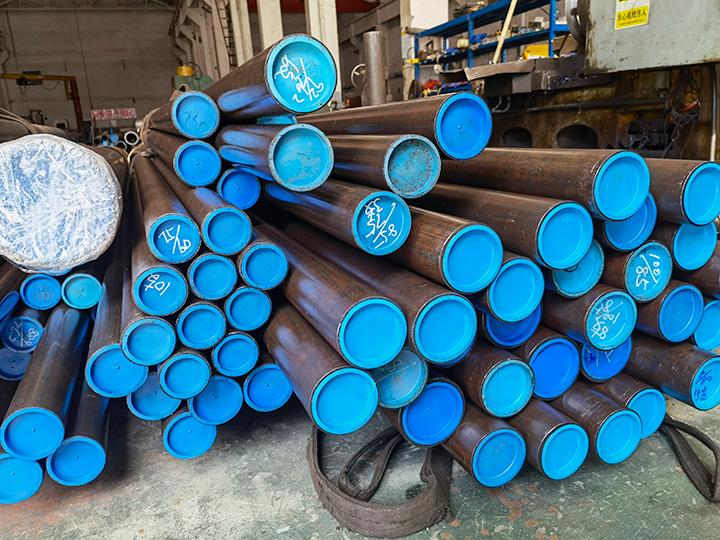
Cold drawing is a precision tube manufacturing process that reduces OD (outer diameter) and improves dimensional tolerance through forced passage of a mandrel through a die. The process increases yield strength 20–35% through work hardening, achieving OD tolerances of ±0.05mm and surface roughness Ra1.6–3.2μm.
During cold drawing, a tube billet is drawn through a die (reducing OD) with a mandrel controlling ID (inner diameter). The process generates 15–25% yield strength increase in carbon steels through dislocation density multiplication—known as strain hardening. ST52 tubes enter the cold draw process at ~355 MPa yield and exit at 450–480 MPa. The trade-off: cold work hardening reduces ductility and machinability for subsequent operations.
Cold drawn tubes suit hydraulic lines, moderate-pressure cylinders (under 160 bar), and applications where the tube ID surface isn't a bearing surface for seals.
What Is Honing and Why Does It Create a Better Hydraulic Surface?
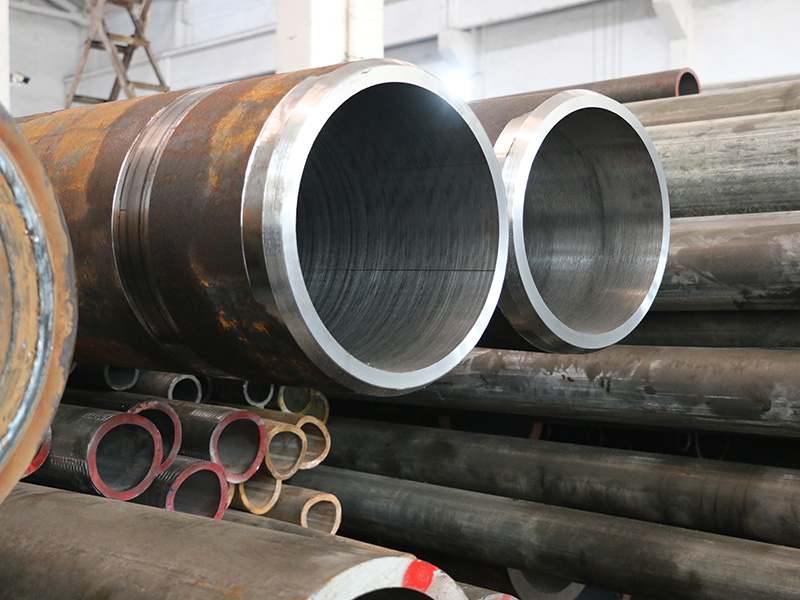
Honing uses abrasive stones rotating at 400–600 RPM with oscillating motion to create a controlled crosshatch pattern on the tube ID, achieving Ra0.2–0.8μm surface roughness. The process removes 0.05–0.3mm of material and corrects 0.02–0.05mm ID geometric errors (taper, ovality).
Honing produces three critical improvements over cold drawn tubes: (1) Surface roughness reduction from Ra1.6–3.2μm to Ra0.2–0.8μm reduces seal friction by 60–70% and extends seal life 3–5×. (2) Geometric correction eliminates ID variations that cause uneven seal loading and premature wear. (3) The crosshatch pattern (30–45° lead angle) retains hydraulic oil on the cylinder wall, maintaining lubrication film during low-speed operation. Honed tubes are mandatory for hydraulic cylinders with operating speeds below 0.5 m/min where boundary lubrication dominates.
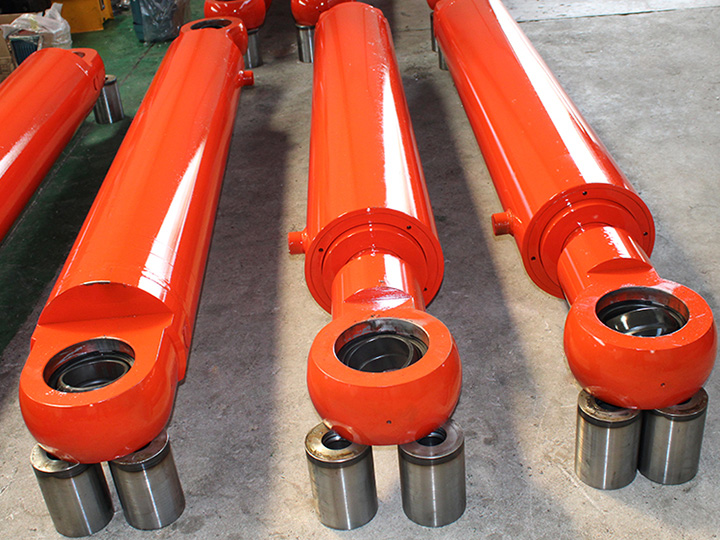
Honed tubes are non-negotiable for precision hydraulic cylinders, low-speed high-pressure applications, aerospace hydraulics, and any cylinder where seal life directly impacts maintenance costs.
Cost-Performance Breakdown: When Each Process Makes Sense
Cold drawn tubes cost 40–60% less than honed tubes for equivalent grades due to single-process manufacturing. The cost gap is justified only when the application genuinely requires honed surface properties.
Typical pricing (2025 market data): Cold drawn ST52 tube 50mm OD × 5mm WT = $3.20–4.50/meter. Honed equivalent (same dimensions, Ra0.8μm) = $5.80–8.20/meter. For a 2-meter hydraulic cylinder barrel, the tube cost difference is $5.20–7.40 per cylinder. If the cylinder operates 8 hours/day in a production machine, a 3× seal life extension (honed vs. cold drawn) saves $200–400 per seal replacement in downtime and parts. The payback is immediate for production equipment; marginal for occasional-use machinery.
Selection table:
|
Application
|
Recommended tube
|
Rationale
|
|
Agricultural hydraulics (<160 bar)
|
Cold drawn
|
Cost-driven, seal life acceptable
|
|
Mobile construction equipment
|
Cold drawn or honed (premium)
|
High utilization justifies honed
|
|
Plastic injection molding cylinders
|
Honed
|
Long stroke, precision control
|
|
Hydraulic press cylinders
|
Honed
|
High pressure, slow operation
|
|
Test bench hydraulic systems
|
Honed
|
Accuracy and repeatability critical
|
Conclusion
The cold drawn vs. honed decision hinges on one question: does the cylinder's seal system benefit from a Ra0.8μm or better bore surface? If seals run on the tube ID surface—and they always do in hydraulic cylinders—the answer is almost always yes. Honed tubes pay for themselves through extended seal life in any application with regular operation cycles.