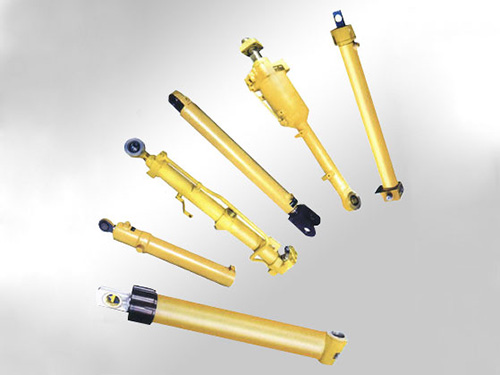
The chrome-plated rod wear-resistant layer is a critical surface modification layer applied to the surface of hydraulic piston rods, metallurgical equipment transmission rods, and other core components. It is mainly composed of a dense chromium layer deposited on the substrate surface through electroplating or thermal spraying technology, which is designed to significantly improve the wear resistance, corrosion resistance, and surface hardness of the rod-shaped components. As a key functional layer, it is widely used in harsh working environments such as hydraulic systems, metallurgical equipment, engineering machinery, and marine equipment, where components are subjected to frequent friction, high pressure, corrosion, and alternating loads. The quality and performance of the chrome-plated rod wear-resistant layer directly determine the service life, operational stability, and maintenance cost of the entire equipment system. With the continuous upgrading of industrial equipment towards high efficiency, high load, and long service life, the technical requirements for chrome-plated rod wear-resistant layers are constantly improving, promoting the innovation of preparation technologies and performance optimization methods.
1. Core Definition and Functional Significance
The chrome-plated rod wear-resistant layer refers to a functional coating formed by depositing metallic chromium or chromium-based alloy on the surface of a metal substrate (usually high-strength alloy steel such as 42CrMo, 35CrMo, or 20CrMnTi) through specialized surface treatment technology. Its core function is to form a hard, dense, and wear-resistant surface barrier, which isolates the substrate from the external harsh environment, reduces friction loss between components, and resists corrosion from media such as hydraulic oil, water, and chemical reagents.
Different from ordinary surface treatment layers (such as nickel plating, zinc plating, or phosphating), the chrome-plated rod wear-resistant layer has unique performance advantages: its surface hardness can reach HRC 60-70, which is 2-3 times that of the ordinary alloy steel substrate; the wear volume under dry sliding friction (load 50N, sliding speed 0.5m/s) is less than 0.01mm³; it has excellent corrosion resistance, and can maintain stable performance in neutral, weakly acidic, and weakly alkaline environments for a long time. In hydraulic and metallurgical equipment, the chrome-plated rod wear-resistant layer can extend the service life of rod-shaped components by 3-5 times, reduce unplanned maintenance downtime by more than 40%, and effectively reduce the overall operating cost of the equipment.
2. Preparation Technologies of Chrome-Plated Rod Wear-Resistant Layer
The preparation of chrome-plated rod wear-resistant layers mainly adopts two core technologies: electroplating chrome (including hard chrome plating and decorative chrome plating) and thermal spraying chrome-based alloy. The selection of preparation technology is determined by the application scenario, performance requirements, and substrate material of the chrome-plated rod.
2.1 Hard Chrome Plating Technology
Hard chrome plating is the most widely used preparation technology for chrome-plated rod wear-resistant layers, accounting for more than 80% of industrial applications. Its working principle is to use an electrolytic cell to deposit metallic chromium on the surface of the rod-shaped substrate: the substrate is used as the cathode, the chromium plate is used as the anode, and the chromic acid solution (main component CrO₃, concentration 200-300g/L) is used as the electrolyte. Under the action of a direct current (current density 20-50A/dm², bath temperature 50-60℃), chromium ions in the electrolyte are reduced and deposited on the substrate surface to form a dense, hard wear-resistant layer.
The key process parameters of hard chrome plating directly affect the performance of the wear-resistant layer: the current density determines the deposition rate (usually 0.1-0.3mm/h) and the structure of the chromium layer; the bath temperature controls the crystal grain size of the chromium layer (lower temperature leads to finer grains and higher hardness); the addition of trace additives (such as sulfate, fluoride) can improve the uniformity and adhesion of the chromium layer. After plating, the chrome-plated rod needs to undergo post-treatment processes such as cleaning, drying, and low-temperature tempering (150-200℃, 2-3 hours) to eliminate internal stress and improve the adhesion between the chromium layer and the substrate. The thickness of the hard chrome wear-resistant layer is usually controlled between 0.05-0.3mm, which can be adjusted according to the wear intensity of the application scenario.
2.2 Thermal Spraying Chrome-Based Alloy Technology
Thermal spraying chrome-based alloy technology is mainly used for large-diameter chrome-plated rods (diameter ≥100mm) or components with complex shapes, which are not suitable for electroplating. This technology uses a thermal spraying device (such as plasma spraying, high-velocity oxygen fuel spraying HVOF) to melt the chrome-based alloy powder (chromium content ≥85%, adding trace elements such as nickel, cobalt, and tungsten to improve wear resistance and corrosion resistance) into a molten or semi-molten state, and then spray it onto the pre-treated substrate surface at a high speed (1000-3000m/s) to form a wear-resistant layer.
Compared with hard chrome plating, thermal spraying chrome-based alloy layers have higher thickness (0.1-1.0mm) and better impact resistance, but the surface roughness is slightly higher (Ra 1.6-3.2μm), which requires subsequent grinding and polishing to meet the precision requirements of hydraulic and metallurgical equipment. The pre-treatment of the substrate (sandblasting, degreasing, and activation) is the key to ensuring the adhesion of the thermal spraying layer: the sandblasting process can make the substrate surface form a rough surface (roughness Ra 3.2-6.3μm), which increases the contact area between the spraying layer and the substrate, and the adhesion strength can reach more than 30MPa.
3. Key Performance Indicators and Evaluation Methods
The performance of the chrome-plated rod wear-resistant layer is evaluated by a series of professional indicators, which directly determine its adaptability to harsh working environments. The key performance indicators include surface hardness, wear resistance, adhesion, corrosion resistance, and surface quality, and each indicator has a standardized evaluation method.
Surface hardness is the core indicator of wear resistance, which is usually measured by a Vickers hardness tester or Rockwell hardness tester. The hard chrome plating layer has a Vickers hardness of 800-1000HV (equivalent to HRC 60-70), while the thermal spraying chrome-based alloy layer has a Vickers hardness of 750-950HV (equivalent to HRC 58-68). The wear resistance is evaluated by the pin-on-disk friction and wear test, and the wear rate is calculated according to the weight loss before and after the test. The wear rate of the high-quality chrome-plated wear-resistant layer is less than 1×10⁻⁶ mm³/(N·m).
Adhesion is an important indicator to prevent the chrome layer from peeling off. The common evaluation methods include the scratch test and the pull-off test. In the scratch test, the critical load when the chrome layer starts to peel off is not less than 50N; in the pull-off test, the adhesion strength between the chrome layer and the substrate is not less than 25MPa. Corrosion resistance is evaluated by the salt spray test (GB/T 10125-2021) and the immersion test: the chrome-plated layer can withstand 240 hours of neutral salt spray test without obvious corrosion spots, and can be immersed in 5% NaCl solution for 1000 hours without rusting.
Surface quality is evaluated by surface roughness and surface defects. The surface roughness Ra of the chrome-plated rod wear-resistant layer after grinding and polishing is usually controlled within 0.1-0.4μm to ensure good sealing performance when matching with seals (such as Glyd ring, Step seal). Surface defects such as cracks, pores, and peeling are not allowed, and the number of pinholes per square centimeter is not more than 1, which is detected by ultrasonic testing or visual inspection.
4. Application Scenarios and Special Requirements
The chrome-plated rod wear-resistant layer is widely used in
hydraulic and metallurgical equipment, and different application scenarios have special performance requirements for the wear-resistant layer, which determines the selection of preparation technology and process parameters.
4.1 Application in Hydraulic Systems
In hydraulic systems (such as hydraulic cylinders of engineering machinery, hydraulic actuators of metallurgical equipment), the chrome-plated rod is the core component of the hydraulic cylinder, and the wear-resistant layer directly affects the sealing performance and service life of the hydraulic cylinder. The hydraulic cylinder rod is usually subjected to high pressure (20-40MPa), frequent reciprocating friction with the seal, and erosion of hydraulic oil. Therefore, the chrome-plated wear-resistant layer requires high surface precision (Ra ≤0.2μm), good wear resistance, and excellent compatibility with hydraulic oil. Hard chrome plating is usually used, and the thickness of the chrome layer is 0.1-0.2mm. For hydraulic cylinders in harsh environments (such as marine hydraulic systems), the chrome layer is usually combined with a passivation treatment to further improve corrosion resistance.
4.2 Application in Metallurgical Equipment
In metallurgical equipment (such as continuous casting machine mold oscillation rods, steel rolling mill roll adjustment rods), the chrome-plated rod is subjected to high temperature (up to 150℃), high dust, and alternating loads. The wear-resistant layer needs to have good high-temperature stability (no obvious softening at 200℃) and wear resistance under high-temperature conditions. Thermal spraying chrome-based alloy technology is often used, and the chrome-based alloy powder is added with tungsten and molybdenum to improve high-temperature hardness. The thickness of the wear-resistant layer is 0.3-0.5mm, and the surface is ground to ensure the position accuracy of the rod-shaped component (position repeat accuracy ±0.03mm).
4.3 Other Application Scenarios
In addition to hydraulic and metallurgical equipment, the chrome-plated rod wear-resistant layer is also used in marine equipment (ship hydraulic rods, propeller shafts), aerospace equipment (landing gear rods), and precision machinery (machine tool guide rods). For marine equipment, the wear-resistant layer needs to have strong seawater corrosion resistance, and the chrome layer is usually thickened to 0.2-0.3mm and subjected to anti-corrosion coating treatment; for aerospace equipment, the wear-resistant layer requires lightweight and high strength, and the thermal spraying chrome-based alloy layer with low porosity (porosity ≤2%) is selected.
5. Technical Challenges, Optimization Measures and Development Trends
Although the chrome-plated rod wear-resistant layer has excellent performance, it still faces some technical challenges in industrial applications, such as poor adhesion of the chrome layer, pores and cracks in the chrome layer, and environmental pollution caused by electroplating. In response to these challenges, targeted optimization measures have been developed, and the technology is constantly moving towards greenization, high performance, and intelligence.
In terms of technical challenges and optimization measures: for the problem of poor adhesion, the pre-treatment process of the substrate is optimized (such as increasing the sandblasting pressure, extending the activation time), and the intermediate transition layer (such as nickel layer) is added between the substrate and the chrome layer to improve adhesion; for the problem of pores and cracks, the electroplating bath formula is optimized, and the post-treatment process (such as stress relief annealing) is strengthened to eliminate internal stress; for environmental pollution caused by hard chrome plating (chromic acid is highly toxic), environmentally friendly chrome plating technologies (such as trivalent chrome plating) are developed, which can reduce chromium pollution by more than 70% while ensuring performance.
The future development trends of chrome-plated rod wear-resistant layers are mainly reflected in three aspects: first, greenization. Trivalent chrome plating, chrome-free alternative coatings (such as titanium nitride, diamond-like carbon DLC) will gradually replace traditional hexavalent chrome plating, realizing environmentally friendly production; second, high performance. By adding rare earth elements (such as cerium, lanthanum) to the chrome layer, the hardness and wear resistance of the wear-resistant layer are further improved, and the service life is extended to more than 10 times that of the substrate; third, intelligence. The digital twin technology is used to monitor the wear state of the chrome-plated layer in real time, predict the service life of the wear-resistant layer, and realize predictive maintenance, which can reduce maintenance costs by more than 30%.
In conclusion, the chrome-plated rod wear-resistant layer is a key functional layer that ensures the stable operation of hydraulic and metallurgical equipment. With the continuous innovation of preparation technology and performance optimization, it will play a more important role in the high-quality development of the industrial field. In the future, the research focus will be on the development of environmentally friendly, high-performance, and intelligent chrome-plated wear-resistant layers, to meet the increasingly high requirements of industrial equipment for reliability and service life.