Skived Tube: Skiving And Boring For Precision Cylinder Barrels
Release time:2026-10-19 Visits:0
Skived tube does not get the attention that honed tube gets, but on most production lines it does the heavy lifting. Skiving is the process that cuts a rough bore to size quickly and accurately, and when it is paired with roller burnishing in one machine, it is the fastest way to make a finished cylinder barrel. This article explains what skiving is, how it differs from boring, and when to ask for a skived tube.
What Is a Skived Tube?
A
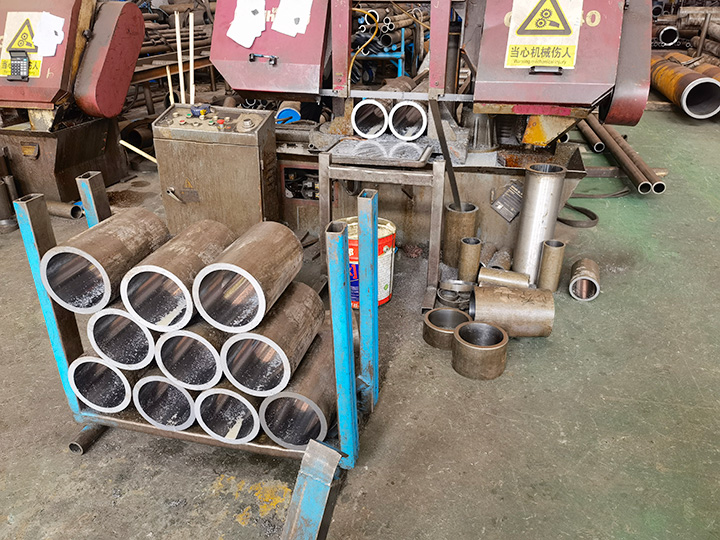
skived tube is a tube whose bore has been cut to size with a skiving tool. Skiving uses a single-point cutting head that takes one long, continuous, chip-forming cut along the bore. It removes the rough, uneven surface of the as-supplied tube and brings the bore to the required diameter in a single pass, with good straightness and roundness.
Skiving vs Boring: What's the Difference?
Boring is the traditional way: a cutting tool on a boring bar machines the bore to size. It works, but it is relatively slow, and the demands on the operator and setup are high.
Skiving is a faster, more consistent alternative developed for barrel production. The single-point head takes the whole stock in one pass, which makes it economical at volume and less dependent on operator skill. In everyday cylinder trade language the two words are often used interchangeably; what matters is the result — a straight, round bore at the right size.
Skive and Roller Burnish: the SRB Process
The real star is the combined skive-and-roller-burnish (SRB) process. One machine first skives the bore to size, then a burnishing head rolls the surface. The tube comes out with the bore finished to cylinder-ready roughness — in many cases no separate honing step is needed.
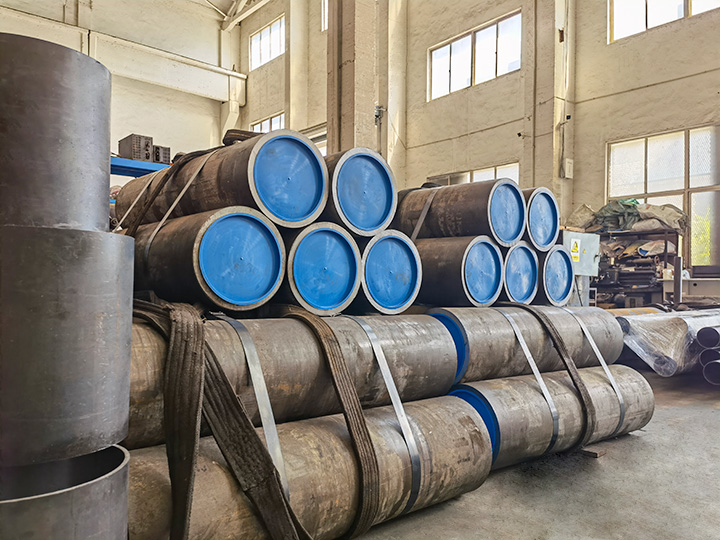
Tengye Machinery runs a 9-metre SRB machine, so barrels up to that length can be produced in a single setup. That matters for long-stroke cylinders, where handling and re-fixturing between machines used to eat both time and accuracy.
Why Skived Tubes Are Used in Cylinders
Speed and consistency. A skived and burnished barrel is ready for assembly almost as soon as it leaves the machine. For cylinder makers producing in batches, SRB tubes shorten lead time and cut unit cost compared with honing every barrel. The burnished bore also carries a work-hardened surface that resists wear — a bonus in high-cycle machines.
Skived vs Honed: Which to Pick
Skived (SRB) — best for production quantities, long barrels, and when you want the bore finished fast. Surface finish is good, typically enough for most hydraulic and pneumatic cylinders.
Honed — best when the specification demands the finest finish, the tightest geometry, or when you must correct a bore that is already off.
Many shops use both in sequence: skive to remove stock, hone for the last few microns.
FAQ
Q: Is a skived tube the same as a bored tube?
Practically, yes — both cut the bore to size with a cutting tool. Skiving is a specific, efficient single-point method within the boring family. You will hear the terms used interchangeably in the cylinder tube trade.
Q: What finish does an SRB tube have?
The burnishing pass leaves a smooth, dense bore — typically comparable to a honed finish and often good enough to assemble directly. Ask the supplier for the actual Ra value on the batch.
Q: Can skiving handle long barrels?
Yes, within the machine's travel. A 9-metre SRB machine, like the one Tengye operates, handles long-stroke cylinder barrels in one pass.
Q: Should I specify skived or honed tube?
If you buy barrels in volume and the finish requirement is standard, skived-and-rolled is usually the economical choice. If the drawing demands the finest geometry and finish, honing has the edge.
Need long, straight, cylinder-ready tubes? Talk to
Tengye Machinery about its 9-metre SRB line — +86 18912360300.