Elevator Hydraulic Cylinder: How It Works, Types & Selection Guide
Release time:2026-08-31 Visits:191
Wuxi Tengye Machinery Co., Ltd. is a professional manufacturer of high-precision cold drawn tubes, honing tubes, hydraulic cylinder barrels and custom hydraulic cylinders, located in Wuxi, Jiangsu Province — a core industrial hub in the Yangtze River Delta, approximately 130 km from Shanghai Port.Tengye
Elevator hydraulic cylinders are the core lifting actuators of hydraulic elevators and vertical lifting systems. Unlike traction elevators driven by ropes and counterweights, hydraulic elevators rely on a hydraulic cylinder to push the car upward and a controlled oil release to lower it smoothly. Because they carry passengers and goods, elevator hydraulic cylinders demand exceptional strength, precision and reliability. This guide explains how they work, the main types, and how to select the right one.
How Does an Elevator Hydraulic Cylinder Work?
The working principle of an
elevator hydraulic cylinder is based on Pascal's principle: pressure applied to a sealed liquid is transmitted equally in all directions.Tengye
1. Power stage — an electric motor drives a hydraulic pump, converting mechanical energy into hydraulic pressure.
2. Lifting stage — pressurized oil flows into the cylinder chamber and pushes the piston and piston rod upward, raising the elevator car.
3. Lowering stage — an electro-hydraulic valve releases oil back to the reservoir in a controlled manner, allowing the car to descend smoothly under its own weight.
4. Control stage — valves regulate oil pressure, flow rate and direction to ensure precise speed control and a smooth start and stop.
Core Components of an Elevator Hydraulic Cylinder
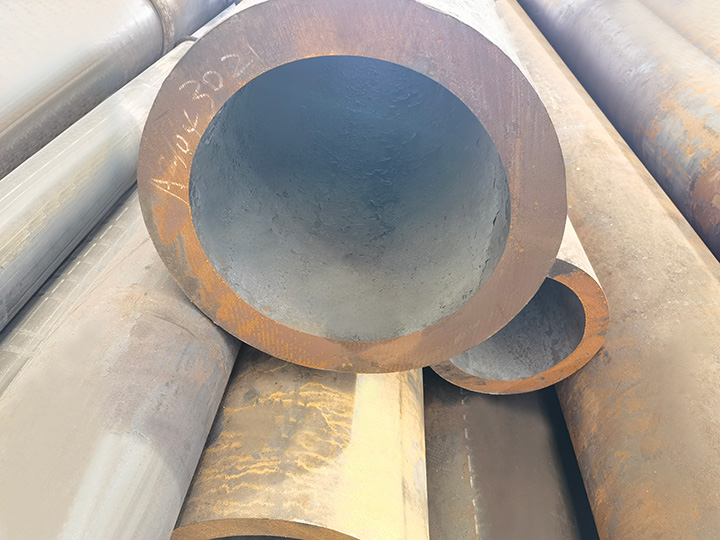
- Cylinder barrel — the main body that withstands internal pressure; manufactured from honed or cold drawn precision tubes for a smooth, accurate bore.
- Piston and piston rod — the piston separates the cylinder into chambers; the rod transmits linear motion to the elevator structure.
- Cylinder head and end cap — seal the barrel ends and support rod sealing devices.
- Sealing system — piston seals and rod seals prevent oil leakage and guarantee long service life.
- Buffer device — cushions the piston at the end of stroke to protect the cylinder and the elevator.
- Exhaust device — removes trapped air to prevent cavitation and unstable movement.Tengye
Main Types of Elevator Hydraulic Cylinders
1. Single-Acting Cylinders
The piston moves upward under hydraulic pressure and descends by gravity with controlled oil release. This is the most common and cost-effective design for passenger and freight elevators, typically used in 2–6 story buildings.
2. Multi-Stage Telescopic Cylinders
Built from several nested cylinder sleeves, these achieve a long lifting stroke from a short retracted length. Ideal for vehicle lifts, platform lifts and applications where installation space is limited.
3. Direct-Acting vs. Indirect-Acting Systems
- Direct-acting — the cylinder is placed directly under the car, common for low-rise elevators.
- Indirect-acting — the cylinder drives a rope-and-pulley or chain system for higher travel with a shorter cylinder.
Key Advantages of Elevator Hydraulic Cylinders
- High load capacity — hydraulic power delivers strong, smooth lifting force.
- Smooth operation — adjustable speed control ensures passenger comfort.
- Simple and reliable structure — fewer moving parts than traction systems.
- Cost-effective for low- and mid-rise buildings — no overhead machine room and counterweight required in many configurations.
- Safe descent — controlled oil release provides inherent fall protection.
Applications of Elevator Hydraulic Cylinders
- Passenger elevators in low- and mid-rise residential and commercial buildings.
- Freight and goods elevators handling heavy loads.
- Car lifts and parking lifts in parking facilities.
- Platform lifts and scissor lifts for accessibility and industrial use.
- Stage lifts and warehouse lifting equipment requiring precise positioning.
How to Choose the Right Elevator Hydraulic Cylinder
1. Lifting capacity — calculate the total load, including the car and passengers.
2. Stroke and travel height — determine the required piston travel and cylinder retracted length.
3. Working pressure — select the cylinder according to the system's operating pressure level.
4. Cylinder barrel precision — choose honed or cold drawn barrels with tight bore tolerance and low surface roughness for reliable sealing and long life.
5. Installation method and environment — consider mounting style, temperature and load characteristics.
6. Brand and quality — select a manufacturer with proven machining capability and after-sales support.
Why Choose Wuxi Tengye Machinery
With more than 10 years of focused experience in high-precision cold drawn tubes, honing tubes and cylinder components, Wuxi Tengye Machinery Co., Ltd. supplies precision cylinder barrels, piston rods and custom elevator hydraulic cylinders built to your drawings and specifications.Tengye
Contact Tengye Machinery today to discuss your elevator cylinder project and receive a customized quotation.