Hydraulic Vs Pneumatic Cylinder: What's The Difference And How To Choose
Release time:2026-09-28 Visits:0
People use the words “hydraulic” and “pneumatic” almost interchangeably on factory floors, but the two are different animals. One pushes with oil, the other pushes with air, and that single difference ripples through force, speed, cost, precision and maintenance. This article puts the two side by side and gives you a practical way to choose — plus a look at what the cylinder barrel has to do in each case.
The Short Answer
Use a pneumatic cylinder when you need speed and simplicity at low to moderate force. Use a hydraulic cylinder when you need serious force, precise position control, or smooth motion under heavy load. If a job needs more than a few kilonewtons, hydraulics usually wins.
How Hydraulic Cylinders Work
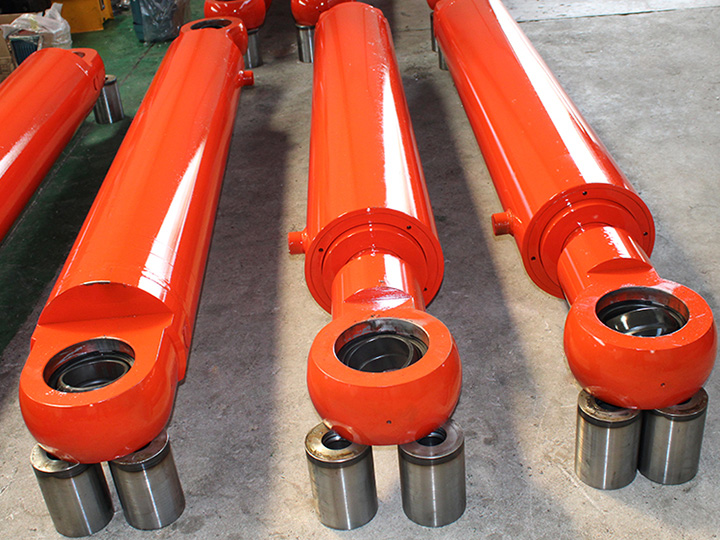
Hydraulic cylinders are driven by incompressible oil at high pressure — commonly 70 to 350 bar. Force equals piston area multiplied by pressure, so even a modest bore can push hard. Because oil does not compress, motion is stiff and controllable: you can hold a position, creep at low speed, and regulate force accurately. The price is a complete system — pump, tank, valves, hoses — and oil that has to stay clean.
How Pneumatic Cylinders Work
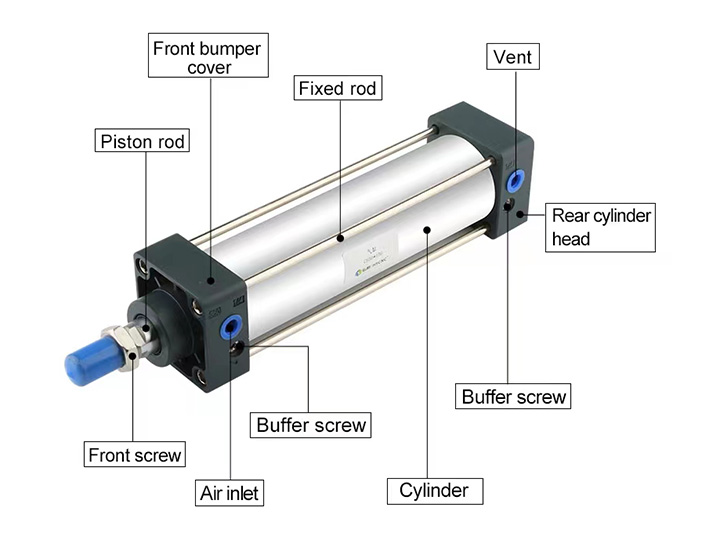
Pneumatic cylinders run on compressed air, typically 6 to 10 bar. Force is limited — a 100 mm bore at 7 bar gives roughly 5.5 kN of push — but air is cheap, clean and fast. Pneumatic systems are simpler to build and maintain, and they are naturally compliant: if something jams, the air compresses and damage stays limited. That makes air cylinders ideal for clamping, sorting, feeding and other light, high-cycle work.
Hydraulic vs Pneumatic: Side by Side
|
Factor |
Hydraulic cylinder |
Pneumatic cylinder |
|
Working medium |
Oil |
Compressed air |
|
Typical pressure |
70–350 bar |
5–10 bar |
|
Force for the size |
Very high |
Limited |
|
Speed |
Controllable, moderate |
Fast |
|
Position control |
Excellent |
Poor — air compresses |
|
Cleanliness |
Oil leaks are a hazard |
Clean; needs dry, filtered air |
|
System cost |
Higher |
Lower |
|
Maintenance |
More demanding |
Simpler |
|
Typical use |
Heavy machinery, presses |
Automation, clamping, light duty |
What the Barrel Has to Do in Each Case
Both cylinders need a precision tube, but the demands differ.
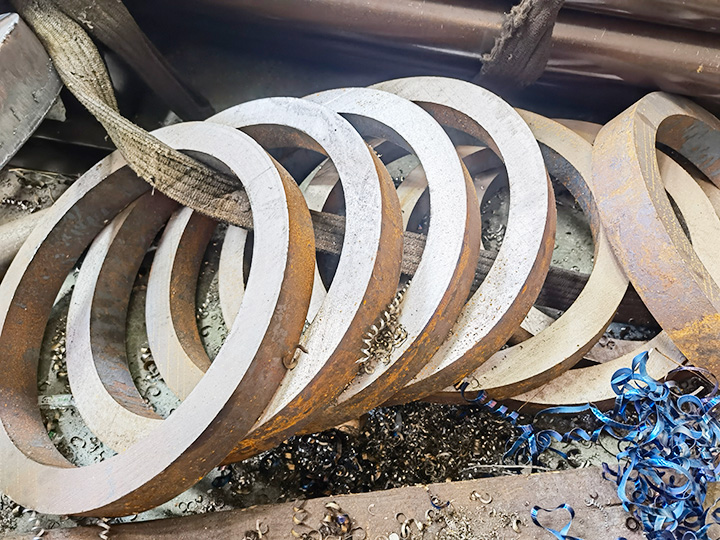
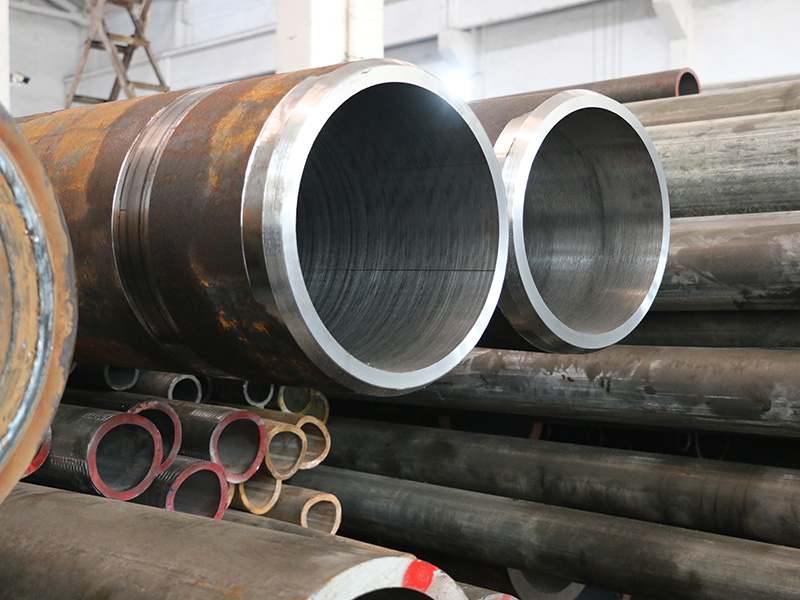
A hydraulic barrel is a pressure vessel. The wall is thicker, the material is usually carbon or alloy steel, and the bore finish is machined to tight tolerances because seal life and leak control are everything. A failed barrel in a hydraulic system means downtime, oil everywhere, and possibly a safety incident.
A pneumatic barrel works at low pressure, so it can be much lighter. Many pneumatic cylinders use aluminium tube with a smooth anodized bore; steel tube is used where stiffness or corrosion resistance matters. The bore still has to be round and smooth — a scored pneumatic bore makes the cylinder stick and chatter — but the machining demands are less severe than for hydraulics.
How to Choose
Force — if the load needs more than roughly 2–5 kN in a compact package, go hydraulic.
Speed and cycles — fast, repetitive, light work belongs to pneumatics.
Precision — position holding and smooth slow motion call for hydraulic; a simple open/close action works fine on air.
Environment — food and clean rooms usually favour pneumatics; heavy dust and outdoor sites often favour hydraulics.
Budget — air is cheaper to install and run; hydraulics pay for themselves when the job demands them.
FAQ
Q: Can a pneumatic cylinder replace a hydraulic one?
Only if the force is modest and the motion does not need to be stiff or precisely controlled. Air compresses, so a pneumatic cylinder cannot hold a load the way a hydraulic one can.
Q: What pressure do pneumatic cylinders run at?
Typical shop air is 6 to 8 bar. Some systems go higher, but the cylinder rating has to match the actual supply.
Q: Why are hydraulic cylinders so much heavier?
They have to contain 10 to 50 times the pressure, so the barrel wall and end caps are much heavier. That is the physical price of high force.
Q: Does Tengye make barrels for both?
Yes. The company produces high-precision cold drawn, honed and rolled tubes plus finished hydraulic and pneumatic cylinder barrels, in carbon steel, alloy steel and stainless.
Whether your project is hydraulic or pneumatic, the barrel decides how long the cylinder lasts. Discuss your application with
Tengye Machinery at +86 18912360300.