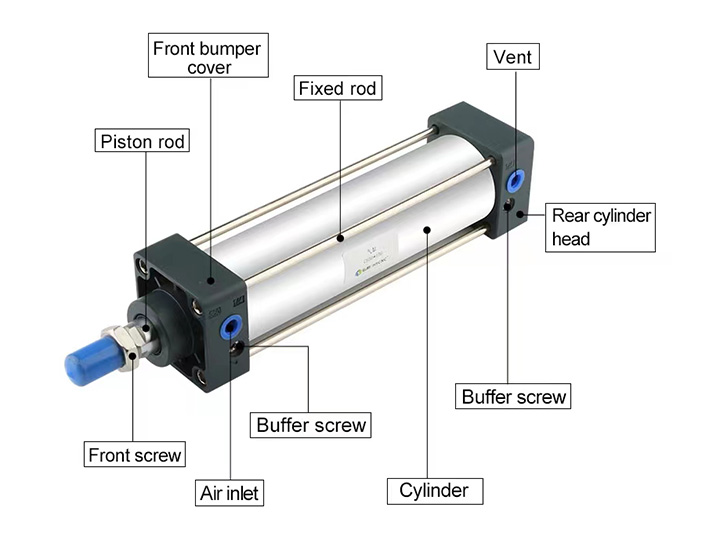
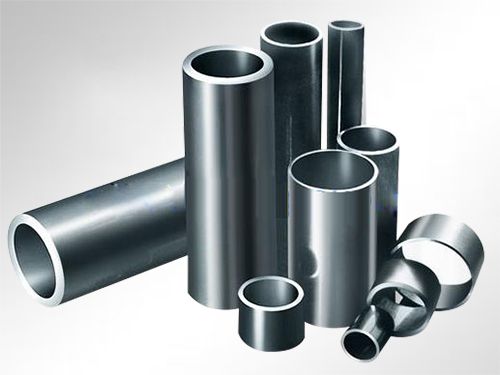
A hydraulic cylinder is only as good as the tube it is built around. The barrel — the cylinder tube that houses the piston — carries the system pressure, guides the piston and its seals, and takes the brunt of every cycle the machine runs. Get the barrel right and the rest of the cylinder has a fighting chance. Get it wrong, and no amount of seal quality or rod polishing will save you from leaks, scoring and early failure.
This guide covers what a
hydraulic cylinder barrel is, how it is machined, what materials are commonly used, and what you actually need to specify when you order one. It is written for buyers and engineers who want a working understanding, not a textbook.
What Is a Hydraulic Cylinder Barrel?
The barrel is the thick-walled tube that forms the pressure chamber of a hydraulic cylinder. The piston slides back and forth inside it, driven by pressurized oil entering through the ports. The barrel has to hold that pressure without yielding, stay round under load, and give the piston seals a surface they can slide on for tens of thousands of cycles.
Two things make a barrel different from ordinary pipe. First, the bore — the inside diameter — is machined to a tight tolerance, because the piston and its seals ride directly on it. Second, the inner surface is finished to a low roughness, typically Ra 0.2–0.4 µm or better. A rough bore eats seals; an out-of-round bore causes uneven wear and leaks.
Why the Barrel Is the Heart of the Cylinder
Consider what the barrel does in service:
Pressure containment — the wall must be thick enough for the working pressure, with a safety margin.
Guidance — roundness and straightness of the bore keep the piston from cocking, and cocking is what destroys seals.
Sealing — bore surface roughness and finish directly decide seal life.
Wear — every cycle, the piston rings and any hard particles in the oil wear the bore surface.
How Hydraulic Cylinder Barrels Are Machined
Barrels start as seamless tube and then go through one or more precision processes. At Tengye Machinery, the main routes are cold drawing, boring/skiving, honing and roller burnishing — often combined in a single production line.
Cold drawing
Cold drawing pulls the tube through a die to reduce its diameter and wall thickness, improving dimensional accuracy and surface finish in one step. Cold drawn tubes are a common starting point for cylinder barrels because the raw tube already comes close to final size, which cuts machining time downstream.
Boring and skiving
Boring removes material from the bore with a cutting tool to reach the required diameter and straightness. Skiving does the same job with a single-point tool that takes one long, continuous cut — the method behind the skive-and-roller-burnish machines used for high-volume barrel production. Tengye operates a 9-metre SRB (skiving and roller burnishing) machine, which finishes the bore of long barrels in one setup.
Honing
Honing uses abrasive stones on an expanding head to grind the bore to a mirror-like finish. It is the go-to process when the specification demands a fine surface and tight geometry, and it corrects roundness and straightness errors left by earlier operations. Honed barrels can reach Ra 0.2 or below.
Roller burnishing
Roller burnishing presses hardened rollers against the bore under high load. Instead of cutting, it cold-works the surface — closing pores and producing a low-friction finish with a work-hardened layer. It is fast, chip-free, and popular for mass production of cylinder barrels.
Materials Used for Cylinder Barrels
Material choice is a trade-off between strength, machinability, cost and corrosion resistance.
Carbon steel seamless pipe — grades such as 20# and 45# are the everyday workhorses of the industry. Good strength, easy to machine, economical. Suitable for most industrial cylinders, often with a protective treatment on the outside.
Alloy steel — 27SiMn, 35CrMo and 42CrMo come in when pressures climb or the machine needs to be lighter for the same strength. After quenching and tempering they give a strong, tough combination, which is why they show up in mining, construction and heavy mobile equipment.
Stainless steel — 304 and similar grades are used where corrosion or product cleanliness matters: food processing, pharmaceuticals, chemicals. Stainless barrels cost more to machine, but they are the only sensible choice in those environments.
Key Specifications to Specify
Ordering a barrel is not a matter of saying “I need a cylinder tube”. A good inquiry or drawing includes:
Bore diameter (ID) and its tolerance, e.g. H8
Wall thickness or outside diameter
Finished length, and whether the ends are cut, chamfered or ported
Surface roughness of the bore, e.g. Ra 0.4 or Ra 0.2
Material grade and heat treatment condition
Straightness and roundness requirements
Quantity — at Tengye you can order in batches or as single pieces
How to Choose a Barrel Supplier
Look for a maker that controls the whole process rather than assembling bought-in parts. Tengye Machinery runs its 2,000-square-metre owned factory from raw tube to finished, container-loaded goods in-house — material, cold drawing, honing, skiving, roller burnishing, cutting and inspection under one roof. That matters, because barrel quality lives or dies in the details: drawing dies, stone grit, burnishing pressure, and how the ends are cut.
Check the equipment list too. A 9-metre SRB machine and dedicated honing units are the kind of capability that lets a supplier take on long, straight, high-precision barrels that smaller shops cannot handle. And ask for the physical and chemical test reports — a supplier that tests its material is a supplier that knows what it ships.
FAQ
Q: What surface finish can be achieved on a hydraulic cylinder barrel?
With honing or roller burnishing, bores can reach Ra 0.2 µm or below — what shops call a mirror finish. For most cylinders Ra 0.4 is plenty; go finer when seal life is critical or speeds are high.
Q: Seamless or welded tube for cylinder barrels?
Most hydraulic barrels use seamless tube, because the bore is machined all the way through and a weld seam risks defects and stress concentrations. Welded tube appears mainly in low-pressure, cost-sensitive applications.
Q: Can you supply small quantities or prototype barrels?
Yes. Tengye sells in batches or single pieces, and special designs are made to the customer's requirements — a common arrangement for prototype machines and repair work.
Q: What does SRB stand for?
Skive and roller burnish. It is a two-step process that cuts the bore to size and then burnishes it, and it is the most productive way to make large numbers of consistent barrels.
Need barrels machined to your drawing? Call
Tengye Machinery at +86 18912360300 or send an inquiry through the website — batch or single piece, carbon steel, alloy steel or stainless.