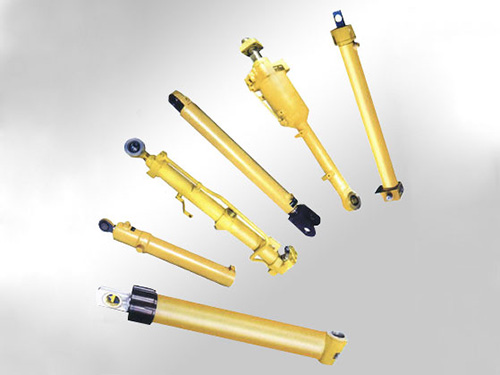
The hydraulic engineering metallurgical cylinder body is a core executive component in heavy-duty metallurgical equipment and hydraulic systems, which undertakes the key tasks of converting hydraulic energy into mechanical energy, bearing high pressure, and transmitting linear motion. It is widely used in key links of metallurgical production such as steel rolling, continuous casting, and blast furnace operation, and its performance, precision and reliability directly determine the operational efficiency, safety and service life of the entire metallurgical equipment system. With the continuous upgrading of metallurgical industry towards high efficiency, intelligence and greenization, the technical requirements for hydraulic engineering metallurgical cylinder bodies are constantly improving, promoting the continuous innovation of its design concept, material selection and manufacturing process.
1. Core Definition and Working Principle
The hydraulic engineering metallurgical cylinder body refers to a specialized cylindrical component designed for metallurgical working conditions, which cooperates with pistons, piston rods, seals and other components to form a hydraulic actuator. Its working principle is based on Pascal's law: in a closed cavity filled with incompressible hydraulic oil, the pressure exerted on the oil is transmitted uniformly in all directions, and the pressure difference between the two sides of the piston drives the piston and piston rod to perform linear reciprocating motion, thereby realizing the precise control of metallurgical equipment such as lifting, tilting, positioning and pressure application.
Different from ordinary hydraulic cylinder bodies, the metallurgical cylinder body must adapt to the harsh working environment of the metallurgical industry, including high temperature (up to 120℃ or even higher), high dust, high humidity, and frequent alternating loads. Therefore, it has unique design requirements in terms of pressure bearing capacity, high temperature resistance, corrosion resistance and wear resistance, and its rated working pressure usually reaches 31.5MPa or more, with a position repeat accuracy of ±0.02mm and a dynamic response time of no more than 80ms.
2. Structural Composition and Key Design Points
The hydraulic engineering metallurgical cylinder body is composed of key components such as cylinder barrel, end cover, piston, piston rod, seal system and buffer device, each of which plays an irreplaceable role in ensuring the stable operation of the cylinder body.
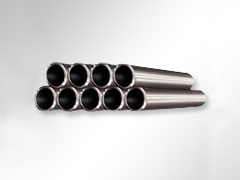
The
cylinder barrel is the main body of the cylinder body, which bears the main hydraulic pressure. It is usually made of high-strength alloy structural steel such as 42CrMo or 35CrMo. After quenching and tempering treatment, its surface hardness reaches HB280-320, and the inner hole is processed by honing technology to control the surface roughness Ra within 0.2-0.4μm, so as to balance wear resistance and seal compatibility. The end cover is installed at both ends of the cylinder barrel to realize the sealing of the cylinder body and the installation of oil inlets and outlets. It is usually reinforced by forging to avoid deformation under high pressure. The piston is connected with the piston rod, which is the core component of energy conversion. Its surface is equipped with a high-precision sealing ring to prevent internal leakage of hydraulic oil. The piston rod is usually made of 20CrMnTi carburized and quenched, with a surface hardness of HRC58-62, which can effectively improve fatigue resistance and corrosion resistance.
In terms of key design, on the one hand, the wall thickness of the cylinder barrel is accurately calculated according to the rated working pressure to ensure that it has sufficient structural strength and safety margin. For example, the minimum wall thickness of the cylinder barrel corresponding to the pressure rating of 300bar is 25mm, with a safety factor of 4:1. On the other hand, the seal system adopts a combined seal structure such as Glyd ring + Step seal, which can maintain stable sealing performance in the temperature range of -20℃ to +120℃ and the working pressure of 31.5MPa. At the same time, a buffer device is added at the end of the cylinder body to reduce the impact force during the reciprocating motion of the piston and avoid component damage caused by rigid collision.
3. Material Selection and Advanced Manufacturing Process
The material selection and manufacturing process of hydraulic engineering metallurgical cylinder body are the core factors determining its performance and service life, and must be strictly controlled to adapt to the harsh metallurgical working conditions.
In terms of material selection, the cylinder barrel is mainly made of high-strength alloy steel. The carbon content of 42CrMo alloy steel is controlled between 0.32% and 0.45%, the chromium content is 1.0%-1.3%, and the molybdenum content is 0.15%-0.25%. Through precise control of the alloy ratio, it ensures hardenability while inhibiting temper brittleness. After quenching and tempering, its tensile strength is not less than 980MPa, and its yield strength is not less than 835MPa, which can meet the requirements of high-pressure and heavy-load work. The piston rod is usually made of carburized steel, and after carburizing, quenching and low-temperature tempering, the surface carbon concentration gradient is controlled at 0.8%-1.0%, and the hardened layer depth reaches 1.8-2.2mm, which can effectively resist micro-motion wear and stress corrosion cracking. In addition, the surface of key components is treated with chrome plating, nickel plating or phosphating to further improve corrosion resistance and wear resistance.
In terms of manufacturing process, the modern hydraulic engineering metallurgical cylinder body adopts integrated forging technology instead of the traditional segmented forging + welding process, which eliminates the hidden dangers of stress concentration and cracks caused by welding, and improves production efficiency and product reliability. The key processes include hot forging, precision machining, heat treatment and surface treatment: hot forging refines the grain structure and improves the core strength; CNC precision machining ensures the dimensional accuracy of the cylinder barrel and piston rod, with an inner diameter tolerance of ±0.05mm; heat treatment (normalizing, quenching and tempering) balances the hardness and toughness of the material; honing and skiving & roller burnishing (SRB) processes ensure the surface finish of the inner hole of the cylinder barrel. At the same time, digital technologies such as CFD flow channel optimization, digital twin and AI visual inspection are integrated into the manufacturing process, which increases the first pass rate to 99.3% and reduces the unit energy consumption by 9.8%.
Quality inspection is an important link in the manufacturing process. Every cylinder body must undergo 100% pressure test exceeding the rated capacity, and ultrasonic testing is used to detect weld defects, and laser profilometry is used to verify the surface finish, so as to ensure that the product meets the requirements of GB/T 15622-2023 Hydraulic Cylinder Test Method and ISO 9001:2015 standard.
4. Application Fields and Performance Requirements in Metallurgical Engineering
The hydraulic engineering metallurgical cylinder body is widely used in various key equipment of the metallurgical industry, and different application scenarios have different performance requirements for the cylinder body.
In steel rolling mills, the cylinder body is mainly used in the AGC (Automatic Gauge Control) system of hot rolling mills, roll adjustment and roll changing devices. It requires high position control accuracy and fast dynamic response to ensure the thickness accuracy of steel plates. The 90% step response time under 21MPa working pressure is not more than 80ms, and the frequency response bandwidth is not less than 15Hz. In continuous casting machines, it is used in mold oscillation, billet/slab handling and other links, requiring good high temperature resistance and sealing performance to adapt to the high temperature environment around the mold and the erosion of molten steel splashes. In blast furnace equipment, it is used in tapping equipment, slag handling and furnace top systems, requiring strong pressure bearing capacity and corrosion resistance to adapt to the harsh environment of high dust and high temperature corrosion.
In addition, the metallurgical cylinder body must meet strict environmental adaptability and reliability requirements. It needs to pass the IP67 protection level certification, and can operate continuously in hydraulic oil with ISO 4406 pollution degree ≤20/18/15. The average mean time between failures (MTBF) is not less than 7850 hours, and the service life cycle reaches more than 500,000 times. The main failure modes are seal wear and cylinder inner wall scratch, which need to be effectively controlled through technical optimization.
5. Technical Development Trends and Future Prospects
With the in-depth promotion of the metallurgical industry's transformation towards high-end, intelligent and green, the hydraulic engineering metallurgical cylinder body is facing new development opportunities and technical challenges, and its development trend is mainly reflected in three aspects.
First, intelligence upgrading. With the acceleration of digital transformation, more and more intelligent monitoring systems are integrated into the metallurgical cylinder body. Through the industrial Internet platform and LSTM neural network, real-time monitoring of the working state of the cylinder body is realized, which can predict the seal wear 14.6 days in advance, reduce unplanned shutdown by 42%, and reduce maintenance costs by 195,000 yuan per unit per year on average. Second, green and low-carbon development. Under the constraint of double carbon policy, the industry is committed to reducing the carbon footprint of the cylinder body. Through arc furnace short-process steelmaking, green power procurement and hydrogen-based reduction technology, the carbon intensity of high-quality 42CrMo steel billets is reduced, and the remanufacturing technology is popularized. The energy consumption of remanufactured parts is only 35% of that of new products, and the performance recovery rate reaches 98.7%. Third, high-parameter and lightweight development. The proportion of high-parameter products with cylinder diameter ≥300mm and pressure ≥25MPa will continue to increase, and lightweight alloys and additive manufacturing technology will be widely used to reduce the weight of the cylinder body while ensuring performance, so as to improve the energy efficiency of the whole equipment system.
In the future, with the deep integration of material science, fluid mechanics and digital technology, the hydraulic engineering metallurgical cylinder body will move towards the direction of higher reliability, higher precision, more intelligence and more environmental protection, providing strong support for the high-quality development of the global metallurgical industry. At the same time, the localization process of high-end metallurgical cylinder bodies will continue to accelerate, and domestic enterprises will gradually enhance their competitiveness in the global market through technological breakthroughs and quality improvement.