Precision Cold Drawn Tube: Process, Tolerances And Applications
Release time:2026-10-05 Visits:0
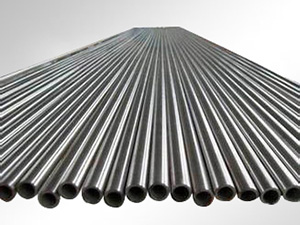
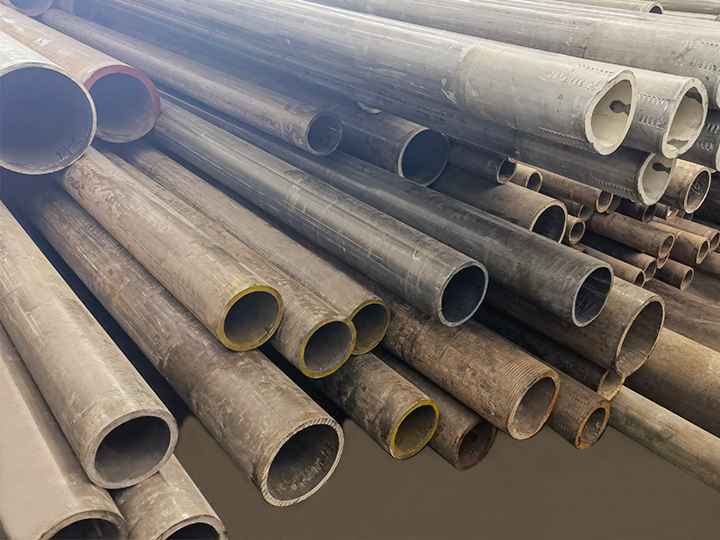
If you have ever compared the surface of a hot-rolled pipe with a cold drawn one, nobody needs to explain the difference to you. Cold drawing takes steel that is rough, scaled and out of round, and turns it into tube that is smooth, straight and accurate — which is exactly why precision cold drawn tube is the standard starting point for cylinder barrels, piston rods and hydraulic lines.
What Is a Precision Cold Drawn Tube?
A precision cold drawn tube is a seamless (or, less commonly, welded) tube that has been pulled through a die at room temperature to reduce its diameter and wall thickness. The drawing operation improves dimensional accuracy, straightens the tube, refines the surface, and cold-works the steel, which raises its yield strength. What comes out is a tube that a cylinder maker can machine to final size with far less stock removal than from hot-rolled pipe.
How Cold Drawing Works
The process looks simple from the outside, but every step is controlled:
1.Hot-rolled seamless tube is inspected and cut to working length.
2.Pickling and lubrication — scale is removed and the surface coated so the tube passes through the die without galling.
3.Drawing — the tube is pulled through a die. With a plug or mandrel inside, both the OD and the ID are controlled; without one (sinking), only the OD is.
4.Straightening and cutting to finished length.
5.Testing — dimensional checks, surface inspection and mechanical tests.
Each pass reduces the diameter by a controlled amount. Large reductions are done in several passes with intermediate heat treatment, so the steel stays workable and does not crack or work-harden too far.
Why Cold Drawn Tube Matters
Dimensional accuracy — OD and wall thickness are held much tighter than hot-rolled stock, so a barrel maker starts close to final size.
Surface quality — the inner and outer surfaces are smooth, cutting the machining allowance and giving a clean base for honing or burnishing.
Mechanical properties — cold working raises hardness and yield strength, which is handy in thin-wall, high-pressure designs.
Concentricity — drawn tube has a more uniform wall around the circumference, which shows up as balanced, round parts.
Typical Applications
Cold drawn precision tube is everywhere in fluid power: cylinder barrels for hydraulic and pneumatic cylinders, piston rods (before chrome plating), hydraulic tubing and fittings, shock absorber tubes, machine shafts, and structural parts where accuracy saves machining time. It is also the raw material Tengye Machinery draws, finishes and turns into honed or rolled cylinder tubes in its own factory.
Buying Guide: What to Check
Material grade and the mill certificate — chemistry and mechanical values on paper
Tolerances — OD, ID and wall thickness, matched to what your next process needs
Surface finish and freedom from scale, seams and scratches
Straightness, especially for long lengths
Cutting to length, end condition, and heat treatment condition
Quantity — and whether the supplier can also machine the tube further
FAQ
Q: What is the difference between drawn and honed tube?
Cold drawing sizes the tube and improves its surface. Honing is a finishing operation on the bore that removes a small amount of stock to achieve tight geometry and a fine finish. Many cylinders use drawn tube first, then hone the bore.
Q: Is cold drawn tube always seamless?
No, but for cylinder and high-pressure work it normally is. Drawn welded tube exists for low-pressure applications and is cheaper.
Q: Does cold drawing make the steel stronger?
Yes. Cold working raises yield strength and hardness, at the cost of some ductility. That is why drawn tubes are often normalized or annealed before heavy machining.
Q: Can you supply cold drawn tube ready for honing?
Yes. Tengye supplies cold drawn tubes in various models and can take them further with honing, skiving or roller burnishing to cylinder-ready condition.