Pneumatic Cylinder: Working Principle, Types And Barrel Requirements
Release time:2026-11-09 Visits:0
Pneumatic cylinders are everywhere you do not see them — inside packaging lines, sorting machines, jigs, clamps and the arms of robots. They are cheap, fast and simple, and they run on something every factory already has: compressed air. This article explains how they work, the common types, and what the barrel has to do for the cylinder to perform.
What Is a Pneumatic Cylinder?
A
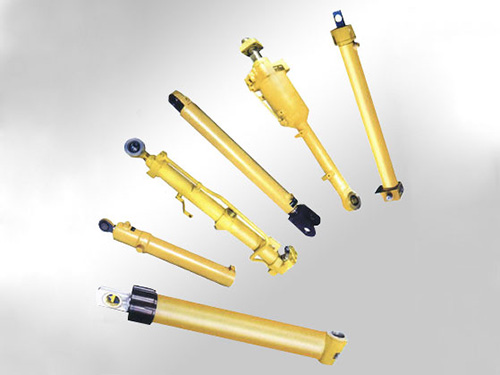
pneumatic cylinder — an air cylinder, cylinder in the trade — converts the energy of compressed air into linear motion. Air at pressure enters one side of the piston, pushes it along the tube, and moves the rod. When the air is vented or reversed, the cylinder returns. That is the whole principle: no pumps, no return lines, no oil.
Working Principle
Force equals pressure times piston area. At typical shop pressure of 6–7 bar, a 63 mm bore gives about 2 kN of push and a 100 mm bore about 3.8–4.4 kN. Because air is compressible, pneumatic motion is soft and springy — a feature when you want compliance, a limitation when you need to hold a position under load. Speed is set by flow control valves, and the stroke is cushioned at the ends to avoid hammering.
Common Types of Pneumatic Cylinders
Single-acting — air pushes one way, a spring returns the piston. Simple, cheap, limited stroke.
Double-acting — air pushes and pulls. The most common type in automation.
Rodless cylinders — the piston moves a carriage along the outside of the tube; used where stroke is long and space is tight.
Compact and short-stroke cylinders — small bores and travels for clamping and pushing in confined spaces.
Guided cylinders — with integrated guide rods to carry side loads without wearing the bore.
Rotary actuators — air pressure converted into a turning motion instead of linear travel.
Why the Barrel Matters in a Pneumatic Cylinder
The barrel is what the piston rides on, and in a pneumatic cylinder it does double duty: it must keep the piston moving freely for millions of cycles, and it often has to be light and compact. Bore surface quality decides friction and seal wear.
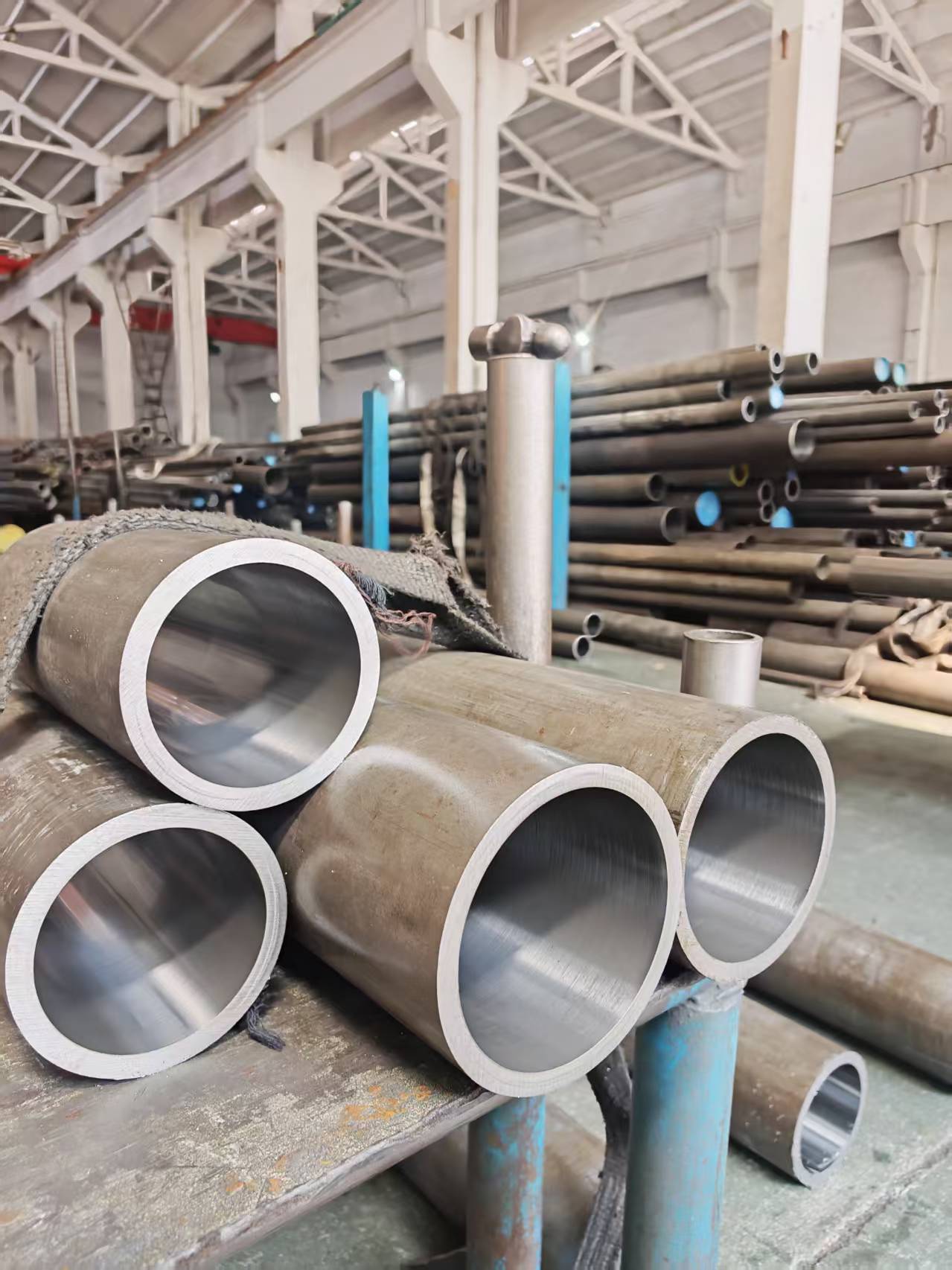
Many pneumatic cylinders use aluminium tube with a smooth anodized bore. Steel tube is used where strength, stiffness or corrosion resistance matters, and precision steel barrels are the standard for heavier pneumatic cylinders. Wherever it is made, the bore has to be round, straight and smooth — a poor bore shows up as stiction at start-up and short seal life. That is why the same honed and rolled tube technology used for hydraulics also goes into quality pneumatic cylinders.
Pneumatic vs Hydraulic Cylinders
Hydraulics run at 10 to 50 times the pressure of pneumatics, which is why hydraulic barrels are heavier and why hydraulic cylinders can push so much harder. For a full comparison of force, speed, precision and cost, see our article on hydraulic vs pneumatic cylinders. The short version: air for speed and simplicity, oil for force and control.
How to Specify a Pneumatic Cylinder
Bore and stroke — sized from the force and travel you need, with a margin.
Working pressure — match the cylinder rating to the actual shop air supply.
Mounting style — foot, flange, clevis or trunnion, matching the machine structure.
Rod end and load — how the rod connects to the load, and whether side loads need a guided version.
Environment — temperature, moisture, washdown and dirt decide the seal and barrel materials.
Sensors and cushioning — position sensing and end-of-stroke damping where the cycle demands them.
FAQ
Q: What pressure do pneumatic cylinders usually run at?
Most plants run 6–8 bar. Check the cylinder's rating against your actual supply, especially at the ends of long air lines where pressure drops.
Q: Why is my pneumatic cylinder sticking?
Common causes: a scored or dirty bore, dried-up lubrication, a bent rod, or side loads the cylinder was never designed for. A smooth, true bore prevents most of them.
Q: Can a pneumatic cylinder hold a load like a hydraulic one?
Not reliably. Air compresses, so a pneumatic cylinder cannot hold position stiffly under a varying load. Use hydraulics when holding is the requirement.
Q: Does Tengye make pneumatic cylinder barrels?
Yes — precision pneumatic cylinder barrels are part of the product range, machined from cold drawn, honed or rolled tube in carbon steel, alloy steel or stainless.