Hydraulic Cylinder Vs Heavy-Duty Pneumatic Air Cylinder: Structure, Features And Industrial Applications
Release time:2026-07-27 Visits:710
A cylinder is a fundamental three-dimensional geometric shape defined by two parallel, congruent bases connected seamlessly by a continuous curved lateral surface. While circular bases are the most prevalent in industrial designs, cylindrical structures can feature any closed planar base shape to fit specialized functional requirements. The right circular cylinder stands as the most widely adopted form in mechanical engineering, boasting perfectly circular bases aligned perpendicularly with the central axis, delivering stable structural performance and consistent motion output. Both hydraulic cylinders and heavy-duty pneumatic air cylinders are engineered based on this classic cylindrical geometry, optimized with industrial-grade structures to convert fluid pressure energy into linear mechanical motion for automated and heavy-duty machinery operations.
Basic Structural Composition of Industrial Cylinders
Industrial
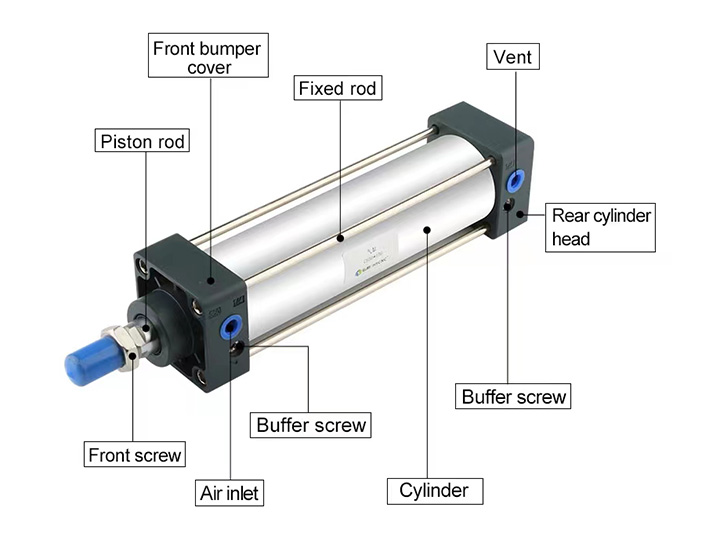
hydraulic cylinders and heavy-duty pneumatic air cylinders inherit the core geometric characteristics of standard cylinders while adding precision mechanical components for industrial work scenarios. Each unit consists of two parallel end bases (end caps), a cylindrical barrel serving as the curved connecting surface, and a built-in piston assembly that divides the internal cavity into independent working chambers. The symmetrical cylindrical structure ensures uniform force distribution along the axis, minimizing lateral friction and mechanical wear during reciprocating motion.
Heavy-duty cylinder models, whether hydraulic or pneumatic, adopt reinforced cylindrical barrel construction compared to standard civilian cylinders. Thick-walled metal barrels, high-strength end cap fasteners, and upgraded sealing systems enable these industrial cylinders to withstand continuous cyclic operation and high-pressure loads. The right circular cylindrical design remains dominant in heavy-duty models because its symmetrical structure eliminates stress concentration, ensuring long-term structural stability in harsh working environments such as construction sites, manufacturing workshops, and mining operations.
Working Principles of Heavy-Duty Pneumatic Air Cylinders
Heavy-duty pneumatic air cylinders are industrial actuators that utilize compressed air as the power medium to drive linear mechanical movement. Leveraging the basic cylindrical structure, the sealed internal cavity receives pressurized air (typically ranging from 80 to 120 PSI in standard industrial systems) to push the piston and drive the piston rod for forward and backward reciprocating motion. The two parallel base ends of the cylinder are equipped with air inlet and outlet ports, controlling air intake and exhaust to switch motion directions accurately.
Designed for heavy-duty operational demands, upgraded pneumatic cylinders feature thicker cylinder barrels, wear-resistant piston seals, and anti-corrosion surface treatments. These enhancements allow them to handle higher load capacities and more frequent continuous operation than ordinary pneumatic cylinders. As air is a compressible medium, heavy-duty pneumatic air cylinders deliver flexible, fast motion with excellent shock absorption performance, making them ideal for high-cycle, medium-load industrial tasks including automated assembly, material clamping, packaging operations, and light-duty mechanical pushing.
Another key advantage of heavy-duty pneumatic air cylinders lies in their clean and low-maintenance operation. The air-driven system produces no fluid pollution, with simple internal structures that reduce failure rates. The standardized cylindrical geometric design ensures high compatibility with mainstream industrial pneumatic systems, supporting quick installation, replacement, and modular integration into automated production lines.
Core Characteristics and Working Mechanism of Hydraulic Cylinders
Hydraulic cylinders are high-power industrial cylinders that take incompressible hydraulic oil as the transmission medium, adhering strictly to the right circular cylindrical geometric structure for ultra-stable high-load operation. Different from pneumatic cylinders, hydraulic systems operate under extremely high pressure, often exceeding thousands of PSI, which enables compact cylindrical structures to output tremendous driving force. The precise cylindrical fit between the piston and cylinder barrel eliminates internal pressure leakage, ensuring efficient conversion of hydraulic pressure into powerful linear thrust or tension.
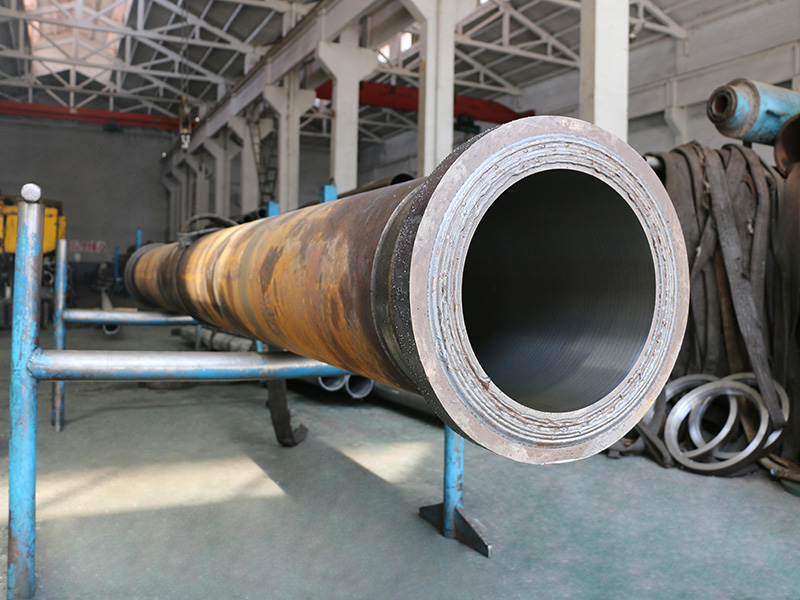
The heavy-duty structural design of hydraulic cylinders focuses on pressure resistance and load stability. The integral welded cylindrical barrel, high-precision honed inner wall, and high-pressure resistant sealing components allow hydraulic cylinders to sustain ultra-heavy loads ranging from tons to hundreds of tons. Thanks to the incompressibility of hydraulic oil, hydraulic cylinders can maintain stable static load holding without position drift, even during long-term load suspension, a critical feature for heavy machinery operation.
In terms of motion control, the standard cylindrical structure of hydraulic cylinders supports ultra-smooth stepless speed regulation. By adjusting the hydraulic oil flow rate, operators can precisely control the extension and retraction speed of the piston rod, achieving accurate positioning and stable motion output. This makes hydraulic cylinders indispensable core components for heavy engineering machinery, forging equipment, lifting platforms, and large-scale mechanical processing devices.
Key Differences Between Hydraulic Cylinders and Heavy-Duty Pneumatic Air Cylinders
The fundamental difference between the two industrial cylinders stems from their power medium, which further differentiates their performance parameters and application scenarios, despite sharing the same cylindrical geometric foundation. Heavy-duty pneumatic air cylinders rely on compressed air, featuring low operating pressure, fast response speed, clean operation, and low overall cost. Their compressible power medium determines that they are more suitable for medium-light load, high-frequency cyclic work with low requirements for static load holding.
Hydraulic cylinders, powered by incompressible hydraulic oil, achieve far higher pressure and force output in the same cylindrical volume. They excel in heavy-load driving, precise motion control, and stable static load maintenance, though they require more complex auxiliary systems including hydraulic pumps, oil filters, and oil circuits. Additionally, hydraulic cylinders have higher requirements for sealing performance of the cylindrical structure to prevent hydraulic oil leakage, while pneumatic cylinders allow minor air leakage with negligible impact on overall system performance.
In terms of durability and environmental adaptability, both heavy-duty cylinders adopt reinforced cylindrical structures for harsh environments. Pneumatic cylinders perform better in dusty, dry working conditions with lower maintenance difficulty, while hydraulic cylinders are more suitable for high-load, high-strength continuous operation scenarios, with better resistance to impact and pressure impact.
Industrial Application Scenarios of Heavy-Duty Industrial Cylinders
Heavy-duty pneumatic air cylinders are widely applied in automated manufacturing industries. Their fast response, convenient installation, and clean operation make them the preferred actuator for automated assembly lines, mechanical clamping mechanisms, sorting equipment, and light-duty handling machinery. Standardized cylindrical specifications support mass production and modular installation, greatly improving the integration efficiency of industrial automation systems.
Hydraulic cylinders dominate heavy engineering and heavy industrial fields. Excavators, cranes, loaders, and other construction machinery rely on high-power hydraulic cylinders to complete lifting, telescoping, and excavation operations. In industrial manufacturing, hydraulic cylinders are used for metal forging, stamping, pressure forming, and heavy workpiece lifting, providing stable and powerful power support for high-load mechanical processing.
With the upgrading of industrial manufacturing standards, both hydraulic cylinders and heavy-duty pneumatic air cylinders are continuously optimized in cylindrical structure design. Slimmer high-strength cylindrical barrels, more durable sealing structures, and higher motion precision have further expanded their application boundaries, enabling them to adapt to more refined, high-efficiency, and high-reliability industrial production and engineering operation needs.