Drawn Pipe: Manufacturing Technology, Performance And Industrial Applications
Release time:2026-07-06 Visits:711
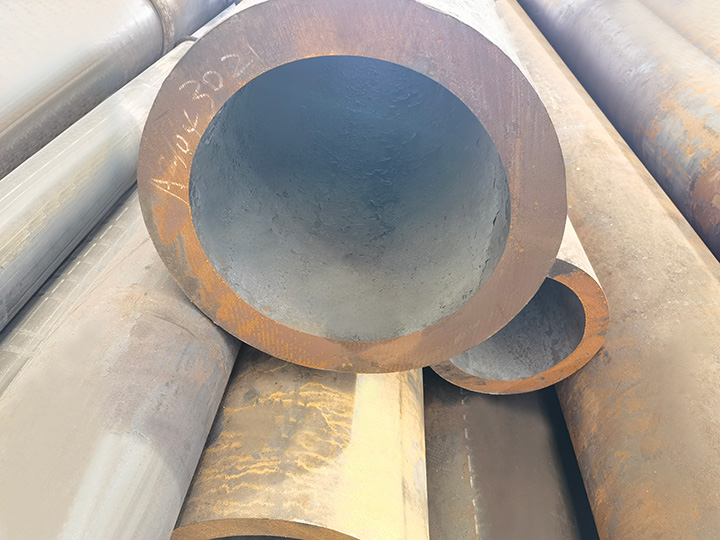
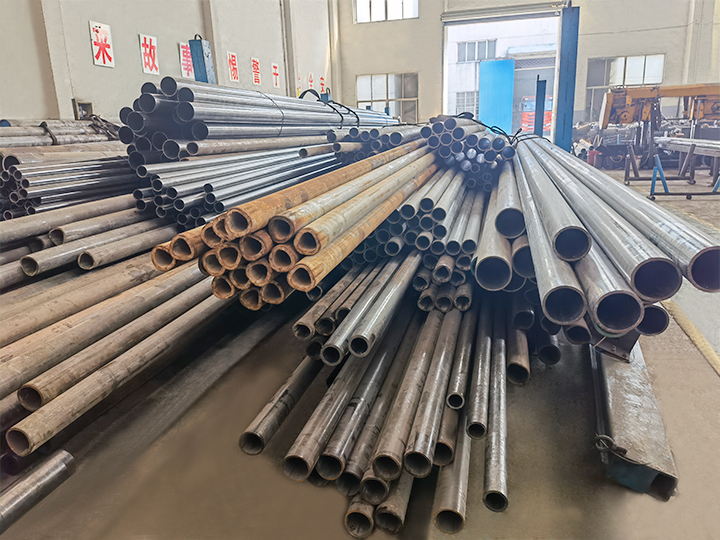
Drawn pipe, a high-precision seamless metal tube produced by cold or hot drawing processes, is a critical component in various industrial fields. Its manufacturing process emphasizes dimensional accuracy and mechanical property optimization, making it suitable for scenarios requiring reliable load-bearing, corrosion resistance and precise assembly. This article concisely elaborates on its core characteristics, manufacturing technology, material selection, typical applications and quality control.
1. Core Characteristics and Performance Advantages
Drawn pipes are distinguished by superior dimensional precision, with inner/outer diameter tolerance up to H7-H8 and surface roughness Ra≤0.4μm. The drawing process enhances their tensile strength, hardness and wear resistance, while ensuring uniform wall thickness and structural integrity. They also exhibit good toughness, enabling them to withstand alternating loads in industrial operations.
2. Manufacturing Technology and Material Selection
The core manufacturing process includes blank preparation, drawing (cold or hot), heat treatment (annealing, quenching-tempering) and finish machining. Cold drawn pipes offer higher precision, while hot drawn pipes are suitable for larger sizes. Precision dies and real-time process control ensure consistent product quality.
Common materials include 45# carbon steel, 40Cr/27SiMn alloy steel and 304/316L stainless steel. Material selection is determined by working conditions, such as high pressure, corrosion or high temperature, with optional surface treatments (chrome plating, nitriding) to enhance performance.
3. Typical Industrial Applications
Drawn pipes are widely used in hydraulic systems, precision machinery, automotive components, aerospace parts and instrumentation. They serve as key parts in hydraulic cylinders, precision shafts and fluid transmission pipelines, supporting stable operation in metallurgical, engineering and high-end manufacturing industries.
4. Quality Control and Maintenance
Strict quality control involves dimensional inspection, ultrasonic/eddy current defect detection and mechanical performance testing. Maintenance focuses on anti-corrosion storage, regular surface cleaning and timely repair of scratches to extend service life.
Conclusion
As a high-performance seamless tube, drawn pipe plays an irreplaceable role in modern industry. Its advanced manufacturing technology and excellent performance meet the precision and reliability requirements of diverse industrial scenarios.