Hydraulic Cylinder Design: Key Calculations And Common Mistakes
Release time:2026-11-30 Visits:0
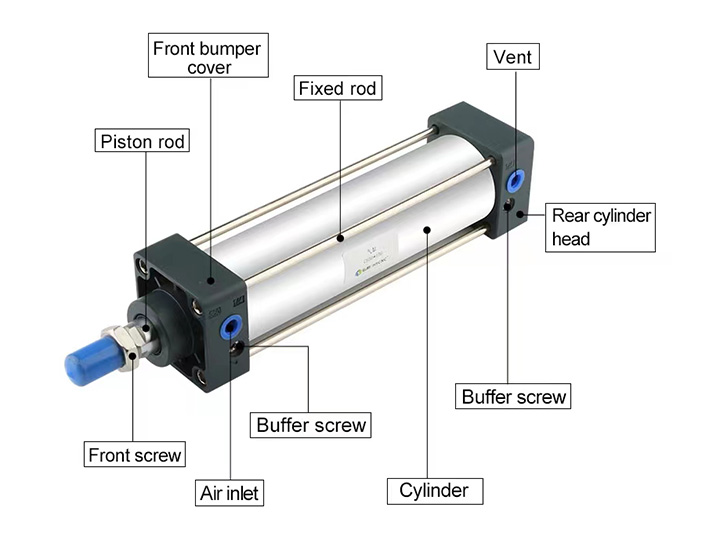
Designing a hydraulic cylinder is not a matter of picking a big tube and hoping. Every dimension is a decision: bore for force, rod for buckling, wall for pressure, seals for the fluid, mounts for the load. Get the chain of calculations right and the cylinder lasts; skip one link and it fails in the field. Here is the design path used when developing custom cylinders, in plain order.
Define the Duty
Load, speed, stroke, pressure, cycles per hour, temperature, fluid, environment. Write it down before touching a calculator. Half of all cylinder failures trace back to a duty cycle that nobody actually defined — a cylinder chosen for a gentle press ends up on a shock-loaded crusher, and nobody can explain why the seals keep failing.
Size the Bore
Force = pressure × area. Decide the working pressure, convert to N/mm², divide the required force by it to get the piston area, and solve for the bore. Add 10–20% for friction, wear and pressure drop. Round up to a standard bore — 40, 50, 63, 80, 100, 125, 160 mm — because non-standard bores cost money and time.
Check the Rod for Buckling
Long rods fail by buckling, not by crushing. Use the Euler buckling formula for slender rods, or the manufacturer's load-stroke charts, and keep a safety factor of at least 2 on the critical load. Remember that the fully extended position is usually the worst case — that is when the rod is longest and the load has the most leverage to bend it.
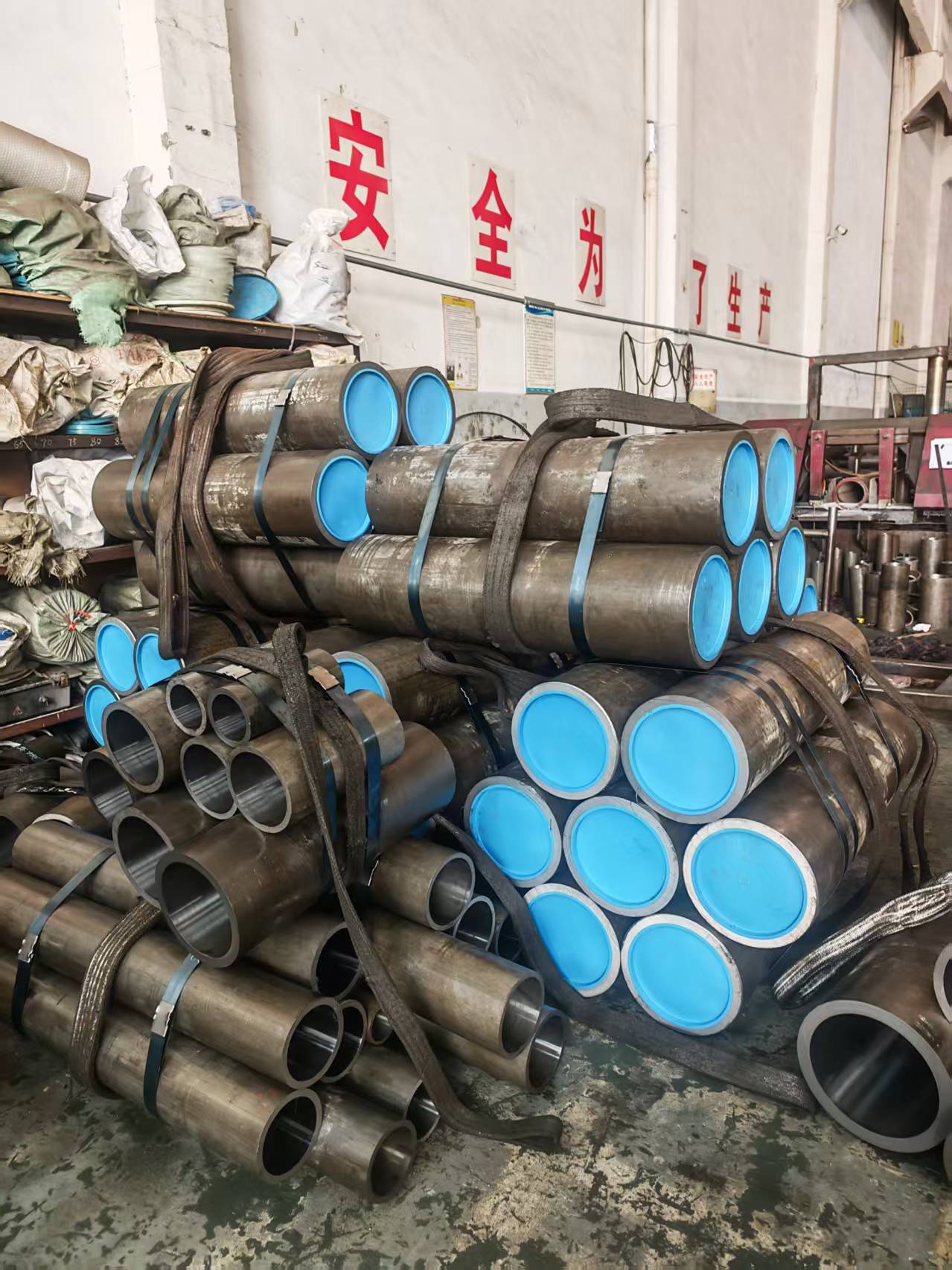
Set the Barrel Wall Thickness
For thin-walled barrels, the starting point is Barlow's formula: t ≥ P × D / (2 × σ_allowable), where D is the outside diameter and σ_allowable is the yield strength divided by a safety factor (commonly 2.5–4 depending on the standard and duty). For thick walls, use Lamé's equations, which account for the stress gradient through the wall. And never copy the wall thickness of a cylinder with the same bore but a different pressure — that is how barrels burst.
Design the End Caps and Ports
End caps are pressure parts, not covers. Check them as plates or flanges carrying the full system pressure, and size the ports for the required flow without excessive velocity — overspeed in ports causes pressure drop and cavitation damage. If the piston hits hard at end of stroke, add cushioning rather than relying on the seals to stop it.
Choose Seals and Grooves
Seal selection follows the fluid, temperature and pressure — see the companion guide on
hydraulic cylinder seals. Groove dimensions come from the seal manufacturer's standard, not from a guess, and the groove and counterface finishes matter as much as the seal itself. A perfect seal in a rough groove is a leaking seal.
Materials and Surface Finish
Bore Ra 0.2–0.4 µm for the barrel; rod Ra 0.2 µm with hard chrome; barrel material matched to pressure and environment — carbon steel for general duty, alloy steel (27SiMn, 35CrMo, 42CrMo) for high pressure, stainless for corrosion.
Five Common Design Mistakes
1.Oversized bore because nobody calculated the force — extra weight, extra oil flow, extra cost for nothing.
2.Rod undersized for the stroke — buckling at the worst possible moment.
3.Wall thickness copied from another cylinder — failure when the pressure is actually higher.
4.Seal grooves machined to the wrong tolerances or with rough finishes — leaks from day one.
5.A mounting that fights the load — side loads that score the bore and kill the seals.
Working with a Manufacturer
Send the duty cycle, not just an envelope drawing. A maker like Tengye Machinery will size the barrel, choose the material, machine the bore with SRB or honing equipment, fit the right seals, and build the cylinder in-house — standard or fully custom, batch or single piece. The best designs happen when the buyer shares the real load case and the builder brings the production knowledge.
FAQ
Q: What safety factor should a hydraulic cylinder use?
For barrel wall thickness, safety factors of 2.5–4 on yield are common, depending on the standard and how shock-loaded the duty is. Rod buckling safety factors are usually at least 2 on the critical load.
Q: Can a cylinder wall be too thick?
Yes, in a practical sense — it adds weight and cost without adding benefit, and very thick walls have higher stress gradients to manage. Size it, do not over-size it.
Q: What happens if I skip the buckling check?
A long rod under compression will bend sideways and jam or snap the cylinder. The stroke is the most dangerous part of the design.
Q: Will Tengye design a custom cylinder for my application?
Yes. Send the load, stroke, pressure, mounting and environment — the factory designs and builds special cylinders to your requirements.
Have a cylinder to design or re-engineer? Tengye Machinery builds custom cylinders from your duty data — +86 18912360300.