Booster Cylinder: Working Principle, Pressure Ratio And Applications
Release time:2026-11-23 Visits:0
Sometimes a plant has plenty of compressed air but not enough pressure. That is the job of a booster cylinder — also called an intensifier. It takes a low-pressure supply and multiplies it into a high-pressure burst using nothing more than two pistons of different sizes. No big pump, no separate hydraulic power unit.
What Is a Booster Cylinder?
A booster or intensifier is a pressure-multiplying device built around two connected pistons of different areas. A large-area piston is driven by low-pressure fluid — usually air — and the smaller-area piston delivers the multiplied pressure. The ratio of the two areas is the pressure ratio: a 5:1 booster fed with 8 bar delivers up to 40 bar on the output side, and a 10:1 unit pushes that to 80 bar.
How an Intensifier Works
Low-pressure air pushes the big piston. The connected small piston pushes on the output fluid with the same force but over a smaller area, so the pressure rises by the area ratio. The output is high pressure at low flow: pressure goes up, flow comes down, and the conservation of energy takes no days off.
One practical consequence: the high-pressure volume is limited by the small piston's stroke. A booster gives you a powerful push, but only for a short distance — which is exactly right for clamping, crimping and pressing, and wrong for long-stroke work.
Air-Hydraulic Boosters
The most common industrial form is the air-hydraulic booster (Pneumatic-hydraulic booster cylinder). Air drives the large piston; oil is compressed on the output side. The result is hydraulic-grade force from a shop-air supply, with the convenience of air — clean, quiet, no big pump — and the power of hydraulics, at least for short strokes and intermittent work. The barrel and seals on the oil side are built like a small hydraulic cylinder, because that is what they are.
Pressure Ratio and Output Force: A Worked Example
Take a booster with a 100 mm drive piston and a 40 mm output piston. Area ratio = (100/40)² = 6.25. Feed it 7 bar shop air, and the oil side reaches about 43 bar. On an output piston of, say, 50 mm, that gives roughly 8.5 kN of clamping force — respectable numbers from a standard air line.
Applications of Booster Cylinders
Clamping and workholding in machine tools and welding fixtures
Riveting, punching and crimping — short, hard strokes
Leak testing and pressure checking of parts and vessels
Injection and die-casting auxiliary functions
Small presses and forming jobs that do not justify a hydraulic power unit
Boosters vs a Hydraulic Power Unit
Boosters win on simplicity, cost and cleanliness for intermittent high pressure. The catch is volume and continuity: the output is a short high-pressure pulse, and the cycle rate is limited by how fast the air side can recover. If the job needs sustained flow at high pressure — a long stroke under full load, for example — a real hydraulic power unit is the honest answer, and a properly built hydraulic cylinder to go with it.
Choosing a Booster
Match three numbers: the pressure ratio you need (output pressure ÷ supply pressure), the high-pressure volume per cycle (output piston area × stroke), and the cycle rate. Then check the seals on the oil side for the actual output pressure — that is where cheap boosters fail. And remember the
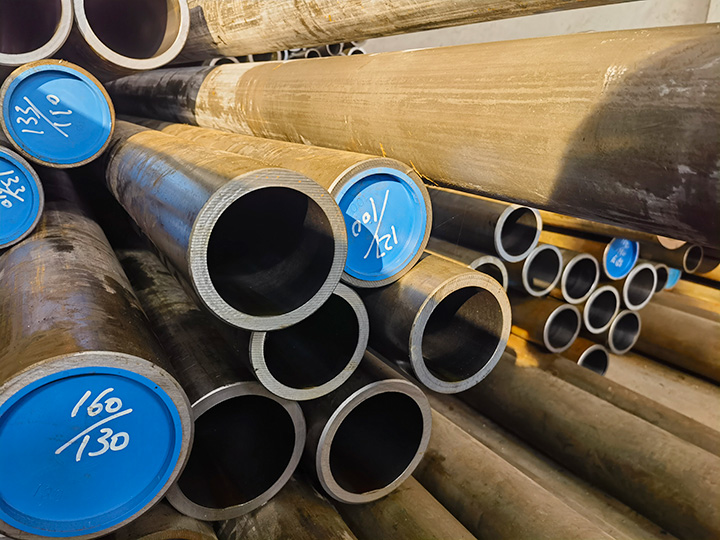
barrel and cylinder on the high-pressure side must be rated for the multiplied pressure, not the shop air pressure.
FAQ
Q: What is the difference between a booster and an intensifier?
None in practice — the terms are used interchangeably for a pressure-multiplying device. Booster is more common in industry; intensifier in hydraulics literature.
Q: Can a booster run continuously?
No. It delivers a high-pressure volume limited by its stroke, then must reset. Use it for short, intermittent work, not continuous flow.
Q: What pressure can a booster reach?
In principle, supply pressure × area ratio. Ratios of 3:1 to 10:1 are common, so 7 bar air can give anywhere from about 20 to 70 bar or more on the oil side.
Q: Does Tengye make high-pressure cylinders for booster applications?
The factory builds cylinders and barrels in alloy and carbon steel rated for elevated pressures. Discuss the output pressure and duty with them to get the right wall and seals.
Designing a clamping or pressing station on shop air? Talk to
Tengye Machinery about the high-pressure side — +86 18912360300.