1. Introduction
Pneumatic transmission technology, as one of the three major industrial transmission technologies (along with hydraulic transmission and mechanical transmission), has the characteristics of clean energy, fast response, simple system composition, and strong environmental adaptability. It is widely used in automated production lines, intelligent equipment, and mechanical manufacturing. Air cylinders, as the core executive component of the pneumatic transmission system, undertake the task of converting the pressure energy of compressed air into mechanical energy, and are the key link connecting the pneumatic control system and the executive mechanism.
Compared with hydraulic cylinders, air cylinders have the advantages of light weight, fast movement speed, no pollution, low cost, and easy maintenance, but their output force is relatively small and the control precision is slightly lower. In practical industrial applications, air cylinders are often used in scenarios requiring fast response, light load, and clean environment, such as material handling, workpiece clamping, automatic feeding and discharging, and mechanical motion control. With the continuous development of industrial automation technology, especially the integration of pneumatic technology with electronic technology, sensor technology, and PLC control technology, air cylinders are developing towards high precision, high speed, intelligence, and miniaturization, expanding their application scope to more high-end industrial fields.
At present, there are various types of air cylinders on the market, and their structural forms, performance parameters, and application scenarios vary greatly. For practitioners, a systematic understanding of the structural principles, types, and application characteristics of air cylinders is the basis for rational selection and standardized application. This paper focuses on the core knowledge of air cylinders, systematically sorts out the structural composition, working principles, classification standards, and application fields, and combines industry standards and practical engineering experience to provide a comprehensive technical guide, helping practitioners avoid selection mistakes and improve the efficiency and reliability of equipment operation.
2. Structural Composition and Working Principles of Air Cylinders
The basic structural composition of
air cylinders is relatively uniform, mainly including core components, sealing components, and auxiliary components. Each component undertakes a specific function, and the coordination of all components ensures the normal operation of the air cylinder. The working principle of air cylinders is based on the pressure difference of compressed air, realizing energy conversion through the action of air pressure on the piston.
2.1 Structural Composition
The typical structure of a standard air cylinder includes the following components, each of which plays an important role in ensuring the performance and reliability of the air cylinder:
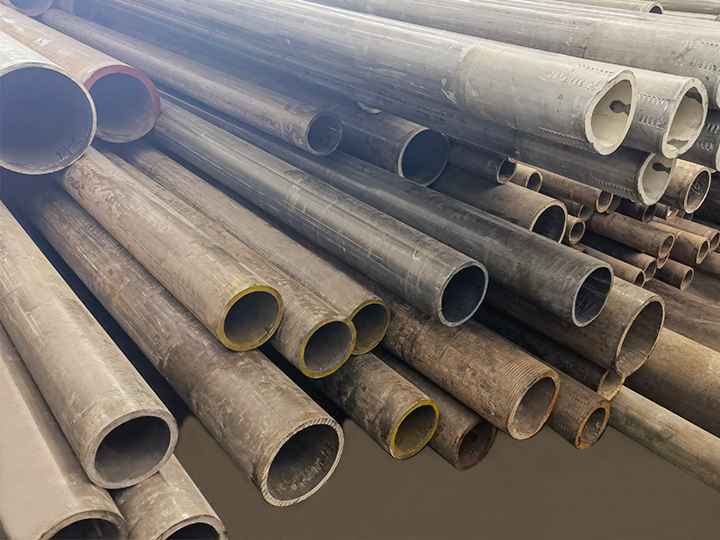
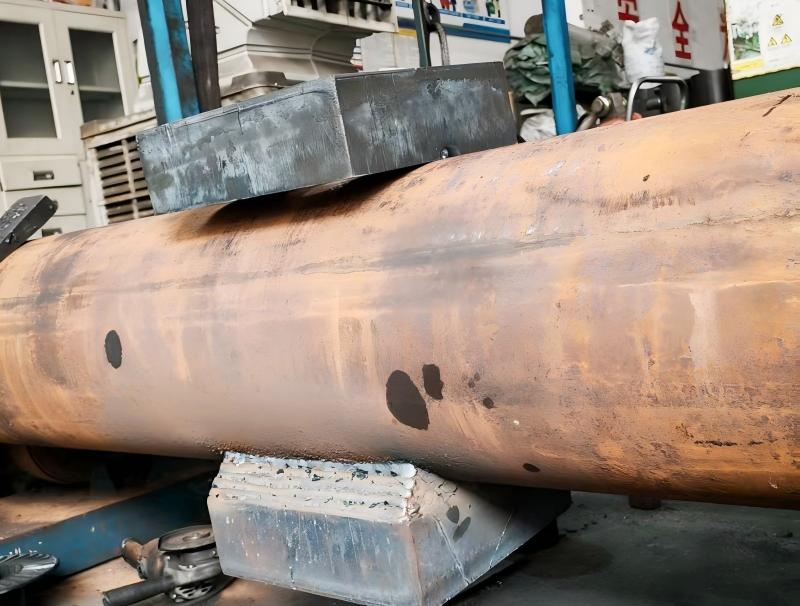
- Cylinder Barrel: The main body of the air cylinder, which is a cylindrical cavity used to accommodate the piston and compressed air. It is usually made of seamless steel pipe, aluminum alloy, or stainless steel, with high precision inner surface (finish Ra 0.8-1.6 μm) to ensure the smooth movement of the piston and good sealing performance. The cylinder barrel must have sufficient rigidity and pressure-bearing capacity to withstand the pressure of compressed air (usually 0.4-1.0 MPa, high-pressure air cylinders can reach 1.6 MPa).
- Piston: A key component that converts air pressure into mechanical force, installed inside the cylinder barrel and closely matched with the inner wall of the cylinder barrel. The piston is usually made of aluminum alloy, cast iron, or engineering plastic, and is equipped with piston seals (such as O-rings, Y-rings) to prevent air leakage between the two ends of the piston. The piston is connected to the piston rod through threads or pins, and transmits the mechanical force generated by air pressure to the load through the piston rod.
- Piston Rod: A component that transmits mechanical force from the piston to the external load, usually made of high-strength steel (such as 45# steel, 304 stainless steel) with chrome plating on the surface to improve wear resistance and corrosion resistance. The piston rod is guided by the guide sleeve in the end cover to ensure its linear movement accuracy, and is equipped with rod seals to prevent compressed air from leaking from the gap between the piston rod and the end cover.
- End Cover: Installed at both ends of the cylinder barrel (front end cover and rear end cover), used to seal the cylinder barrel and support the piston rod. The end cover is usually made of aluminum alloy or cast iron, and is equipped with air inlet and outlet ports to connect the pneumatic pipeline and control valve. The front end cover is equipped with a guide sleeve to guide the piston rod, and the rear end cover is usually equipped with a buffer device to reduce the impact when the piston moves to the end of the stroke.
- Sealing Components: The key to ensuring the sealing performance of the air cylinder, including piston seals, rod seals, and static seals (between the end cover and the cylinder barrel). The seals are usually made of nitrile rubber (NBR), fluorine rubber (FKM), or polytetrafluoroethylene (PTFE), which have good elasticity, wear resistance, and air tightness, and can adapt to the working pressure and temperature of the air cylinder (usually -20℃ to 80℃).
- Auxiliary Components: Including buffer devices (such as buffer sleeves, buffer valves), position detection devices (such as magnetic switches), and mounting brackets. The buffer device is used to absorb the impact energy when the piston moves to the end of the stroke, avoid rigid collision between components, and extend the service life of the air cylinder; the position detection device is used to detect the position of the piston (extended or retracted) and feed back signals to the control system to realize automatic control; the mounting bracket is used to fix the air cylinder to the equipment.
2.2 Working Principles
The working principle of air cylinders is based on Pascal’s Law and the pressure difference effect of gases: when compressed air enters one end of the cylinder barrel through the air inlet port, a pressure difference is formed between the two ends of the piston. Under the action of this pressure difference, the piston is pushed to move linearly, and the piston rod connected to the piston drives the external load to move. When the compressed air enters the other end of the cylinder barrel, the piston moves in the opposite direction, realizing the reciprocating linear motion of the air cylinder.
Taking a double-acting air cylinder (the most common type of air cylinder) as an example, its working process is as follows:
1. Extension Stroke: Compressed air is input into the rodless cavity (the cavity without the piston rod) of the air cylinder through the air inlet port of the rear end cover. The pressure of the compressed air acts on the end face of the piston, generating a thrust force F = P × A (where P is the pressure of the compressed air, A is the effective acting area of the piston). Under the action of this thrust force, the piston moves forward, driving the piston rod to extend, and the air in the rod cavity (the cavity with the piston rod) is discharged through the air outlet port of the front end cover.
2. Retraction Stroke: Compressed air is input into the rod cavity of the air cylinder through the air inlet port of the front end cover. The pressure of the compressed air acts on the other end face of the piston, generating a retraction force. Since the effective acting area of the piston in the rod cavity is smaller than that in the rodless cavity, the retraction force is usually smaller than the extension force. Under the action of the retraction force, the piston moves backward, driving the piston rod to retract, and the air in the rodless cavity is discharged through the air outlet port of the rear end cover.
For single-acting air cylinders, only one end of the cylinder barrel is equipped with an air inlet port, and the return of the piston is realized by the action of a spring or external load. Its working principle is simpler, but the output force is uneven, and it is suitable for scenarios requiring unidirectional motion and small load.
3. Classification of Air Cylinders
Air cylinders can be classified into different types according to different standards, such as structural form, motion type, control mode, working pressure, and application scenario. Each type of air cylinder has its own unique structural characteristics and applicable scope. The detailed classification is as follows:
3.1 Classification by Motion Type
According to the type of motion output by the air cylinder, it can be divided into linear motion air cylinders and rotary motion air cylinders, which are suitable for different motion control scenarios:
- Linear Motion Air Cylinders: The most widely used type of air cylinder, which outputs linear reciprocating motion. It is further divided into:
- Double-Acting Air Cylinder: Both extension and retraction strokes are driven by compressed air, with stable output force, uniform speed, and wide application range. It is widely used in material handling, workpiece clamping, automatic feeding and discharging, and other scenarios.
- Single-Acting Air Cylinder: Only one stroke is driven by compressed air, and the other stroke is reset by a spring or external load. According to the reset direction, it can be divided into single-acting extension type (spring reset) and single-acting retraction type (spring reset). It is suitable for scenarios requiring unidirectional motion, such as lifting, pushing, and positioning.
- Tandem Air Cylinder: Composed of two or more single-acting or double-acting air cylinders connected in series, which can output larger thrust force under the same air pressure. It is suitable for heavy-load scenarios requiring large output force, such as stamping, forging, and heavy material handling.
- Rotary Motion Air Cylinders: Output rotary motion (angle 0°-360°), which converts the linear motion of the piston into rotary motion through a crankshaft, gear, or rack-and-pinion mechanism. It is further divided into:
- Rack-and-Pinion Rotary Air Cylinder: The piston rod is equipped with a rack, which meshes with the gear on the output shaft. When the piston moves linearly, the rack drives the gear to rotate, realizing rotary motion. It has the advantages of accurate angle control and stable rotation, and is suitable for scenarios requiring precise rotary positioning, such as workpiece flipping, valve switching, and mechanical arm rotation.
- Crankshaft Rotary Air Cylinder: The piston is connected to the crankshaft through a connecting rod. When the piston moves linearly, the connecting rod drives the crankshaft to rotate, outputting rotary motion. It has a simple structure and large torque, and is suitable for scenarios requiring large rotary torque, such as material mixing, door opening and closing.
3.2 Classification by Structural Form
According to the structural form of the cylinder barrel and piston, air cylinders can be divided into the following types, which are suitable for different installation and working environments:
- Standard Cylinder: The most common structural form, with a cylindrical cylinder barrel, piston, and piston rod, and a simple structure, easy installation, and low cost. It is suitable for most general industrial scenarios, such as automated production lines, mechanical equipment, and material handling.
- Thin Cylinder: The cylinder barrel is thin-walled, small in size, light in weight, and suitable for installation in narrow spaces. It is widely used in compact equipment, such as precision instruments, electronic equipment, and small mechanical arms.
- Compact Cylinder: The overall structure is compact, the length of the cylinder barrel is short, and the installation space is small. It is suitable for scenarios with limited installation space, such as automatic equipment, medical equipment, and food processing equipment.
- Rodless Cylinder: No piston rod is provided, and the load is driven by the slider installed on the cylinder barrel. It has the advantages of long stroke, small space occupation, and smooth movement. It is suitable for long-stroke motion scenarios, such as material conveying, linear positioning, and automated assembly lines.
- Multi-Position Cylinder: Equipped with multiple air inlet and outlet ports and positioning devices, which can realize multi-position positioning of the piston. It is suitable for scenarios requiring precise multi-position control, such as automated assembly, workpiece positioning, and multi-step processing.
3.3 Classification by Control Mode
According to the control mode of the air cylinder, it can be divided into ordinary air cylinders and precision control air cylinders, which are suitable for different precision requirements:
- Ordinary Air Cylinders: Controlled by ordinary pneumatic valves (such as solenoid valves, manual valves), only realize on-off control (extension and retraction), and the speed and position control precision is low. It is suitable for scenarios with low precision requirements, such as simple material pushing, clamping, and feeding.
- Precision Control Air Cylinders: Equipped with precision control components (such as speed control valves, position sensors, servo valves), which can realize precise control of speed, position, and force. It is further divided into:
- Speed-Controlled Air Cylinder: Equipped with a speed control valve to adjust the movement speed of the piston, ensuring stable speed and avoiding impact. It is suitable for scenarios requiring stable speed, such as precision assembly, workpiece processing, and material conveying.
- Position-Controlled Air Cylinder: Equipped with a position sensor (such as magnetic switch, linear encoder) to detect the position of the piston in real time, and realize precise positioning through the control system. It is suitable for scenarios requiring high positioning precision, such as precision positioning, automated assembly, and electronic component processing.
- Force-Controlled Air Cylinder: Equipped with a force sensor to detect the output force of the air cylinder, and realize precise force control through the control system. It is suitable for scenarios requiring precise force control, such as workpiece clamping, stamping, and bonding.
3.4 Classification by Working Pressure
According to the working pressure of the air cylinder, it can be divided into low-pressure air cylinders, medium-pressure air cylinders, and high-pressure air cylinders, which are selected according to the load requirements:
- Low-Pressure Air Cylinders: Working pressure ≤ 0.4 MPa, with small output force, suitable for light-load scenarios, such as precision instruments, electronic equipment, and small workpiece handling.
- Medium-Pressure Air Cylinders: Working pressure 0.4-1.0 MPa, the most commonly used type, with moderate output force, suitable for most general industrial scenarios, such as automated production lines, mechanical equipment, and material handling.
- High-Pressure Air Cylinders: Working pressure > 1.0 MPa (usually 1.0-1.6 MPa), with large output force, suitable for heavy-load scenarios, such as stamping, forging, and heavy material handling.
4. Application Fields of Air Cylinders
Due to the advantages of simple structure, fast response, low cost, clean and environmental protection, air cylinders are widely used in various industrial fields, covering industrial automation, machinery manufacturing, automotive production, aerospace, medical equipment, food processing, and other fields. The specific application scenarios are as follows:
4.1 Industrial Automation Field
Industrial automation is the largest application field of air cylinders, mainly used in automated production lines, intelligent equipment, and robot systems, undertaking the tasks of material handling, workpiece clamping, automatic feeding and discharging, and motion control. Common application scenarios include:
- Automated Assembly Lines: Air cylinders are used to drive the movement of assembly components, such as workpiece positioning, component pressing, and automatic feeding. For example, in the electronic component assembly line, air cylinders are used to clamp and transport circuit boards, and press electronic components into the circuit boards;
- Material Handling Systems: Air cylinders are used to push, lift, and transport materials, such as conveying belts, manipulators, and lifting platforms. For example, in the logistics sorting system, air cylinders are used to push packages to the corresponding sorting channels;
- Workpiece Clamping Devices: Air cylinders are used to clamp workpieces during processing, ensuring the stability of the workpiece during processing. For example, in the machining center, air cylinders are used to clamp the workpiece on the fixture, preventing displacement during processing.
4.2 Machinery Manufacturing Field
In the machinery manufacturing field, air cylinders are widely used in various mechanical equipment, such as machine tools, stamping equipment, and packaging machinery, to realize the control of mechanical motion. Common application scenarios include:
- Machine Tools: Air cylinders are used to control the movement of the tool rest, workpiece clamping, and automatic feeding. For example, in the lathe, air cylinders are used to clamp the workpiece and push the tool rest to move;
- Stamping Equipment: Air cylinders are used to drive the stamping die to move, realizing the stamping and forming of workpieces. For example, in the small stamping machine, air cylinders are used to provide stamping force, stamping metal sheets into the required shape;
- Packaging Machinery: Air cylinders are used to control the packaging process, such as bag opening, filling, sealing, and cutting. For example, in the automatic packaging machine, air cylinders are used to open the packaging bag, push the material into the bag, and seal the bag mouth.
4.3 Automotive Production Field
The automotive production field has high requirements for automation and production efficiency, and air cylinders are widely used in various links of automotive production, such as stamping, welding, assembly, and testing. Common application scenarios include:
- Automotive Stamping Line: Air cylinders are used to clamp the stamping die, feed the metal sheet, and take out the stamping part, ensuring the continuity and efficiency of the stamping process;
- Automotive Welding Line: Air cylinders are used to position and clamp the automotive body and components, ensuring the accuracy of the welding position. For example, in the robot welding line, air cylinders are used to clamp the automotive body to the welding fixture;
- Automotive Assembly Line: Air cylinders are used to assemble automotive components, such as installing doors, windows, engines, and tires. For example, air cylinders are used to lift the engine and install it into the automotive body.
4.4 Aerospace Field
In the aerospace field, air cylinders are used in aircraft, rockets, and other aerospace equipment, requiring high reliability, high precision, and strong environmental adaptability (high temperature, low temperature, high pressure). Common application scenarios include:
- Aircraft Control System: Air cylinders are used to control the movement of aircraft components, such as flaps, ailerons, and landing gear. For example, air cylinders are used to drive the landing gear to extend and retract during aircraft takeoff and landing;
- Rocket Launch System: Air cylinders are used to control the movement of rocket components, such as the opening and closing of the launch pad, the positioning of the rocket, and the separation of the rocket stages.
4.5 Other Application Fields
In addition to the above fields, air cylinders are also widely used in medical equipment, food processing, textile machinery, and other fields:
- Medical Equipment: Air cylinders are used in medical devices such as medical robots, surgical instruments, and diagnostic equipment, requiring high precision and cleanliness. For example, air cylinders are used to control the movement of the surgical robot arm, ensuring the accuracy of the surgical operation;
- Food Processing: Air cylinders are used in food processing equipment such as food packaging machines, food cutting machines, and food conveying machines, requiring clean and pollution-free. For example, air cylinders are used to control the cutting knife of the food cutting machine, ensuring the uniformity of food cutting;
- Textile Machinery: Air cylinders are used in textile equipment such as looms, spinning machines, and textile printing machines, to control the movement of textile components, such as yarn feeding, cloth pressing, and printing.
5. Selection Principles and Common Maintenance Methods of Air Cylinders
The rational selection and standardized maintenance of air cylinders are the key to ensuring their reliable operation and extending their service life. This section summarizes the selection principles and common maintenance methods of air cylinders, providing practical guidance for practitioners.
5.1 Selection Principles
When selecting air cylinders, it is necessary to comprehensively consider the working conditions, performance requirements, and application scenarios, and follow the following principles:
- Determine the Motion Type: According to the motion requirement of the load (linear or rotary), select linear motion air cylinders or rotary motion air cylinders. For linear motion, select double-acting or single-acting air cylinders according to whether bidirectional driving is required;
- Calculate the Output Force: According to the load size and working pressure, calculate the required output force of the air cylinder, and select the air cylinder with appropriate bore size (the larger the bore size, the larger the output force). The output force should be 1.2-1.5 times the load force to reserve a safety margin;
- Determine the Stroke: According to the movement distance of the load, select the air cylinder with appropriate stroke. The stroke should be slightly larger than the required movement distance to avoid insufficient stroke;
- Consider the Installation Space: According to the installation space of the equipment, select the air cylinder with appropriate structural form (standard cylinder, thin cylinder, compact cylinder, rodless cylinder);
- Determine the Control Precision: According to the control requirements (speed, position, force), select ordinary air cylinders or precision control air cylinders, and configure corresponding control components (speed control valves, position sensors);
- Consider the Working Environment: According to the working environment (temperature, humidity, corrosion, dust), select the air cylinder with appropriate material and sealing performance. For corrosive environments, select stainless steel air cylinders; for high-temperature environments, select high-temperature resistant seals.
5.2 Common Maintenance Methods
Regular maintenance of air cylinders can effectively reduce failures, extend service life, and ensure stable operation. Common maintenance methods include:
- Regular Inspection: Regularly check the air cylinder for air leakage, abnormal noise, and loose components. Check the sealing performance of the seals, and replace worn or damaged seals in time; check the piston rod for scratches, corrosion, and deformation, and repair or replace it if necessary;
- Lubrication Maintenance: For air cylinders requiring lubrication, regularly add lubricating oil (such as pneumatic lubricating oil) to the air inlet port to reduce friction between components and extend the service life of the piston, piston rod, and seals. Note that the lubricating oil should be compatible with the seals;
- Cleaning Maintenance: Regularly clean the surface of the air cylinder and the air inlet and outlet ports to prevent dust, impurities, and other substances from entering the cylinder barrel, causing wear of components and air leakage;
- Pressure and Speed Check: Regularly check the working pressure and movement speed of the air cylinder, adjust the pressure regulating valve and speed control valve, and ensure that the pressure and speed are within the design range;
- Storage and Protection: For air cylinders not in use for a long time, discharge the compressed air in the cylinder barrel, clean the surface, apply anti-rust oil, and store them in a dry, clean, and ventilated environment to avoid corrosion and damage.