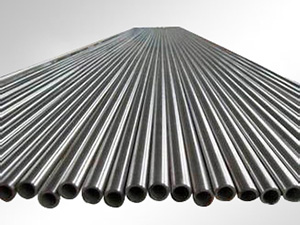
Precision Steel Tube Quality Standards: Ensuring Reliable Performance
Release time:2026-05-22 Visits:361
Quality standards ensure
precision steel tubes meet application requirements. Understanding relevant standards helps specify appropriate products and verify supplier capabilities. This guide covers the primary standards governing precision steel tube manufacturing.
Dimensional Tolerances
Dimensional accuracy determines tube suitability for many applications. Several tolerance standards define acceptable dimensional variations for precision tubes.
DIN 2391 defines tolerances for precision seamless steel tubes, primarily serving hydraulic and pneumatic applications. This standard specifies tolerances for outside diameter, wall thickness, and length. The tolerances are tighter than general industrial standards, reflecting the requirements of precision applications.
ISO 3305 covers dimensional tolerances for welded and seamless steel tubes. This international standard provides tolerance tables applicable to various industrial applications. The standard includes options for different tolerance levels.
American standards follow different approaches to tolerances. ASTM A519 specifies requirements for mechanical and pressure tubing. Dimensional tolerances in ASTM standards may differ from European equivalents.
Surface Quality Standards
Surface quality directly affects tube performance in sealing and fluid flow applications. Surface finish standards ensure consistent quality across productions.
Roughness measurement using profilometers quantifies surface texture. Ra values (arithmetical mean roughness) provide standard measurement of surface smoothness. Precision tubes typically require Ra values below 1.6μm for internal surfaces.
Visual inspection standards assess surface defects. Standards define acceptable and unacceptable defect types. This inspection ensures tubes are free from seams, laps, and other defects that compromise performance.
Mechanical Property Requirements
Mechanical testing verifies tube strength and ductility. Tensile testing determines yield strength, tensile strength, and elongation. These properties must meet application requirements for safe, reliable operation.
Hardness testing provides an alternate measure of material strength. Various scales (Rockwell, Brinell, Vickers) apply to different material types and sizes. Hardness values correlate with strength and wear resistance.
Flattening or bend tests verify ductility and soundness. These tests reveal internal defects and verify material suitable for forming operations. Standards specify test parameters for each tube type.
Non-Destructive Testing
Non-destructive testing (NDT) detects internal and surface defects without damaging the tube. These tests ensure material soundness for critical applications.
Ultrasonic testing (UT) detects internal defects using high-frequency sound waves. This method identifies cracks, laps, and other discontinuities. Testing follows ASTM E213 or equivalent standards.
Eddy current testing identifies surface defects in conductive materials. This method effectively detects cracks and other surface-breaking defects. Automated scanning provides comprehensive coverage.
Hydrostatic testing verifies leak-free performance under pressure. This test subjects the tube to internal pressure exceeding working pressure. Failure indicates weak points in the tube wall.
Chemical Composition Standards
Material specifications define acceptable chemical compositions for each tube grade. Analysis methods verify chemical composition meets requirements.
Spectrometric analysis determines element percentages in the material. This testing verifies the correct alloy composition. Requirements vary by grade, with carbon steel, alloy steel, and stainless steel each having specific ranges.
Material traceability documents the specific melt producing each tube. This documentation enables root cause analysis if problems arise. Quality systems maintain records enabling full material traceability.
Certification Requirements
Mill test certificates document compliance with specifications. These certificates report actual test results for each lot. Certificates provide evidence of quality for receiving inspection and regulatory compliance.
Third-party inspection agencies provide independent verification of quality. These agencies perform witness testing and inspection. This service adds confidence for critical applications.
Industry-specific certifications may be required for certain applications. IATF 16949 serves automotive suppliers. AS9100 applies to aerospace applications. ISO 9001 provides general quality management system certification.
Wuxi Tengye Quality Assurance
Wuxi Tengye maintains comprehensive quality systems meeting international standards. Our quality lab performs all required testing and inspection. Mill test certificates accompany every shipment.
Our quality processes begin with incoming material verification. Each production lot undergoes in-process inspection. Final inspection verifies finished product meets specifications.
Continuous improvement drives quality system development. Customer feedback and defect analysis identify improvement opportunities. Our quality team implements changes that enhance product reliability.
Selecting Appropriate Standards
Application requirements determine which standards apply. Fluid power applications typically reference DIN 2391 or equivalent. Mechanical applications may follow ASTM A519.
Consult with tube suppliers regarding standard requirements for your application. Suppliers help identify requirements and verify product compliance. The correct specification ensures product suitability.
Working with qualified suppliers simplifies standard compliance. Reputable manufacturers understand applicable standards and produce to meet them. Wuxy Tengye provides tubes meeting recognized quality standards worldwide.
Understanding quality standards enables confident product specification and verification. These standards protect applications from defect-related failures. Quality tubes from qualified suppliers deliver reliable performance throughout their service life.