1. Introduction
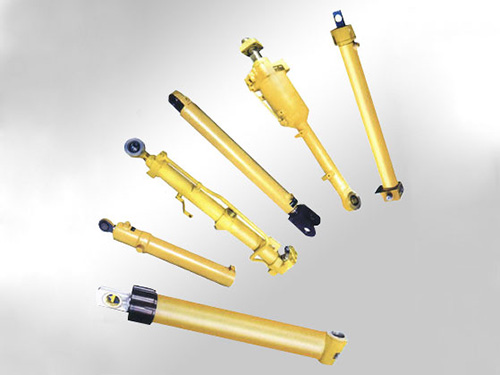
Hydraulic transmission technology, with its advantages of high power density, smooth transmission, stable operation, and easy automatic control, has been widely used in construction machinery, industrial automation, aerospace, marine engineering, and other fields. Hydraulic cylinders, as the executive terminal of hydraulic transmission systems, are responsible for converting the pressure energy of hydraulic oil into mechanical energy that can drive the load to move linearly or rotate, which is the key link connecting the hydraulic system and the working mechanism.
Compared with other linear actuators (such as electric cylinders, pneumatic cylinders), hydraulic cylinders have obvious advantages: they can output large thrust or pull force with a compact structure, adapt to harsh working environments (high temperature, high pressure, dust, humidity), and achieve precise speed and position control. However, hydraulic cylinders are complex in structure, and their performance is affected by factors such as hydraulic oil quality, working pressure, and operating environment. Improper design, incorrect selection, or lack of scientific maintenance will easily lead to cylinder failure, affecting the normal operation of the entire equipment and even causing safety accidents.
At present, there are various types of hydraulic cylinders, and their structural characteristics, performance parameters, and application scenarios vary significantly. A systematic analysis of the structural principles, classification, applications, and maintenance methods of hydraulic cylinders is of great significance for optimizing the selection of hydraulic cylinders, improving the reliability of hydraulic systems, reducing maintenance costs, and extending the service life of equipment. This paper focuses on the core content of hydraulic cylinders, providing a comprehensive and in-depth professional analysis and practical guidance for relevant practitioners.
2. Structural Principles of Hydraulic Cylinders
The
hydraulic cylinder realizes energy conversion and motion transmission based on Pascal’s principle, relying on the pressure of hydraulic oil acting on the effective area of the piston to generate thrust or pull force, and drive the piston rod to move linearly. The basic structure of a hydraulic cylinder is composed of a cylinder barrel, piston, piston rod, cylinder head, seal, and other auxiliary components. Each component cooperates closely to ensure the normal operation of the hydraulic cylinder. The working principle and structural composition are detailed as follows:
2.1 Core Working Principle
The working principle of hydraulic cylinders is based on Pascal’s law: in a closed hydraulic system, the pressure applied to any point of the static liquid is transmitted equally to all points of the liquid. When hydraulic oil with a certain pressure is input into the hydraulic cylinder, the oil acts on the piston (or plunger) to generate a force F = P × A, where F is the output force, P is the pressure of the hydraulic oil, and A is the effective acting area of the piston. Under the action of this force, the piston drives the piston rod to move linearly, converting hydraulic energy into mechanical energy to drive the load to work.
According to the direction of oil input, hydraulic cylinders can realize forward and reverse movement: when hydraulic oil is input into the rodless cavity (the cavity without the piston rod), the piston is pushed to move forward, and the piston rod extends to output thrust; when hydraulic oil is input into the rod cavity (the cavity with the piston rod), the piston is pushed to move backward, and the piston rod retracts to output pull force. The speed of the piston rod is determined by the flow rate of the hydraulic oil input into the cylinder, which can be adjusted by controlling the flow rate of the hydraulic valve.
2.2 Structural Composition
A standard hydraulic cylinder is composed of core components and auxiliary components, each of which undertakes specific functions to ensure the sealing, stability, and reliability of the cylinder. The detailed composition is as follows:
2.2.1 Core Components
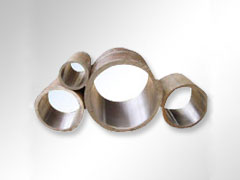
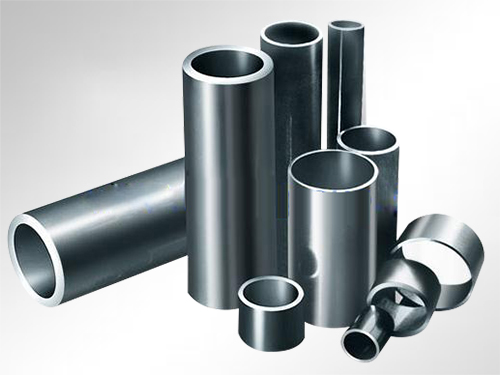
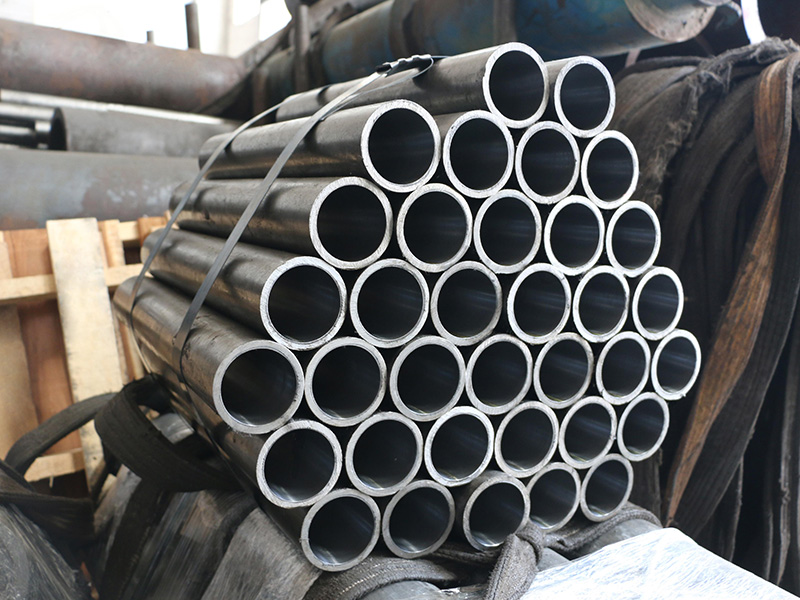
- Cylinder Barrel: The main body of the hydraulic cylinder, which is a cylindrical cavity used to store hydraulic oil and guide the movement of the piston. It is usually made of high-strength seamless steel pipe, and the inner surface is precision honed to ensure high dimensional accuracy and surface roughness, reducing friction between the piston and the cylinder barrel. The cylinder barrel must have sufficient strength and rigidity to withstand the high pressure of hydraulic oil (usually 10-35 MPa, even higher for high-pressure cylinders).
- Piston: Installed inside the cylinder barrel, it is the key component that converts hydraulic pressure into mechanical force. The piston is closely matched with the cylinder barrel, and a seal is installed on the piston to prevent hydraulic oil from leaking between the rodless cavity and the rod cavity. The piston is usually made of cast iron, steel, or aluminum alloy, and its structure is designed according to the working pressure and load requirements (such as integral piston, combined piston).
- Piston Rod: Connected to the piston, it extends out of the cylinder head to transmit the mechanical force generated by the piston to the load. The piston rod is usually made of high-strength alloy steel, and the surface is treated with chrome plating or nitriding to improve wear resistance and corrosion resistance. The end of the piston rod is usually designed with a thread, flange, or pin hole to connect with the load.
- Cylinder Head: Installed at both ends of the cylinder barrel, it is used to seal the cylinder barrel and guide the movement of the piston rod. The cylinder head at the rod end is equipped with a guide sleeve to ensure the coaxiality of the piston rod and reduce wear; the cylinder head at the rodless end is usually equipped with an oil inlet and outlet to connect the hydraulic pipeline. The cylinder head is fixed to the cylinder barrel by bolts, threads, or welding, ensuring reliable sealing.
2.2.2 Auxiliary Components
- Sealing Components: The key to ensuring the sealing performance of the hydraulic cylinder, including piston seals, rod seals, and static seals. Piston seals prevent oil leakage between the piston and the cylinder barrel; rod seals prevent oil leakage between the piston rod and the cylinder head; static seals (such as O-rings, gaskets) are used between the cylinder barrel and the cylinder head, and between the guide sleeve and the cylinder head to prevent oil leakage. Common seal materials include nitrile rubber (NBR), fluorine rubber (FKM), and polyurethane (PU), which are selected according to the working pressure, temperature, and hydraulic oil type.
- Guide Sleeve: Installed in the rod end cylinder head, it guides the movement of the piston rod, ensures the coaxiality of the piston rod and the cylinder barrel, and reduces the wear of the piston rod and the rod seal. The guide sleeve is usually made of bronze, cast iron, or composite materials with good wear resistance.
- Buffer Device: Installed at both ends of the cylinder barrel, it is used to absorb the impact force when the piston moves to the end of the stroke, avoiding rigid collision between the piston and the cylinder head, and protecting the cylinder and load. Common buffer devices include buffer sleeves, buffer valves, and throttling holes.
- Exhaust Device: Used to discharge the air in the hydraulic cylinder. If air remains in the cylinder, it will cause unstable movement of the piston rod (such as crawling), noise, and reduced efficiency. Exhaust devices are usually installed at the highest point of the cylinder barrel or cylinder head, including exhaust valves, exhaust plugs, and exhaust ports.
- Hydraulic Interfaces: Including oil inlet and outlet ports, which are used to connect the hydraulic pipeline and the hydraulic valve. The interface type is usually thread (BSP, NPT) or flange, and the size is determined according to the flow rate and working pressure of the hydraulic cylinder.
3. Classification of Hydraulic Cylinders
Hydraulic cylinders can be classified from multiple dimensions according to structural form, movement direction, working pressure, and application scenarios. Different types of hydraulic cylinders have distinct structural characteristics and performance advantages, and are suitable for different working conditions. The specific classification is as follows:
3.1 Classification by Structural Form
This is the most common classification method, and hydraulic cylinders are mainly divided into three types: piston hydraulic cylinders, plunger hydraulic cylinders, and telescopic hydraulic cylinders:
- Piston Hydraulic Cylinders: The most widely used type of hydraulic cylinder, which can realize bidirectional movement and output thrust and pull force. According to the number of piston rods, it can be divided into single-rod piston cylinders and double-rod piston cylinders. Single-rod piston cylinders have different effective areas of the rodless cavity and rod cavity, so the output force and movement speed are different when extending and retracting; double-rod piston cylinders have the same effective areas of both cavities, so the output force and movement speed are the same when extending and retracting. They are widely used in industrial machinery, construction machinery, and automation equipment.
- Plunger Hydraulic Cylinders: Composed of a cylinder barrel, plunger, and cylinder head, it can only realize one-way movement (extension), and the retraction of the plunger relies on the load or external force (such as a spring, gravity). The plunger is in contact with the cylinder barrel with a small gap, and there is no seal between them, so the manufacturing precision is lower than that of piston cylinders, and the cost is lower. It is mainly used in scenarios that require large thrust and one-way movement, such as hydraulic presses, jacks, and lifting platforms.
- Telescopic Hydraulic Cylinders: Also known as multi-stage hydraulic cylinders, it is composed of multiple nested cylinder barrels (stages), which can realize long-stroke movement with a compact retracted length. The telescopic order is usually from the largest stage to the smallest stage, and the retraction order is from the smallest stage to the largest stage. It has the advantages of small retracted length and large extended stroke, and is mainly used in construction machinery (such as cranes, excavators), agricultural machinery, and aerospace equipment.
3.2 Classification by Movement Direction
According to the movement direction of the executive component, hydraulic cylinders can be divided into linear hydraulic cylinders and rotary hydraulic cylinders:
- Linear Hydraulic Cylinders: The most common type, which drives the load to perform linear reciprocating movement. Piston cylinders, plunger cylinders, and telescopic cylinders all belong to linear hydraulic cylinders, which are widely used in various fields that require linear motion.
- Rotary Hydraulic Cylinders: Also known as hydraulic motors, which convert hydraulic energy into rotary mechanical energy and drive the load to perform rotary movement. They have the advantages of high torque, stable rotation, and easy speed regulation, and are mainly used in scenarios that require rotary motion, such as rotary tables, winches, and hydraulic motors of construction machinery.
3.3 Classification by Working Pressure
According to the rated working pressure, hydraulic cylinders can be divided into low-pressure, medium-pressure, high-pressure, and ultra-high-pressure hydraulic cylinders, which are suitable for different pressure levels of hydraulic systems:
- Low-Pressure Hydraulic Cylinders: Rated working pressure ≤ 10 MPa, mainly used in light-load scenarios, such as small-scale automation equipment, hydraulic lifts, and household hydraulic tools.
- Medium-Pressure Hydraulic Cylinders: Rated working pressure 10-25 MPa, widely used in general industrial machinery, construction machinery (such as small excavators), and agricultural machinery.
- High-Pressure Hydraulic Cylinders: Rated working pressure 25-35 MPa, used in heavy-load scenarios, such as hydraulic presses, large excavators, and marine engineering equipment.
- Ultra-High-Pressure Hydraulic Cylinders: Rated working pressure > 35 MPa, used in special scenarios that require extremely large thrust, such as hydraulic breaking hammers, deep-sea equipment, and aerospace equipment.
3.4 Classification by Application Scenarios
According to the specific application fields, hydraulic cylinders can be divided into industrial hydraulic cylinders, construction machinery hydraulic cylinders, aerospace hydraulic cylinders, and marine hydraulic cylinders:
- Industrial Hydraulic Cylinders: Used in industrial automation, machine tools, hydraulic presses, and other equipment, with high precision, stable operation, and small size requirements.
- Construction Machinery Hydraulic Cylinders: Used in excavators, cranes, loaders, and other construction machinery, with high pressure, large thrust, and strong adaptability to harsh environments (dust, vibration, high temperature).
- Aerospace Hydraulic Cylinders: Used in aircraft landing gear, flaps, and other components, with high precision, light weight, high reliability, and strict requirements on material and manufacturing process.
- Marine Hydraulic Cylinders: Used in ship steering gear, anchor winches, and other equipment, with corrosion resistance, high pressure resistance, and adaptability to marine environments (high humidity, salt spray).
4. Applications of Hydraulic Cylinders
Hydraulic cylinders, with their advantages of high power density, stable operation, and precise control, are widely used in various industries. The specific application scenarios are detailed as follows, combining the characteristics of different types of hydraulic cylinders and industry needs:
4.1 Construction Machinery Industry
The construction machinery industry is the largest application field of hydraulic cylinders, and almost all construction machinery relies on hydraulic cylinders to realize movement and load transmission. Typical applications include:
- Excavators: Hydraulic cylinders are used to drive the boom, arm, and bucket to move, realizing excavation, lifting, and unloading operations. The boom cylinder, arm cylinder, and bucket cylinder are usually high-pressure piston cylinders or telescopic cylinders, which can output large thrust to cope with heavy loads.
- Cranes: Hydraulic cylinders are used to drive the boom lifting, luffing, and telescoping, and the outrigger cylinder is used to support the crane body to ensure stability during lifting. Telescopic hydraulic cylinders are widely used in the boom of cranes to achieve long-stroke telescoping with a compact structure.
- Loaders: Hydraulic cylinders are used to drive the bucket lifting and tilting, realizing loading and unloading of materials. The bucket cylinder and lifting cylinder are medium-pressure piston cylinders, which have the characteristics of fast response and stable operation.
4.2 Industrial Automation Industry
In industrial automation production lines, hydraulic cylinders are used to realize precise linear movement, positioning, and force control, improving production efficiency and product quality. Typical applications include:
- Machine Tools: Hydraulic cylinders are used in the clamping mechanism, feed mechanism, and tool changing mechanism of machine tools, realizing precise clamping of workpieces and stable feed movement. High-precision piston cylinders are usually used, which have high positioning accuracy (up to ±0.01 mm).
- Hydraulic Presses: Hydraulic cylinders are the core components of hydraulic presses, which output large thrust to realize stamping, forging, bending, and other processing operations. Plunger cylinders or high-pressure piston cylinders are usually used, with rated working pressure up to 35 MPa or higher.
- Automation Production Lines: Hydraulic cylinders are used in conveyor belts, manipulators, and other equipment, realizing linear feeding, pushing, and positioning of workpieces. Small and medium-pressure piston cylinders are widely used, which have the advantages of fast response and easy control.
4.3 Aerospace Industry
The aerospace industry has strict requirements on the reliability, precision, and weight of hydraulic cylinders. Hydraulic cylinders are mainly used in aircraft and spacecraft to realize key movements. Typical applications include:
- Aircraft Landing Gear: Hydraulic cylinders are used to drive the retraction and extension of the landing gear, ensuring the safety of aircraft takeoff and landing. High-precision, lightweight piston cylinders are used, which are made of high-strength alloy materials and have strict sealing and reliability requirements.
- Aircraft Flaps and Ailerons: Hydraulic cylinders are used to adjust the angle of flaps and ailerons, controlling the lift and attitude of the aircraft during flight. Small, high-precision piston cylinders are used, which have fast response and high control accuracy.
4.4 Marine Engineering Industry
Marine hydraulic cylinders need to adapt to harsh marine environments (high humidity, salt spray, vibration) and have high corrosion resistance and reliability. Typical applications include:
- Ship Steering Gear: Hydraulic cylinders are used to drive the rudder blade to rotate, controlling the direction of the ship. High-pressure piston cylinders are used, which have large torque and stable operation.
- Anchor Winches and Mooring Systems: Hydraulic cylinders are used to drive the winch to rotate, realizing the lifting and lowering of anchors and the mooring of ships. Rotary hydraulic cylinders (hydraulic motors) are usually used, which have high torque and easy speed regulation.
4.5 Other Application Fields
In addition to the above fields, hydraulic cylinders are also widely used in agricultural machinery (such as tractors, harvesters), medical equipment (such as hydraulic stretchers, surgical robots), and special equipment (such as hydraulic jacks, breaking hammers), playing an important role in improving work efficiency and reducing labor intensity.
5. Maintenance Guide for Hydraulic Cylinders
Scientific and standardized maintenance is the key to ensuring the stable operation of hydraulic cylinders, extending their service life, and reducing fault occurrence. The maintenance of hydraulic cylinders mainly includes daily inspection, regular maintenance, common fault diagnosis, and handling. The specific guide is as follows:
5.1 Daily Inspection (Before and After Operation)
Daily inspection is mainly to check the appearance, sealing, and movement status of the hydraulic cylinder, and find potential faults in time. The key inspection points are:
- Appearance Inspection: Check whether the cylinder barrel, piston rod, and cylinder head are damaged, deformed, or corroded; check whether the hydraulic pipeline and interface are loose or leaking.
- Sealing Inspection: Check whether there is oil leakage at the piston seal, rod seal, and static seal. If oil leakage is found, replace the seal in time to avoid affecting the performance of the hydraulic cylinder.
- Movement Status Inspection: Check whether the piston rod moves smoothly, whether there is jamming, crawling, or abnormal noise; check whether the stroke of the piston rod is normal, and whether the positioning is accurate.
- Hydraulic Oil Inspection: Check the oil level, color, and viscosity of the hydraulic oil. If the oil level is too low, add hydraulic oil of the specified type; if the oil is discolored, emulsified, or contains impurities, replace the hydraulic oil and clean the oil filter.
5.2 Regular Maintenance (Periodic Maintenance)
Regular maintenance is carried out according to the operation time and working conditions of the hydraulic cylinder, usually divided into monthly maintenance, quarterly maintenance, and annual maintenance. The key maintenance contents are:
5.2.1 Monthly Maintenance
- Clean the surface of the hydraulic cylinder, remove dust, oil stains, and other impurities, especially the surface of the piston rod, to avoid scratches and corrosion.
- Check the tightness of the bolts and nuts connecting the hydraulic cylinder and the load, and tighten them if they are loose.
- Check the exhaust device, open the exhaust valve to discharge the air in the cylinder, and ensure the smooth movement of the piston rod.
5.2.2 Quarterly Maintenance
- Disassemble the guide sleeve and rod seal, check the wear of the seal and guide sleeve, and replace them if they are worn or damaged.
- Check the piston and piston seal, remove the piston from the cylinder barrel, clean the inner surface of the cylinder barrel and the piston, and replace the piston seal if there is wear or leakage.
- Check the piston rod for bending, deformation, or surface damage. If the piston rod is bent, correct it; if the surface is scratched or corroded, repair it by polishing or chrome plating.
5.2.3 Annual Maintenance
- Completely disassemble the hydraulic cylinder, clean all components (cylinder barrel, piston, piston rod, guide sleeve, etc.), and check for wear, deformation, or damage. Replace the worn or damaged components.
- Check the cylinder barrel for internal wear, corrosion, or scratches. If the wear is serious, repair it by honing or replace the cylinder barrel.
- Replace all seals, and apply lubricating grease to the moving parts (piston, guide sleeve) to ensure smooth movement.
- Assemble the hydraulic cylinder, conduct pressure test and leak test, and ensure that the cylinder works normally without leakage.
5.3 Common Fault Diagnosis and Handling
Hydraulic cylinders are prone to faults such as oil leakage, piston rod jamming, crawling, and insufficient output force during operation. The common faults, causes, and handling methods are summarized as follows:
Common Faults
Main Causes
Handling Methods
Oil leakage at rod seal
1. Wear or damage of rod seal; 2. Scratches on piston rod surface; 3. Excessive hydraulic oil pressure; 4. Impurities enter the seal
1. Replace the rod seal; 2. Polish or repair the piston rod surface; 3. Adjust the hydraulic oil pressure to the rated value; 4. Clean the seal and hydraulic oil
Oil leakage between piston and cylinder barrel
1. Wear or damage of piston seal; 2. Internal wear of cylinder barrel; 3. Piston deformation
1. Replace the piston seal; 2. Repair or replace the cylinder barrel; 3. Replace the piston
Piston rod jamming or movement inflexible
1. Bending or deformation of piston rod; 2. Wear or jamming of guide sleeve; 3. Impurities in cylinder barrel; 4. Insufficient lubrication
1. Correct or replace the piston rod; 2. Replace the guide sleeve; 3. Clean the cylinder barrel and hydraulic oil; 4. Add lubricating grease
Piston rod crawling
1. Air in hydraulic cylinder; 2. Insufficient hydraulic oil flow; 3. Wear of seal or guide sleeve; 4. Uneven surface of cylinder barrel
1. Discharge the air in the cylinder; 2. Adjust the hydraulic oil flow; 3. Replace the seal or guide sleeve; 4. Repair the cylinder barrel surface
Insufficient output force
1. Low hydraulic oil pressure; 2. Leakage of hydraulic cylinder; 3. Wear of piston or cylinder barrel; 4. Blockage of hydraulic pipeline
1. Adjust the hydraulic oil pressure; 2. Repair the leakage part; 3. Replace the worn components; 4. Clean the hydraulic pipeline
5.4 Maintenance Precautions
- When disassembling and assembling the hydraulic cylinder, use special tools to avoid damaging the components; pay attention to the assembly sequence, and ensure that the seals are installed correctly (avoid reversing or damaging the seal).
- The hydraulic oil used must meet the specified grade and purity, and it is strictly prohibited to mix different types of hydraulic oil; the hydraulic oil should be replaced regularly, and the oil filter should be cleaned or replaced at the same time.
- During maintenance, keep the working environment clean, avoid impurities entering the hydraulic cylinder and hydraulic system, which may cause wear and blockage.
- After maintenance, conduct a pressure test and leak test on the hydraulic cylinder to ensure that the cylinder works normally without leakage before putting it into use.
- For hydraulic cylinders used in harsh environments (high temperature, high humidity, salt spray), strengthen daily inspection and maintenance, and take anti-corrosion measures (such as applying anti-corrosion paint to the surface).
6. Conclusion
Hydraulic cylinders are core executive components of hydraulic transmission systems, which realize the conversion of hydraulic energy to mechanical energy through the structural cooperation of cylinder barrel, piston, piston rod, and other components, and the working principle based on Pascal’s law. They have the advantages of high power density, stable operation, precise control, and strong adaptability to harsh environments, and are widely used in construction machinery, industrial automation, aerospace, marine engineering, and other fields.
This paper systematically classifies hydraulic cylinders from multiple dimensions such as structural form, movement direction, working pressure, and application scenarios, clarifies the characteristics and applicable scenarios of different types of hydraulic cylinders, and provides a basis for the rational selection of hydraulic cylinders. At the same time, the paper provides a comprehensive maintenance guide, including daily inspection, regular maintenance, common fault diagnosis, and handling methods, which is of great practical significance for ensuring the stable operation of hydraulic cylinders, extending their service life, and reducing maintenance costs.
With the continuous development of hydraulic technology, hydraulic cylinders are developing towards high precision, high pressure, lightweight, and intelligence. For relevant practitioners, mastering the structural principles, classification, and application characteristics of hydraulic cylinders, and strictly following the standardized maintenance guide, is crucial to improving the reliability and efficiency of hydraulic systems. In the future, with the integration of new technologies such as intelligent monitoring and big data, the design, application, and maintenance of hydraulic cylinders will be more intelligent and scientific, which will further promote the development of hydraulic transmission technology and provide strong support for the upgrading of various industries.