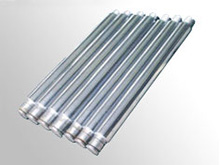
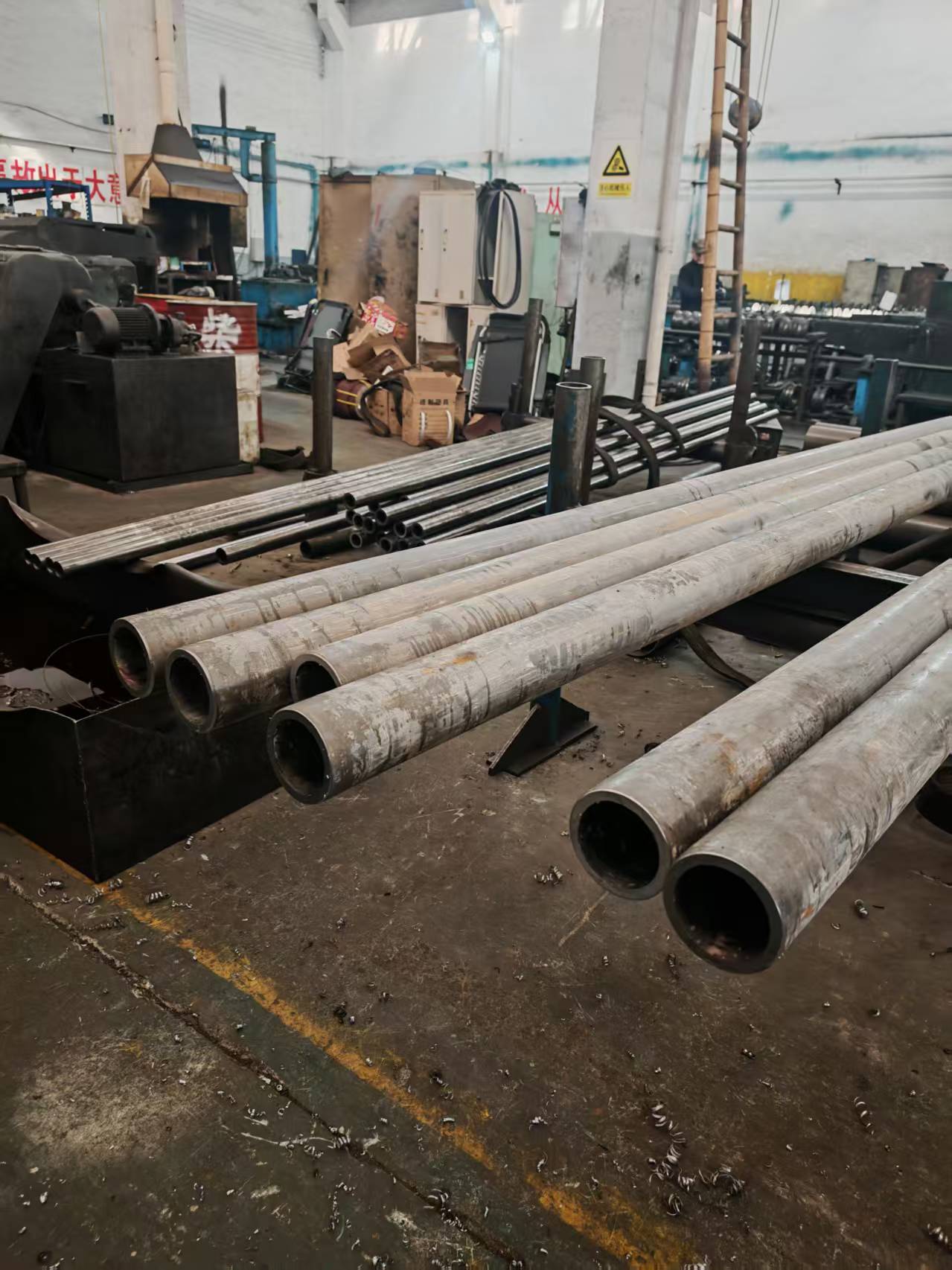
Seamless steel tubes (SSTs) are high-performance tubular components manufactured without welding seams, distinguished by exceptional structural integrity, pressure resistance, and consistent mechanical properties. Unlike welded steel tubes, their one-piece construction eliminates the risk of weld seam failure, making them irreplaceable in high-pressure, high-temperature, and corrosive industrial environments. Widely adopted in oil and gas, aerospace, hydraulic systems, and mechanical manufacturing, seamless steel tubes play a pivotal role in ensuring operational safety, enhancing equipment durability, and optimizing structural efficiency. This article elaborates on the core characteristics, refined manufacturing processes, and typical application fields of seamless steel tubes, providing practical insights for engineers, procurement specialists, and technical managers.
I. Core Characteristics of Seamless Steel Tubes
The unique value of
seamless steel tubes stems from their inherent structural advantages and tailored performance, which are unmatched by welded alternatives. Key characteristics include:
1. Superior Structural Integrity
As one-piece formed components, seamless steel tubes have no weld seams—eliminating the weakest link in welded tubes. This structure avoids defects such as weld porosity, cracks, and incomplete fusion, ensuring uniform load distribution and resistance to fatigue failure under repeated stress. They can withstand higher internal and external pressures, making them ideal for high-pressure fluid transmission and structural load-bearing applications.
2. Excellent Mechanical Properties
Seamless steel tubes undergo precise thermal and mechanical processing, resulting in consistent grain structure and mechanical performance across the entire tube body. Depending on material and heat treatment, they exhibit high tensile strength (up to 1500MPa for alloyed variants), good toughness, and wear resistance. Cold-worked seamless tubes further enhance hardness and dimensional stability, while hot-rolled variants maintain excellent ductility for forming and machining.
3. Precise Dimensional Control
Advanced manufacturing processes (cold drawing, cold rolling) enable tight dimensional tolerances for seamless steel tubes. Outer diameter (OD) tolerances can be controlled within ±0.01mm, wall thickness (WT) uniformity within ±5%, and concentricity within 0.02mm/m. Ultra-smooth surface finishes (Ra ≤ 0.8μm after honing) are achievable, reducing fluid friction and improving sealing performance in hydraulic and pneumatic systems.
4. Strong Corrosion and Temperature Resistance
By selecting appropriate materials (stainless steel, alloy steel, special corrosion-resistant alloys) and surface treatments, seamless steel tubes can adapt to harsh environments. They resist corrosion from acids, alkalis, saltwater, and industrial gases, and maintain stability at extreme temperatures—ranging from -200℃ (cryogenic applications) to 600℃ (high-temperature industrial processes).
5. Versatile Material Adaptability
Seamless steel tubes can be manufactured from a wide range of materials, including carbon steel, alloy steel, stainless steel, and special alloys (titanium, Hastelloy, Inconel). This flexibility allows customization to meet specific application requirements, from cost-effective general-purpose use to high-performance scenarios in aerospace and oil and gas industries.
II. Manufacturing Processes of Seamless Steel Tubes
The production of seamless steel tubes involves a series of refined processes, from raw material preparation to final finishing, with strict control over each stage to ensure quality. The main technologies are categorized into hot working and cold working processes, as follows:
1. Hot Working Processes
Hot working is the primary process for producing seamless steel tube blanks, conducted above the recrystallization temperature to improve ductility and reduce forming resistance.
- Hot Rolling (HR) Process: Raw steel billets (typically round bars of carbon steel, alloy steel, or stainless steel) are heated to 1100-1250℃ in a walking beam furnace—above the recrystallization temperature of steel. The heated billets are then pierced by a piercing mill (曼内斯曼 piercing mill is the most common) to form hollow cylindrical shells. These shells are further rolled by a mandrel mill or continuous rolling mill to adjust outer diameter, wall thickness, and roundness, followed by sizing, cooling, and straightening. Hot-rolled seamless tubes have high production efficiency, are suitable for medium-to-large diameters (10-1000mm), and serve as blanks for cold working processes. They are widely used in general industrial applications due to their cost-effectiveness.
- Hot Extrusion Process: Suitable for producing small-batch, special-shaped, or thick-walled seamless tubes. Heated steel billets are placed in an extrusion container and pushed through a die by a ram to form seamless tubes. This process is ideal for hard-to-deform materials (stainless steel, titanium alloys) and can produce tubes with complex cross-sections, but has lower production efficiency and higher costs than hot rolling.
2. Cold Working Processes
Cold working processes are used to refine hot-rolled blanks, improving dimensional accuracy, surface quality, and mechanical properties. Intermediate annealing is often required to eliminate work hardening.
- Cold Drawing (CD) Process: The most widely used cold working method for seamless steel tubes. Hot-rolled tube blanks are first pickled to remove oxide scales, coated with a lubricant (e.g., phosphate + soap) to reduce friction, and then drawn through a die with a mandrel at room temperature. This process reduces outer diameter and wall thickness while enhancing dimensional precision (tolerance up to ±0.01mm) and surface finish. Multiple drawing passes may be needed to achieve the desired specifications, with intermediate annealing (700-800℃) to restore ductility and eliminate internal stress. Cold-drawn seamless tubes are suitable for small-to-medium diameters (1-200mm) and are used in hydraulic systems, automotive components, and precision machinery.
- Cold Rolling (CR) Process: Utilizes a multi-roll cold rolling mill to deform tube blanks, offering higher precision than cold drawing. The process involves passing the blank through a set of rotating rolls that control outer diameter and wall thickness simultaneously. Cold-rolled seamless tubes have ultra-high dimensional accuracy, uniform mechanical properties, and smooth surfaces (Ra ≤ 0.4μm). They are suitable for small-diameter, thin-walled tubes (OD ≤ 50mm, WT ≤ 5mm) used in aerospace, medical equipment, and high-precision hydraulic systems, but require advanced equipment and have higher production costs.
3. Finishing Processes
All seamless steel tubes undergo post-processing to meet final application requirements:
- Heat Treatment: Annealing, quenching, and tempering to adjust mechanical properties (e.g., hardness, toughness, fatigue resistance) and eliminate internal stress from forming. For example, alloy steel seamless tubes are quenched and tempered to achieve high strength and toughness.
- Surface Treatment: Pickling, passivation, hard chrome plating, or galvanizing to improve corrosion resistance and surface finish. Honing or polishing is used for ultra-smooth surfaces in hydraulic cylinders and precision instruments.
- Dimensional Inspection and Cutting: Precision cutting (laser, sawing) to fixed lengths, followed by strict dimensional measurement using coordinate measuring machines (CMM), laser diameter gauges, and surface roughness testers to verify compliance with specifications.
- Non-Destructive Testing (NDT): Ultrasonic testing (UT) to detect internal defects, magnetic particle testing (MT) for surface cracks, and eddy current testing (ECT) for surface and near-surface defects—ensuring no hidden quality issues.
III. Typical Application Fields of Seamless Steel Tubes
Seamless steel tubes are widely used in industries requiring high reliability, pressure resistance, and precision. Their unique characteristics make them indispensable in the following fields:
1. Oil and Gas Industry
The oil and gas industry is the largest consumer of seamless steel tubes, which withstand extreme pressure, corrosion, and temperature in exploration, drilling, and transportation: Downhole Equipment (drill pipes, casing tubes, tubing) using high-strength alloy steel and corrosion-resistant alloys (Hastelloy) to resist downhole pressure (up to 100MPa) and corrosive fluids; Transmission Pipelines (oil and gas gathering lines) with hot-rolled seamless tubes for long-distance transportation;Refining Equipment (heat exchanger tubes, reactor tubes) resistant to high temperature and chemical corrosion.
2. Aerospace Industry
Aerospace applications demand ultra-high precision and reliability, making cold-rolled seamless tubes the preferred choice: Hydraulic and Pneumatic Systems (control tubes, fuel lines) using stainless steel or titanium alloy seamless tubes with dimensional tolerances within ±0.005mm; Engine Systems (exhaust tubes, cooling pipelines) with heat-resistant alloy seamless tubes that maintain stability at 500-600℃; Landing Gear Components requiring high strength-to-weight ratios and fatigue resistance.
3. Hydraulic and Pneumatic Systems
Seamless steel tubes are essential for power transmission in hydraulic and pneumatic equipment: Hydraulic Cylinders (cylinder barrels, piston rods) using cold-drawn and honed seamless tubes with ultra-smooth surfaces (Ra ≤ 0.8μm) to reduce friction and ensure tight sealing; Hydraulic Pipelines (for construction machinery, industrial presses) with high-pressure resistance (up to 63MPa) and dimensional stability;Pneumatic Systems (precision air tubes) with consistent inner diameter to ensure stable airflow.
4. Mechanical Manufacturing
In mechanical equipment, seamless steel tubes are used for critical load-bearing and transmission components: Machinery Spindles and Shafts requiring high concentricity and surface finish; Tooling and Fixtures (guide rails, drill sleeves) with dimensional stability; Automotive Components (engine oil pipelines, shock absorber cylinders, drive shafts) using cold-drawn seamless tubes of ST52, 45#, or 40Cr steel for durability and precision fit.
5. Energy and Power Industry
Seamless steel tubes play a key role in power generation and energy storage:Thermal Power Plants (boiler tubes, superheater tubes) using heat-resistant alloy seamless tubes that withstand high temperature and pressure; Nuclear Power Plants (coolant tubes) with corrosion-resistant stainless steel seamless tubes; Renewable Energy (wind turbine hydraulic tubes, solar thermal system pipelines) requiring reliability in outdoor environments.
6. Other High-End Applications
Additional fields include: Medical Equipment (stainless steel seamless tubes for surgical instruments and implantable components) with biocompatibility and ultra-high surface quality; Cryogenic Engineering (titanium alloy seamless tubes for liquid natural gas storage and transportation) resistant to low temperatures; Chemical Industry (pipes for acid, alkali, and solvent transmission) using corrosion-resistant seamless tubes.
IV. Conclusion
Seamless steel tubes, with their inherent structural advantages, excellent mechanical properties, and versatile adaptability, are foundational components in high-performance industrial applications. Their manufacturing processes—from hot rolling to precision cold working—are tailored to meet diverse accuracy and performance requirements, while their application scope spans critical sectors such as oil and gas, aerospace, and energy.
As industrial technology advances, the demand for high-precision, lightweight, and corrosion-resistant seamless steel tubes continues to grow. Innovations in intelligent manufacturing (real-time process monitoring) and advanced materials (high-strength low-alloy steels, composite materials) will further enhance the performance and application potential of seamless steel tubes. For professionals in industrial design, procurement, and maintenance, a deep understanding of seamless steel tubes’ characteristics, processes, and application scenarios is crucial to optimizing product reliability and operational efficiency.
"