1. Introduction
Pneumatic transmission technology, with its unique advantages of fast response, clean environmental protection, low cost and easy maintenance, has been widely used in various industrial automation fields. As the core executive component of pneumatic systems, pneumatic cylinders realize linear reciprocating motion by converting the pressure energy of compressed air into mechanical energy. However, standard pneumatic cylinders (such as single-acting, double-acting cylinders) have obvious limitations in applications with radial loads, offset loads or high precision positioning requirements—their piston rods are prone to bending, vibration or jitter under radial force, which affects the motion stability and service life of the cylinder.
Guide rod cylinders, also known as guided cylinders, solve the above problems by optimizing the structural design. They add one or two guide rods parallel to the piston rod, and connect the guide rods and the piston rod through a connecting plate (or piston), forming a stable guiding mechanism. This structural design not only retains the advantages of fast response and low cost of standard pneumatic cylinders, but also significantly improves the anti-bending, anti-torsion and load-bearing capabilities of the cylinder, making it suitable for more complex application scenarios.
With the continuous upgrading of industrial automation and the increasing demand for high-precision, high-stability mechanical equipment, the application scope of guide rod cylinders is expanding day by day. From precision clamping in CNC machine tools to material conveying in automated production lines, from small-sized guide rod cylinders in electronic equipment to large-tonnage guide rod cylinders in heavy-duty handling, guide rod cylinders play an irreplaceable role. However, due to the variety of guide rod cylinder types, specifications and performance parameters, the rational selection of guide rod cylinders according to actual engineering needs is crucial to ensuring equipment performance, reducing failure rates and controlling costs. This paper focuses on the core content of guide rod cylinders, providing a comprehensive and in-depth professional analysis and practical guidance for relevant practitioners.
2. Basic Composition and Classification of Guide Rod Cylinders
Guide rod cylinders are improved on the basis of standard double-acting pneumatic cylinders, with a more complex structure but more comprehensive functions. Their basic composition includes core components and auxiliary components, and they can be divided into different types according to structural forms and application requirements. A clear understanding of their composition and classification is the basis for mastering their working principles and selecting products.
2.1 Basic Composition
The structure of guide rod cylinders is mainly composed of core components and auxiliary components, and each component cooperates closely to ensure the stable and reliable operation of the cylinder. The detailed composition is as follows:
- Core Components:
- Cylinder Barrel: The main body of the guide rod cylinder, used to store compressed air and provide an installation space for the piston. It is usually made of high-strength aluminum alloy or carbon steel, with high dimensional accuracy and surface finish to ensure the smooth movement of the piston. The cylinder barrel is equipped with air inlet and outlet ports to connect the pneumatic pipeline and control valve.
- Piston and Piston Rod: The piston is installed inside the cylinder barrel, and the piston rod is connected to the piston through threads or pins, extending out of the cylinder head to transmit mechanical force. The piston is equipped with piston seals to prevent air leakage between the two cavities of the cylinder; the piston rod is usually made of high-strength alloy steel, and the surface is chrome-plated to improve wear resistance and corrosion resistance.
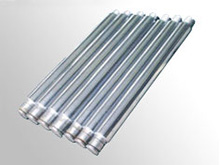
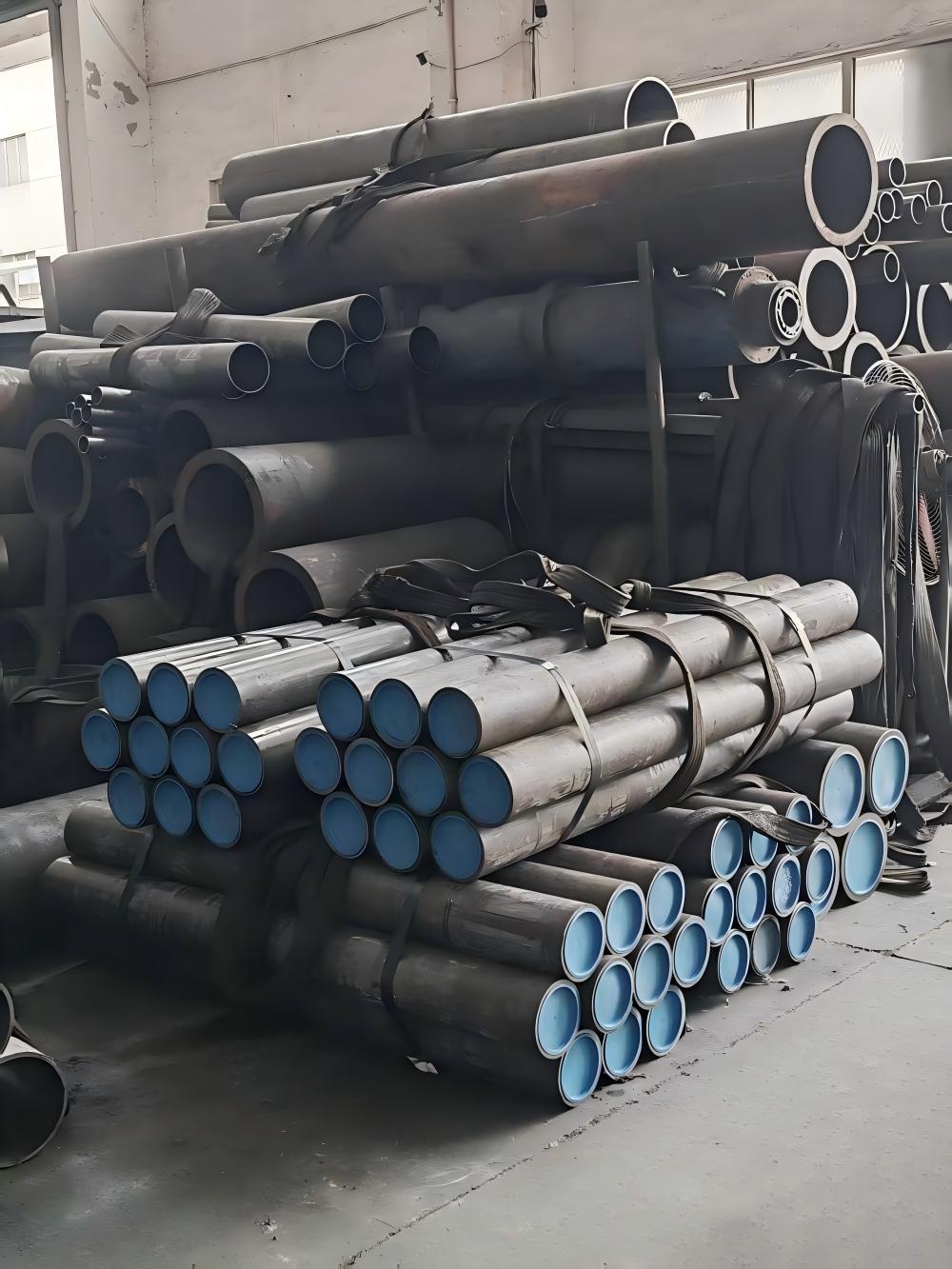
- Guide Rods: The core feature of guide rod cylinders, usually 1-2 pieces, parallel to the piston rod and symmetrically installed on both sides of the cylinder barrel. The guide rod is made of high-precision seamless steel pipe or alloy steel, with high straightness and surface finish, and is equipped with guide sleeves to ensure smooth linear movement. The guide rod and the piston rod are connected through a connecting plate, which can effectively bear radial loads and offset loads, preventing the piston rod from bending.
- Connecting Plate: Used to connect the piston rod and the guide rod, ensuring that the piston rod and the guide rod move synchronously. It is usually made of aluminum alloy or steel plate, with high rigidity to avoid deformation under load, ensuring the stability of the guiding mechanism.
- Auxiliary Components:
- Guide Sleeves: Installed at both ends of the guide rod, used to guide the movement of the guide rod, reduce friction between the guide rod and the cylinder head, and ensure the coaxiality of the guide rod and the piston rod. The guide sleeve is usually made of bronze, composite materials or self-lubricating materials, with good wear resistance and self-lubricating performance.
- Sealing Components: Including piston seals, rod seals and guide rod seals, which are key to ensuring the sealing performance of the cylinder. Common seal types include lip seals, O-rings, and combination seals, and the material is selected according to the working pressure, temperature and working environment (such as nitrile rubber NBR, fluorine rubber FKM).
- Buffer Devices: Installed at both ends of the cylinder barrel, used to absorb the impact force when the piston moves to the end of the stroke, avoid rigid collision between the piston and the cylinder head, and protect the cylinder components from damage. Common buffer devices include rubber buffers, hydraulic buffers and throttling buffers.
- Installation Accessories: Including flanges, foot brackets, trunnion brackets, etc., used to fix the guide rod cylinder to the equipment, and can be selected according to the installation space and application requirements.
- Position Detection Devices: Optional components, such as magnetic switches, used to detect the position of the piston (extended or retracted), and feed back signals to the control system to realize automatic control of the cylinder.
2.2 Classification of Guide Rod Cylinders
According to the number of guide rods, structural forms and installation methods, guide rod cylinders can be divided into the following types, each with its own characteristics and applicable scenarios:
- Single Guide Rod Cylinders: Only one guide rod is equipped, which is installed on one side of the piston rod. It has a compact structure and small installation space, suitable for scenarios with small radial loads and limited installation space, such as small-sized clamping mechanisms and precision positioning devices.
- Double Guide Rod Cylinders: Equipped with two guide rods, symmetrically installed on both sides of the piston rod. It has strong anti-bending, anti-torsion and load-bearing capabilities, and can bear larger radial loads and offset loads. It is the most widely used type of guide rod cylinder, suitable for most industrial automation scenarios, such as material conveying, workpiece clamping and stamping auxiliary.
- Slide Table Guide Rod Cylinders: Integrate the guide rod cylinder with a slide table, the guide rod and the slide table are integrated, and the piston rod drives the slide table to move linearly. It has higher positioning accuracy and stability, and is suitable for high-precision positioning, conveying and assembling scenarios, such as electronic component assembly lines and precision machining equipment.
- Compact Guide Rod Cylinders: Optimized structural design, smaller volume and lighter weight on the basis of ensuring performance, suitable for scenarios with extremely limited installation space, such as small-sized electronic equipment and precision instruments.
3. Working Principles of Guide Rod Cylinders
The working principle of guide rod cylinders is based on the basic principle of pneumatic transmission, which converts the pressure energy of compressed air into linear mechanical energy, and realizes stable linear reciprocating motion through the guiding effect of the guide rod. Its working mechanism is similar to that of standard double-acting pneumatic cylinders, but it has more stable motion performance due to the addition of the guide rod mechanism. The detailed working principle and process are as follows:
3.1 Basic Working Mechanism
Guide rod cylinders are usually double-acting cylinders, which have two air inlet and outlet ports (one for the rodless cavity and one for the rod cavity). The working process relies on the pressure difference of compressed air acting on the piston to generate thrust or pull force, and the guide rod and the piston rod move synchronously under the guidance of the guide sleeve, ensuring stable linear motion.
The core working formula is F = P × A, where F is the output force of the guide rod cylinder, P is the working pressure of compressed air (usually 0.4-0.8 MPa), and A is the effective acting area of the piston. The direction of the output force is determined by the direction of the compressed air input, and the movement speed is determined by the flow rate of the compressed air, which can be adjusted by the flow control valve.
3.2 Key Working Processes
The working process of guide rod cylinders is divided into two stages: extension and retraction, and the guide rod plays a guiding and load-bearing role in the whole process:
- Extension Process: Compressed air is input into the rodless cavity of the cylinder through the air inlet port, and the rod cavity is connected to the air return pipe. The pressure of the compressed air acts on the entire end face of the piston (without the piston rod), generating a thrust to push the piston to move forward. The piston drives the piston rod and the guide rod (connected through the connecting plate) to move synchronously forward under the guidance of the guide sleeve, and the guide rod bears the radial load or offset load during the movement, preventing the piston rod from bending or vibrating. At this stage, the cylinder outputs thrust to drive the external load to move.
- Retraction Process: Compressed air is input into the rod cavity of the cylinder through the air inlet port, and the rodless cavity is connected to the air return pipe. The pressure of the compressed air acts on the end face of the piston with the piston rod (the effective area is smaller than that of the rodless cavity), generating a pull force to pull the piston to move backward. The piston drives the piston rod and the guide rod to move synchronously backward, and the guide rod still plays a guiding role to ensure the stability of the retraction movement. At this stage, the cylinder outputs pull force to drive the external load to reset.
3.3 The Role of Guide Rods
The guide rod is the core component that distinguishes guide rod cylinders from standard pneumatic cylinders, and its main roles are as follows:
- Guiding Function: Ensure that the piston rod moves along a straight line, avoid the piston rod from bending, tilting or jittering during movement, and improve the motion stability and positioning accuracy of the cylinder.
- Load-Bearing Function: Bear radial loads, offset loads or moment loads acting on the piston rod, transfer the load to the cylinder body through the guide sleeve, reduce the stress on the piston rod, and avoid damage to the piston rod and seals due to excessive bending stress.
- Anti-Torsion Function: Prevent the piston rod from rotating during movement, ensure the directionality of the load movement, and be suitable for scenarios that require precise angular positioning.
4. Core Advantages of Guide Rod Cylinders
Compared with standard pneumatic cylinders (single-acting, double-acting cylinders), guide rod cylinders have obvious advantages in motion stability, load-bearing capacity, positioning accuracy and application scope, which are the key reasons for their wide application in complex industrial scenarios. The core advantages are detailed as follows:
4.1 Strong Load-Bearing Capacity and Anti-Bending Performance
The biggest advantage of guide rod cylinders is that they can bear radial loads, offset loads and moment loads, which standard pneumatic cylinders cannot do. The guide rod and the piston rod form a stable guiding mechanism, which can effectively disperse the radial force acting on the piston rod, prevent the piston rod from bending, deforming or breaking, and significantly improve the service life of the cylinder. For example, in the workpiece clamping scenario, the guide rod cylinder can bear the radial force generated by the clamping action, ensuring stable clamping without jitter.
4.2 High Motion Stability and Positioning Accuracy
Under the guidance of the guide rod and guide sleeve, the piston rod of the guide rod cylinder moves along a strict straight line, avoiding the vibration, jitter or tilting of the piston rod during movement. The positioning accuracy of the cylinder can reach ±0.1-0.3 mm, which is higher than that of standard pneumatic cylinders (±0.5-1.0 mm). This advantage makes guide rod cylinders suitable for high-precision positioning, conveying and assembling scenarios, such as electronic component assembly and precision machining.
4.3 Compact Structure and Easy Installation
Guide rod cylinders integrate the functions of linear motion and guiding, and their structure is more compact than the combination of standard pneumatic cylinders and independent guide mechanisms. They occupy less installation space and can be installed in various ways (flange, foot, trunnion) according to the application requirements, which is convenient for equipment integration and layout. In addition, the guide rod cylinder has a simple overall structure, few wearing parts, and easy maintenance.
4.4 Good Adaptability and Versatility
Guide rod cylinders have a wide range of specifications and types, and can be selected according to different load requirements, stroke lengths and installation spaces. They can work stably in harsh industrial environments (such as dust, high temperature, high humidity), and the surface of the guide rod and piston rod is treated with anti-corrosion and anti-wear, which has strong environmental adaptability. At the same time, guide rod cylinders can be equipped with position detection devices (magnetic switches), speed control valves and other accessories to meet the needs of automatic control and speed adjustment.
4.5 Cost-Effective and High Reliability
Compared with the combination of standard pneumatic cylinders and independent guide mechanisms, guide rod cylinders have lower overall cost, simpler installation and debugging, and can reduce the complexity of the equipment structure. In addition, the guide rod cylinder has a reasonable structural design, stable performance, low failure rate, and long service life (usually 5-8 years under normal use and maintenance), which can reduce the maintenance cost and downtime of the equipment.
5. Selection Guide of Guide Rod Cylinders
The rational selection of guide rod cylinders directly affects the performance, reliability and service life of the pneumatic system and related equipment. When selecting, it is necessary to comprehensively consider factors such as load characteristics, stroke requirements, installation mode, working environment and performance parameters, and strictly follow the selection steps to ensure that the selected product meets the actual application requirements. The detailed selection guide is as follows:
5.1 Clarify Application Requirements and Load Analysis
Before selecting a guide rod cylinder, it is first necessary to clarify the specific application scenario and working requirements, and conduct a detailed load analysis, which is the basis for selecting the cylinder type and specification.
- Load Type: Clarify the load type borne by the cylinder, including axial load (thrust or pull force), radial load, offset load and moment load. If there is a radial load or offset load, a guide rod cylinder must be selected; if only axial load exists, a standard pneumatic cylinder can be selected, but a guide rod cylinder can also be selected to improve stability. For large radial loads or moment loads, double guide rod cylinders or slide table guide rod cylinders are preferred.
- Load Size: Calculate the maximum load that the cylinder needs to bear, and determine the output force of the cylinder according to the working pressure of the pneumatic system. The output force of the cylinder should be 1.2-1.5 times the maximum load to ensure that the cylinder can work stably and avoid overload damage. The output force can be calculated according to the formula F = P × A (F is the output force, P is the working pressure, A is the effective acting area of the piston).
- Motion Requirements: Clarify the motion direction (extension/retraction), motion speed (usually 50-500 mm/s), and positioning accuracy requirements of the cylinder, so as to select the appropriate cylinder type and accessories (such as speed control valves, position detection devices).
5.2 Determine the Cylinder Type and Structure
According to the load analysis and application requirements, select the appropriate type and structure of the guide rod cylinder:
- Number of Guide Rods: For small radial loads and limited installation space, select single guide rod cylinders; for large radial loads, offset loads or moment loads, select double guide rod cylinders; for high-precision positioning and conveying, select slide table guide rod cylinders.
- Stroke Length: Determine the stroke length of the cylinder according to the movement distance of the load, and consider a certain margin (usually 5-10 mm) to avoid insufficient stroke. The stroke of guide rod cylinders is usually 10-1000 mm, and special strokes can be customized according to requirements.
- Installation Mode: Select the appropriate installation mode according to the installation space and equipment layout, including flange installation, foot installation, trunnion installation, etc. Flange installation is suitable for fixed installation on the equipment surface; foot installation is suitable for horizontal installation; trunnion installation is suitable for scenarios that require rotation adjustment.
5.3 Match Performance Parameters
According to the application requirements, match the key performance parameters of the guide rod cylinder to ensure that the cylinder can work stably under the specified working conditions:
- Working Pressure: The working pressure of the guide rod cylinder should match the working pressure of the pneumatic system (usually 0.4-0.8 MPa). Select the cylinder with the appropriate pressure grade to avoid the cylinder from being unable to output enough force due to low pressure, or damage due to high pressure.
- Effective Area of Piston: Determine the effective area of the piston according to the required output force and working pressure. The larger the effective area, the greater the output force under the same pressure.
- Motion Speed: The motion speed of the cylinder is determined by the flow rate of the compressed air. Select the appropriate flow control valve to adjust the speed, and ensure that the speed is within the range specified by the cylinder (usually 50-500 mm/s). Too fast speed will cause impact, and too slow speed will affect production efficiency.
- Positioning Accuracy: Select the cylinder with the appropriate positioning accuracy according to the application requirements. For high-precision scenarios (such as precision assembly), select slide table guide rod cylinders with high positioning accuracy; for general scenarios, ordinary double guide rod cylinders can meet the requirements.
5.4 Consider Environmental Adaptability
The working environment has an important impact on the service life of the guide rod cylinder. When selecting, it is necessary to consider the environmental factors and select the cylinder with corresponding protection measures:
- Temperature Environment: If the working environment is high temperature (above 60℃) or low temperature (below 0℃), select the cylinder with high-temperature or low-temperature resistant seals and materials to avoid seal aging or freezing.
- Corrosive Environment: If the working environment contains corrosive gas, liquid or salt spray (such as chemical industry, marine environment), select the cylinder with anti-corrosion treatment (such as chrome plating, anti-corrosion paint) on the surface of the guide rod and piston rod, and select corrosion-resistant seals (such as fluorine rubber FKM).
- Dusty Environment: If the working environment is dusty, select the cylinder with dust-proof covers or dust-proof seals to prevent dust from entering the cylinder, causing wear of the guide rod, piston and seals.
5.5 Select Accessories and Suppliers
- Accessories Selection: According to the automatic control and operation requirements, select appropriate accessories, such as position detection devices (magnetic switches), speed control valves, buffer devices, and installation brackets. Magnetic switches are used to detect the position of the piston and realize automatic control; speed control valves are used to adjust the motion speed of the cylinder; buffer devices are used to reduce impact.
- Supplier Selection: Select reliable suppliers with good reputation, stable product quality and perfect after-sales service. Check the supplier’s production qualification, product quality certification (such as ISO9001), and sample testing to ensure that the product meets the technical requirements. At the same time, consider the supplier’s delivery capacity and after-sales service to avoid affecting the project progress and equipment maintenance.
5.6 Selection Notes
- Do not overload the guide rod cylinder. The actual load should not exceed 80% of the rated output force to avoid damage to the piston rod, guide rod and seals.
- When selecting the stroke, avoid the cylinder from working at the limit stroke for a long time, which will cause excessive impact and affect the service life.
- Pay attention to the coaxiality between the cylinder and the load during installation to avoid additional radial loads caused by misalignment.
- Select the appropriate seal material according to the working medium (compressed air) and working environment to ensure the sealing performance and service life of the cylinder.
6. Conclusion
Guide rod cylinders, as a special type of pneumatic linear actuators, integrate linear motion and guiding functions, and have the advantages of strong load-bearing capacity, high motion stability, high positioning accuracy, compact structure and easy installation. They solve the problem that standard pneumatic cylinders are prone to bending and jitter under radial loads, and are widely used in industrial automation, precision machining, material handling, electronic equipment and other fields, playing an irreplaceable role in improving equipment performance, ensuring operation stability and reducing production costs.
This paper systematically elaborates on the basic composition and classification of guide rod cylinders, deeply analyzes their working principles and the core role of guide rods, and focuses on summarizing their core advantages compared with standard pneumatic cylinders. It further provides a comprehensive selection guide, including clarifying application requirements, load analysis, determining cylinder type, matching performance parameters, considering environmental adaptability, and selecting accessories and suppliers, which provides a professional reference for relevant practitioners.
With the continuous development of industrial automation and intelligent manufacturing, the demand for high-precision, high-stability pneumatic actuators is increasing, and guide rod cylinders are developing towards miniaturization, high precision, intelligence and corrosion resistance. For relevant practitioners, mastering the working principles, core advantages and selection rules of guide rod cylinders, and making scientific selection according to actual project requirements, is crucial to optimizing the design of pneumatic systems, improving equipment reliability and promoting the efficient development of related industries. In the future, with the integration of new technologies such as intelligent monitoring and advanced manufacturing, guide rod cylinders will be more intelligent and reliable, and will play a more important role in the industrialization process.