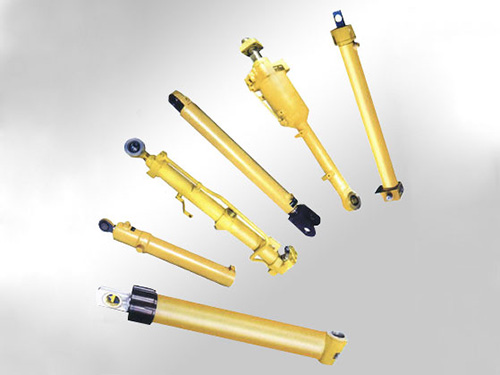
In the competitive landscape of high-precision manufacturing, rolled tubes stand out as a class of tubular components forged through cold plastic deformation, delivering unmatched dimensional accuracy, surface quality, and mechanical performance. Unlike subtractive processes such as boring or honing that remove material to refine tube geometry, roll forming shapes tubes via controlled pressure application, preserving material integrity while achieving micron-level precision. This article dissects the core advantages of rolled tubes and their diverse applications across high-end industrial sectors, shedding light on why these components have become indispensable in modern engineering.
Core Advantages of High-Precision Rolled Tubes
The superiority of rolled tubes stems from the unique cold
rolling process, which modifies both the tube’s surface morphology and internal microstructure, resulting in performance attributes that outshine conventionally machined tubular components.
1. Ultra-High Dimensional Accuracy and Consistency
Cold rolling employs precision-machined rollers to exert uniform pressure on the inner or outer surface of tube blanks, enabling tight control over key dimensions. The outer diameter tolerance of high-precision rolled tubes can be stabilized within **H8–H10 grade**, with wall thickness deviation limited to less than 2% of the nominal value. Notably, the rolling process ensures circumferential and longitudinal consistency of dimensions—unlike machining processes that may leave localized deviations, rolled tubes maintain uniform geometry across their entire length, eliminating the need for secondary calibration in most assembly scenarios. This consistency is critical for components requiring interchangeability, such as hydraulic cylinder barrels and precision instrument housings.
2. Mirror-Like Surface Quality Without Secondary Finishing
The plastic deformation induced by rolling eliminates micro-roughness, burrs, and tool marks left by primary processing (e.g., hot rolling or drawing). The surface roughness (Ra) of rolled tubes can reach **0.1–0.8 μm** without additional polishing or honing, forming a dense, smooth surface layer. This feature minimizes friction between the tube and mating parts (e.g., pistons, shafts), reduces wear and tear on seals, and prevents fluid turbulence in fluid transmission applications. For high-pressure hydraulic systems, the smooth inner surface of rolled tubes also reduces energy loss caused by fluid friction, improving overall system efficiency.
3. Enhanced Mechanical Properties via Microstructure Refinement
Cold rolling is a work-hardening process that compresses the tube’s material grains, breaking coarse grains into fine, uniformly distributed equiaxed grains. This structural transformation significantly improves the tube’s mechanical performance:
- Tensile strength and yield strength increase by **15–30%** compared to annealed tubes of the same material;
- Fatigue resistance is enhanced, enabling the tubes to withstand high-frequency cyclic loads in dynamic systems (e.g., robot joint actuators, automotive shock absorbers);
- The dense surface layer formed by rolling improves corrosion resistance, as it reduces the number of micro-pores and cracks that could serve as corrosion initiation sites.
Crucially, the rolling process does not damage the material’s base properties—unlike heat treatment, it avoids grain growth or phase transformation, maintaining a balance between strength and toughness.
4. High Material Utilization and Cost Efficiency
As a plastic forming process, rolling transforms tube blanks by reshaping material rather than removing it, with material utilization rates reaching **85–95%**. This is a stark contrast to subtractive processes such as boring, which may waste 10–20% of raw material as chips. For mass production of high-precision tubes, this advantage translates to significant cost savings on raw materials. Additionally, the rolling process is highly efficient—CNC-controlled rolling mills can process tubes at speeds of up to 5 m/min, and the elimination of secondary finishing steps further shortens the production cycle.
5. Versatility in Material and Specification Adaptation
Rolled tubes can be manufactured from a wide range of materials, including carbon steel, alloy steel, stainless steel, aluminum alloy, and even titanium alloy for aerospace applications. The rolling process can be tailored to produce tubes with diverse specifications: from small-diameter thin-walled tubes (outer diameter < 10 mm) for medical devices to large-diameter thick-walled tubes (outer diameter > 500 mm) for energy equipment. This versatility allows rolled tubes to meet the customized needs of different industries, without the need for specialized tooling adjustments for each specification.
Key Application Fields of High-Precision Rolled Tubes
Thanks to their comprehensive performance advantages, rolled tubes have penetrated every corner of high-precision manufacturing, serving as core components in critical systems where reliability and precision are non-negotiable.
1. Industrial Automation and Robotics
In industrial automation systems, rolled tubes are the preferred choice for manufacturing hydraulic/pneumatic cylinder barrels of robotic arms and precision positioning equipment. Their tight dimensional tolerance ensures a perfect fit with pistons and seals, minimizing radial clearance and improving the system’s response speed and positioning accuracy (up to ±0.01 mm). The enhanced fatigue resistance of rolled tubes also extends the service life of automation equipment operating continuously 24/7, reducing maintenance downtime. For collaborative robots (cobots), lightweight aluminum alloy rolled tubes further reduce the overall weight of the robot arm, enhancing flexibility and safety.
2. Aerospace and Defense Industry
Aerospace applications demand components that can withstand extreme conditions—high altitude, low temperature, high vibration, and high pressure. Rolled tubes made of high-strength titanium alloy or nickel-based superalloy are used to manufacture aircraft hydraulic pipelines, engine fuel delivery tubes, and missile guidance system structural components. The ultra-high dimensional consistency of rolled tubes ensures seamless integration into complex aerospace systems, while their high strength-to-weight ratio helps reduce the overall weight of aircraft, improving fuel efficiency and flight range. In defense applications, rolled steel tubes are also used as gun barrels and artillery components, where their uniform wall thickness guarantees stable ballistics and firing accuracy.
3. Automotive and Transportation Engineering
In the automotive industry, rolled tubes are widely used in critical safety and performance components, including shock absorber tubes, drive shaft sleeves, brake system pipelines, and electric vehicle battery cooling tubes. For electric vehicles (EVs), the smooth inner surface of rolled aluminum alloy tubes minimizes coolant flow resistance, improving the heat dissipation efficiency of battery packs. The high corrosion resistance of stainless steel rolled tubes also ensures long-term reliability in harsh automotive operating environments (e.g., road salt, humidity). In high-speed rail systems, rolled tubes serve as structural components for bogies and hydraulic control systems, withstanding the dynamic loads generated during high-speed operation (up to 350 km/h).
4. Energy and Petrochemical Industry
In the energy sector, rolled tubes play a vital role in oil and gas exploration, nuclear power generation, and renewable energy systems. Thick-walled rolled alloy steel tubes are used as high-pressure well casings in oil fields, capable of withstanding downhole pressures exceeding 100 MPa. In nuclear power plants, rolled zirconium alloy tubes serve as fuel cladding, with their uniform wall thickness and dense surface layer preventing radioactive material leakage. For solar thermal power generation systems, rolled stainless steel tubes are used as heat collector tubes, where their smooth surface reduces heat loss and improves solar energy absorption efficiency. In wind power generation, rolled tubes are used in hydraulic pitch control systems, ensuring precise adjustment of wind turbine blades to maximize energy capture.
5. Medical Equipment Manufacturing
In the medical field, rolled tubes made of medical-grade stainless steel or titanium alloy are used to manufacture surgical instruments, dialysis machine fluid channels, and minimally invasive surgical catheters. The ultra-smooth surface of rolled tubes prevents the adhesion of blood cells, bacteria, and biological tissues, complying with strict medical hygiene standards. The high dimensional accuracy of these tubes also ensures precise positioning during minimally invasive surgeries, reducing the risk of tissue damage. For implantable medical devices (e.g., stents), rolled titanium alloy tubes offer excellent biocompatibility and mechanical strength, matching the elasticity of human blood vessels.