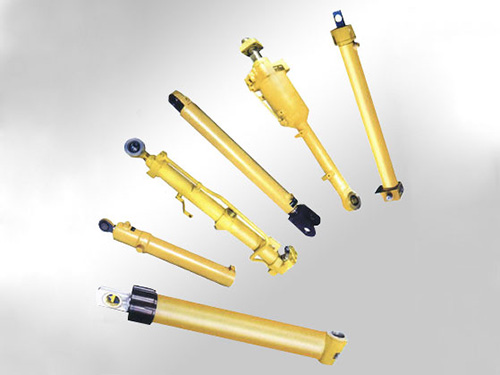
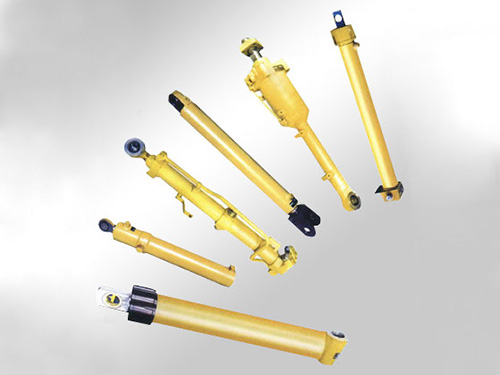
Hydraulic cylinders are core executive components in hydraulic transmission systems, which convert hydraulic energy into linear mechanical energy through pressure oil. They are widely used in various industries due to their advantages of large output force, stable operation, compact structure and high control precision. This guide systematically elaborates on the working principles, structural composition and typical application fields of hydraulic cylinders, aiming to provide a comprehensive and practical technical reference for engineering technicians, researchers and students engaged in hydraulic system design, maintenance and research.
1. Introduction
In modern industrial systems, hydraulic transmission technology plays an irreplaceable role in scenarios requiring heavy-load and linear motion control. As the key executive unit of this technology, hydraulic cylinders are the bridge connecting hydraulic pressure and mechanical movement. Unlike pneumatic cylinders, hydraulic cylinders rely on the incompressibility of hydraulic oil to achieve high-precision force and displacement control, which can meet the harsh working requirements of high pressure, heavy load and complex environment. With the integration of industrial automation, intelligent manufacturing and other technologies, the structural design of hydraulic cylinders is constantly optimized, and their application scenarios are expanding day by day. Grasping the working principles and structural characteristics of hydraulic cylinders is the basis for rational selection and efficient application of this component.
2. Structural Analysis of Hydraulic Cylinders
A
hydraulic cylinder is a typical mechatronic component composed of multiple precision parts. The rationality of its structure directly determines the performance, service life and reliability of the whole component. The basic structure of a hydraulic cylinder includes cylinder assembly, piston assembly, sealing components, guide components and auxiliary components.
2.1 Cylinder Assembly
The cylinder assembly is the main load-bearing structure of the hydraulic cylinder, consisting of the cylinder barrel, front end cap and rear end cap.
- Cylinder barrel: It is the main body of the hydraulic cylinder, providing a sealed high-pressure space for the movement of the piston. Commonly used materials include carbon structural steel (45# steel), alloy structural steel (42CrMo) and stainless steel (316L). The inner wall of the cylinder barrel needs precision honing and surface treatment (such as hard chrome plating or nitriding) to ensure low friction coefficient and high wear resistance.
- Front end cap (rod end cap): It is installed at the end where the piston rod extends, equipped with a guide sleeve and a dust ring to guide the movement of the piston rod and prevent external dust from entering the cylinder.
- Rear end cap (blind end cap): It is the closed end of the hydraulic cylinder, which is connected with the cylinder barrel by flange, thread or welding. It is usually equipped with oil ports for the inlet and outlet of hydraulic oil.
2.2 Piston Assembly
The piston assembly is the core moving part of the hydraulic cylinder, responsible for converting hydraulic pressure into mechanical thrust or tension, including piston, piston rod and connecting parts.
- Piston: It divides the inner cavity of the cylinder barrel into two independent hydraulic chambers (rod chamber and rodless chamber). The outer circle of the piston is equipped with sealing rings to prevent the mutual leakage of hydraulic oil between the two chambers. Commonly used piston materials are cast iron, brass or engineering plastics, which have good wear resistance and sealing performance.
- Piston rod: It connects the piston and the external load, transmitting the force generated by the piston to the working mechanism. It is usually made of high-strength alloy steel, and the surface is treated with hard chrome plating to improve corrosion resistance and wear resistance. The connection between the piston rod and the piston is realized by nuts or pins, ensuring sufficient connection strength.
2.3 Sealing Components
Sealing components are the key to ensuring the normal operation of hydraulic cylinders, and their performance directly affects the efficiency and reliability of the cylinder. They are divided into static seals and dynamic seals according to their working states:
- Static seals: Used for the connection parts of the cylinder barrel and end caps, with no relative movement between the sealing surfaces. Common types include O-rings and gaskets, which rely on elastic deformation to fill the gap and achieve sealing.
- Dynamic seals: Used for the matching parts of the piston and cylinder barrel, as well as the piston rod and front end cap, with relative movement between the sealing surfaces. Common types include Yx-type seals, U-type seals and V-type combination seals, which can maintain good sealing performance under high pressure and high-speed movement conditions.
2.4 Guide and Auxiliary Components
- Guide components: Mainly the guide sleeve installed in the front end cap, which guides the piston rod to move linearly, avoids the contact between the piston rod and the end cap, and reduces wear. Guide sleeves are usually made of copper alloy or wear-resistant engineering plastics with low friction coefficient.
- Auxiliary components: Including dust rings, buffer devices, exhaust valves, etc. The dust ring prevents dust, sand and other impurities from entering the cylinder; the buffer device reduces the impact when the piston moves to the end of the stroke; the exhaust valve discharges the air in the cylinder to avoid the "crawling" phenomenon of the piston.
3. Working Principles of Hydraulic Cylinders
The working principle of hydraulic cylinders is based on Pascal's Law, which states that in a closed static liquid, the pressure applied to any point will be transmitted to all directions in the liquid equally, and the pressure value remains unchanged. Hydraulic cylinders convert hydraulic energy into mechanical energy by using the pressure of hydraulic oil acting on the effective area of the piston to generate linear motion and output force. According to the movement mode, hydraulic cylinders are mainly divided into single-acting hydraulic cylinders and double-acting hydraulic cylinders.
3.1 Working Principle of Single-Acting Hydraulic Cylinders
Single-acting hydraulic cylinders have only one oil port, which can only input hydraulic oil in one direction, and the return stroke relies on external forces (such as spring force, load gravity or mechanical pull force). The working process is divided into two stages:
1. Extension stage: Hydraulic oil is pumped into the rodless chamber of the cylinder through the oil port. Under the action of hydraulic pressure, the piston is pushed to move forward, driving the piston rod to extend and outputting thrust to the external load.
2. Retraction stage: When the hydraulic system releases pressure, the hydraulic oil in the rodless chamber flows back to the oil tank through the oil port. The piston and piston rod return to the initial position under the action of external reset force (such as the spring installed in the rod chamber).
Single-acting hydraulic cylinders have the advantages of simple structure, low cost and easy maintenance, and are suitable for working conditions that only require one-way force output, such as lifting platforms, ejector rods of machine tools and dump truck lifting mechanisms.
3.2 Working Principle of Double-Acting Hydraulic Cylinders
Double-acting hydraulic cylinders are equipped with two oil ports, which can realize two-way movement by alternately inputting hydraulic oil into the rod chamber and rodless chamber, without relying on external forces. This type of hydraulic cylinder is the most widely used in industrial applications, and its working process is as follows:
1. Extension stage: The hydraulic system inputs high-pressure oil into the rodless chamber through the oil port, and the oil in the rod chamber flows back to the oil tank through the other oil port. The hydraulic pressure acts on the entire surface of the piston (larger effective area), generating a large thrust to push the piston rod to extend outward.
2. Retraction stage: The hydraulic system switches the oil supply direction, inputting high-pressure oil into the rod chamber, and the oil in the rodless chamber flows back to the oil tank. The hydraulic pressure acts on the piston surface excluding the piston rod area (smaller effective area), generating pulling force to drive the piston rod to retract inward.
Double-acting hydraulic cylinders have the characteristics of two-way force output, stable movement and high control precision, and are suitable for working conditions that require reciprocating linear motion, such as excavator boom mechanisms, industrial robot manipulators and metal stamping equipment.
4. Application Fields of Hydraulic Cylinders
With the advantages of large output force, strong load capacity and good environmental adaptability, hydraulic cylinders are widely used in almost all fields of modern industry and equipment manufacturing. The following are the typical application fields and their technical requirements:
4.1 Construction Machinery
This is the largest and most mature application field of hydraulic cylinders. Construction machinery such as excavators, loaders, cranes, bulldozers and concrete pumps all rely on hydraulic cylinders as the core executive components.
- Technical requirements: The hydraulic cylinders need to bear heavy loads, frequent impacts and harsh working environments (dust, rain, temperature changes). Therefore, high-strength alloy steel cylinder barrels and piston rods with hard chrome plating are usually used, and the sealing components need to have good wear resistance and dust resistance.
- Typical applications: The boom, arm and bucket cylinders of excavators control the lifting and excavation actions; the lifting cylinders of cranes realize the lifting of heavy objects.
4.2 Industrial Automation and Robotics
In the field of industrial automation, hydraulic cylinders are widely used in automated production lines, CNC machine tools, material handling equipment and heavy-duty industrial robots.
- Technical requirements: High control precision, fast response speed and low leakage rate are required to realize accurate positioning and synchronous movement of the working mechanism. Precision honing of the cylinder barrel inner wall and high-performance dynamic sealing components are usually adopted.
- Typical applications: The feed system of CNC machine tools uses hydraulic cylinders to control the movement of the tool holder; heavy-duty industrial robots use hydraulic cylinders to drive the manipulator to complete the handling of large workpieces.
4.3 Metallurgical and Mining Equipment
Metallurgical equipment (rolling mills, continuous casting machines, steelmaking converters) and mining equipment (shearers, roadheaders, hydraulic supports) have the characteristics of high temperature, high pressure and heavy load, and have strict requirements on the reliability of hydraulic cylinders.
- Technical requirements: The hydraulic cylinders need to have high temperature resistance, corrosion resistance and fatigue resistance. Heat-resistant alloy steel materials and high-temperature resistant sealing components are usually used, and the surface of the cylinder barrel is treated with nitriding to improve high-temperature hardness.
- Typical applications: The hydraulic cylinders of rolling mills control the rolling pressure to ensure the thickness accuracy of steel plates; the hydraulic supports of coal mines support the mine roof to ensure the safety of the working face.
4.4 Agricultural Machinery
Modern agricultural machinery is increasingly developing towards large-scale and automation, and hydraulic cylinders have become an important component of agricultural equipment such as harvesters, tractors, seeders and sprayers.
- Technical requirements: Low cost, reliable operation and corrosion resistance to agricultural chemicals and fertilizers. Carbon structural steel materials and anti-corrosion coating treatment are usually adopted.
- Typical applications: The cutting table lifting cylinder of the harvester controls the height of the cutting table; the hydraulic cylinder of the tractor's three-point suspension system adjusts the working depth of agricultural tools.
4.5 Marine Engineering and Offshore Equipment
Marine engineering equipment (offshore drilling platforms, ship cranes, underwater operation equipment) works in a harsh marine environment with high salt, high humidity and strong corrosion.
- Technical requirements: Excellent corrosion resistance and seawater resistance. Stainless steel (316L) or marine-grade alloy steel materials are usually used, and the surface is treated with anti-corrosion coating and passivation.
- Typical applications: The hydraulic cylinders of offshore drilling platforms control the lifting of drilling equipment; the hydraulic cylinders of ship cranes realize the loading and unloading of goods.