Comprehensive Analysis Of Manufacturing Materials, Application Fields And Working Principles Of Hydraulic Cylinder Barrels
Release time:2026-01-09 Visits:2
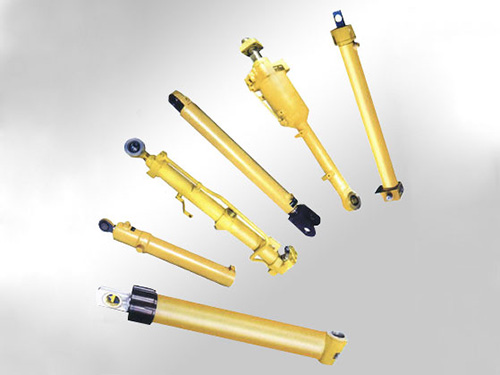
Hydraulic cylinder barrels are the core pressure-bearing components of hydraulic cylinders, which play a critical role in converting hydraulic energy into linear mechanical energy. Their performance directly determines the stability, service life and working efficiency of the entire hydraulic system. This paper comprehensively analyzes the working principles, manufacturing materials and typical application fields of hydraulic cylinder barrels.
1. Working Principles of Hydraulic Cylinder Barrels
The operation of a hydraulic cylinder barrel is based on Pascal's law, which states that pressure applied to an enclosed fluid is transmitted undiminished to every portion of the fluid and the walls of the containing vessel.
1. Basic Working Mechanism
The
hydraulic cylinder barrel forms a sealed cavity together with the piston, piston rod and end caps. When the hydraulic pump delivers high-pressure oil into the cavity through the oil port, the oil exerts uniform pressure on the inner wall of the barrel and the surface of the piston. Due to the pressure difference between the two sides of the piston, the piston is pushed to drive the piston rod to perform linear reciprocating motion. The barrel provides a stable guide for the piston movement and bears the internal hydraulic pressure to prevent deformation or rupture.
2. Classification by Working Mode
- Single-acting hydraulic cylinder barrels: High-pressure oil is only injected into one end of the barrel, and the piston is reset by external forces such as springs, gravity or load. The barrel only needs to bear pressure in a single direction, so its structural design can be relatively lightweight.
- Double-acting hydraulic cylinder barrels: High-pressure oil can be alternately injected into both ends of the barrel, realizing bidirectional movement of the piston rod without relying on external forces. The barrel needs to bear alternating bidirectional pressure, so it has higher requirements for material strength and structural rigidity.
2. Manufacturing Materials of Hydraulic Cylinder Barrels
The selection of hydraulic cylinder barrel materials is mainly determined by the working pressure, working medium, environmental conditions and service life requirements. The commonly used materials can be divided into the following categories:
1. Carbon Structural Steel and Alloy Structural Steel
This is the most widely used material category for hydraulic cylinder barrels, with high cost performance and excellent mechanical properties.
- 45# carbon steel: It has good comprehensive mechanical properties, and after quenching and tempering treatment, its tensile strength and yield strength can meet the requirements of medium and low pressure hydraulic systems (working pressure ≤ 25 MPa). It is suitable for general industrial equipment such as hydraulic presses and conveyor belts.
- Alloy structural steel (e.g., 20CrMnTi, 42CrMo): After carburizing, quenching and tempering treatment, it has high surface hardness, core toughness and fatigue resistance. It can withstand high working pressure (25–35 MPa) and alternating load, and is widely used in high-pressure hydraulic systems of construction machinery and mining equipment.
2. Stainless Steel
Stainless steel is selected for hydraulic cylinder barrels working in corrosive environments, with excellent corrosion resistance and low-temperature resistance.
- 304 stainless steel: It has good corrosion resistance to weak corrosive media such as water and air, and is suitable for hydraulic systems in food processing, pharmaceutical equipment and marine environments.
- 316 stainless steel: It contains molybdenum elements, which significantly improves the corrosion resistance to strong corrosive media such as seawater and chemical solutions. It is used in offshore engineering, chemical machinery and other harsh working conditions.
3. High-Strength Aluminum Alloy
For equipment with strict weight requirements, high-strength aluminum alloy (e.g., 6061-T6, 7075-T6) is the ideal material for hydraulic cylinder barrels. It has the characteristics of low density (about 1/3 of steel) and high specific strength. After heat treatment, its mechanical properties can meet the requirements of low and medium pressure systems. It is widely used in aerospace equipment, lightweight industrial robots and mobile hydraulic devices.
3. Application Fields of Hydraulic Cylinder Barrels
Relying on the advantages of large output force, stable operation and compact structure, hydraulic cylinder barrels are widely used in various industries that require linear drive:
1. Construction Machinery
This is the largest application field of hydraulic cylinder barrels. In excavators, loaders, cranes and bulldozers, the hydraulic cylinder barrels drive the movement of working devices such as buckets, booms and lifting arms. They need to bear heavy loads, impact and harsh working environments such as dust and rain, so alloy structural steel is usually used as the manufacturing material.
2. Industrial Automation and Robotics
In automated production lines and industrial robots, hydraulic cylinder barrels are used in hydraulic clamping devices, material handling mechanisms and robot joints. For precision equipment, the cylinder barrels are required to have high machining accuracy and good stability. Stainless steel or aluminum alloy is often selected to meet the requirements of corrosion resistance and lightweight.
3. Metallurgical and Mining Equipment
In metallurgical furnaces, rolling mills and mining machinery, hydraulic cylinder barrels bear high temperature, high pressure and heavy load. They are used to control the opening and closing of furnace doors, the lifting of rolling rollers and the movement of mining scraper conveyors. The cylinder barrels are usually made of heat-resistant alloy steel to ensure long-term stable operation under high-temperature conditions.
4. Aerospace and Marine Engineering
In aerospace equipment, lightweight aluminum alloy hydraulic cylinder barrels are used to control the deployment of aircraft landing gear and the adjustment of wing flaps. In marine engineering, stainless steel cylinder barrels are applied to ship steering gear, hatch cover drive systems and offshore oil drilling platforms, relying on their excellent corrosion resistance to seawater.