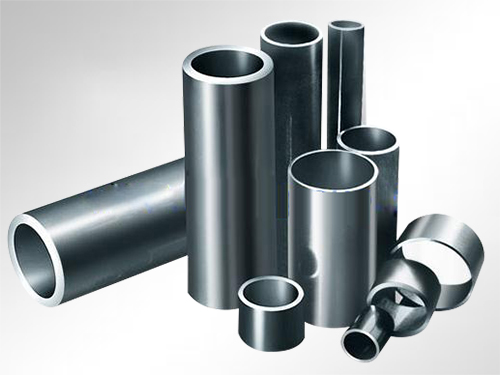
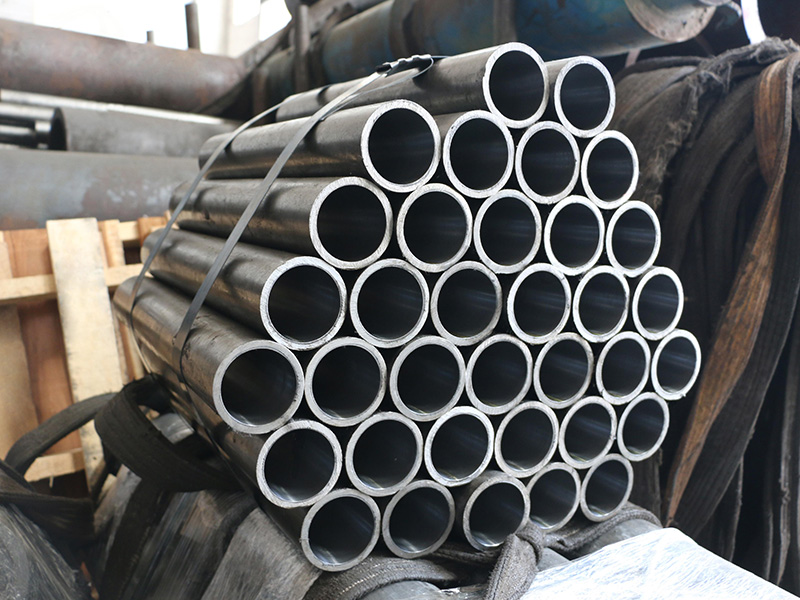
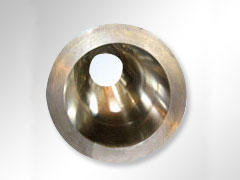
In the spectrum of high-precision tubular components, cold-rolled precision steel tubes stand as a testament to the synergy of advanced plastic deformation technology and material science. Distinguished from hot-rolled steel tubes by their near-net-shape forming and minimal post-processing requirements, these tubes deliver exceptional dimensional accuracy, surface finish, and mechanical performance that cater to the stringent demands of modern high-end manufacturing. Unlike traditional machining methods that rely on material removal, cold rolling shapes steel tubes through controlled pressure at room temperature, preserving material integrity while unlocking superior functional properties. This article dissects the sophisticated production processes, core technical characteristics, and diverse industrial applications of cold-rolled precision steel tubes, shedding light on their irreplaceable role in powering industrial innovation.
1. Sophisticated Production Processes of Cold-Rolled Precision Steel Tubes
The manufacturing of
cold-rolled precision steel tubes is a systematic, multi-stage workflow that demands strict control over process parameters to ensure consistent quality. Every step, from raw material preparation to final inspection, is calibrated to achieve micron-level precision.
1.1 Raw Material Preparation & Pretreatment
The foundation of high-quality cold-rolled precision steel tubes lies in the selection of premium raw materials and thorough pretreatment:
- Raw Material Selection: The base material is typically hot-rolled seamless steel tubes or welded steel tubes with tight chemical composition control. Common grades include 10# steel, 20# steel, 45# steel, and alloy steels such as 40Cr, chosen based on the intended application’s strength and corrosion resistance requirements. The raw tubes must be free of internal defects like porosity, inclusions, and cracks, verified via ultrasonic testing (UT) before proceeding.
- Annealing Treatment: Raw tubes undergo full annealing or spheroidizing annealing to soften the material, reduce hardness, and improve cold workability. For carbon steel tubes, annealing involves heating to 850–900℃, holding for 2–4 hours, and cooling slowly to room temperature. This process refines the grain structure, eliminates internal stresses from hot rolling, and lowers the tensile strength to facilitate subsequent cold deformation.
- Surface Conditioning: After annealing, the tubes are subjected to pickling (using hydrochloric acid or sulfuric acid solutions) to remove oxide scales and rust from the inner and outer surfaces. This step prevents scratches on the tube surface during cold rolling and ensures uniform contact between the tube and rolling dies. The tubes are then rinsed with water and dried to avoid residual acid corrosion.
1.2 Cold Rolling: The Core Forming Process
Cold rolling is the defining step that transforms annealed tubes into high-precision components. This process is conducted at room temperature using specialized multi-roll cold rolling mills (typically 6-roll or 12-roll mills) equipped with rigid frames and servo-controlled roll positioning systems.
1. Mandrel Installation: A precision mandrel is inserted into the tube blank to control the inner diameter and wall thickness during rolling. The mandrel’s diameter is precisely matched to the target inner diameter of the finished tube.
2. Rolling Operation: The tube blank, fitted with the mandrel, is fed into the rolling mill. The rolling dies exert radial pressure on the outer surface of the tube, while the mandrel provides internal support, causing the tube to undergo plastic deformation—reducing its outer diameter and wall thickness while maintaining a constant cross-sectional area. Key process parameters are strictly controlled:
- Rolling Speed: 1–5 m/s, adjusted based on the tube diameter and material ductility;
- Reduction Ratio: Total reduction of outer diameter is typically 30–60% across multiple passes, with single-pass reduction limited to 10–20% to avoid tube rupture;
- Roll Temperature: Maintained below 100℃ to prevent thermal softening (a hallmark of cold rolling that distinguishes it from warm rolling).
3. Multi-Pass Rolling: For tubes requiring high precision or large reduction ratios, multiple rolling passes are performed with intermediate annealing. Each pass reduces the tube’s dimensions incrementally, and intermediate annealing eliminates work hardening caused by cold deformation, restoring the tube’s ductility for subsequent processing.
1.3 Finishing & Quality Inspection
After cold rolling, the tubes undergo a series of finishing processes to meet final application requirements:
- Precision Straightening: Using a hydraulic precision straightener, the tube’s straightness error is controlled within 0.2 mm per meter. This step corrects any bending or warping caused by uneven rolling pressure, ensuring the tube maintains a uniform geometry along its entire length.
- Cutting & Chamfering: The tubes are cut to the specified length using a CNC cutting machine, with length tolerance controlled within ±0.5 mm. Both ends are then chamfered (typically 30–45°) to remove burrs and facilitate assembly with mating components.
- Stress Relief Annealing: To eliminate residual stresses generated during cold rolling and prevent dimensional deformation during service, the tubes undergo low-temperature stress relief annealing (heating to 350–450℃, holding for 1–2 hours, and cooling naturally). This process does not reduce the tube’s strength but improves its dimensional stability.
- 100% Quality Inspection: Final inspection is a rigorous process covering key parameters:
- Dimensional Accuracy: Inner/outer diameter tolerance (H8–H10 grade), wall thickness deviation (≤2% of nominal value), and roundness error (≤0.01 mm) measured via laser diameter gauges and bore gauges;
- Surface Quality: Surface roughness (Ra 0.2–0.8 μm) tested using a roughness profiler, with no scratches, pits, or oxide scales allowed;
- Mechanical Properties: Tensile strength, yield strength, and elongation tested via sample tensile testing;
- Non-Destructive Testing: Ultrasonic testing for internal defects and eddy current testing for surface cracks.
2. Core Technical Characteristics of Cold-Rolled Precision Steel Tubes
The cold rolling process endows these steel tubes with a unique set of technical characteristics that outperform hot-rolled tubes and machined tubes in multiple dimensions:
2.1 Exceptional Dimensional Accuracy and Consistency
The most prominent advantage of cold-rolled precision steel tubes is their micron-level dimensional control. Thanks to the rigid constraint of rolling dies and mandrels, the outer diameter tolerance can be stabilized within H8–H10 grade, and wall thickness deviation is limited to less than 2% of the nominal value—far superior to the ±5% deviation of hot-rolled tubes. This high consistency eliminates the need for secondary machining in most applications, reducing assembly costs and improving the interchangeability of components.
2.2 Superior Surface Quality Without Post-Processing
Cold rolling produces a smooth, burr-free surface finish on both the inner and outer walls of the tube, with a surface roughness (Ra) of 0.2–0.8 μm. The plastic deformation during rolling flattens micro-roughness and eliminates tool marks, resulting in a dense, uniform surface layer. Unlike hot-rolled tubes that require polishing or honing to improve surface quality, cold-rolled precision steel tubes can be directly assembled into systems, shortening the production cycle.
2.3 Enhanced Mechanical Properties via Work Hardening
Cold rolling induces significant work hardening in the tube material, transforming its microstructure and improving mechanical performance:
- Strength Enhancement: Tensile strength and yield strength increase by 20–40% compared to annealed tubes of the same grade. For example, 20# steel cold-rolled tubes have a tensile strength of ≥550 MPa, compared to ≤410 MPa for annealed tubes;
- Improved Fatigue Resistance: The dense, refined grain structure formed by cold rolling enhances the tube’s resistance to cyclic loads, making it suitable for dynamic applications such as hydraulic cylinder barrels and shock absorber tubes;
- Balanced Toughness: Low-temperature stress relief annealing after rolling retains the tube’s strength while improving its toughness, avoiding brittle fracture under impact loads.
2.4 High Material Utilization and Cost Efficiency
As a plastic forming process, cold rolling shapes tubes by redistributing material rather than removing it, resulting in a material utilization rate of 90–95%. This is a stark contrast to machining processes (e.g., boring) that waste 10–20% of raw material as chips. For mass production, this advantage translates to significant cost savings on raw materials. Additionally, the elimination of post-processing steps further reduces manufacturing costs.
3. Diverse Industrial Applications of Cold-Rolled Precision Steel Tubes
With their exceptional performance, cold-rolled precision steel tubes have become the preferred choice for critical components in a wide range of high-end industries, where precision, reliability, and durability are non-negotiable.
3.1 Industrial Automation and Hydraulic/Pneumatic Systems
This is the largest application market for cold-rolled precision steel tubes. They are widely used as cylinder barrels for hydraulic and pneumatic cylinders in robotic arms, automated production lines, and precision positioning equipment. The tight dimensional tolerance ensures a perfect fit with pistons and seals, minimizing radial clearance and improving the system’s response speed and positioning accuracy (up to ±0.01 mm). The enhanced fatigue resistance of these tubes also extends the service life of automation equipment operating 24/7, reducing maintenance downtime.
3.2 Automotive Manufacturing
In the automotive industry, cold-rolled precision steel tubes are critical components for safety and performance systems:
- Brake Systems: Used as brake hard tubes, their high dimensional accuracy ensures consistent fluid flow, improving brake response and reliability;
- Suspension Systems: Serve as shock absorber tubes, withstanding high-frequency cyclic loads and harsh road conditions;
- Electric Vehicle (EV) Components: Used in battery cooling systems and motor housings, leveraging their excellent thermal conductivity and dimensional stability to ensure efficient heat dissipation.
3.3 Aerospace and Defense Industry
Aerospace applications demand components that are lightweight, high-strength, and reliable under extreme conditions. Cold-rolled precision steel tubes (especially alloy steel grades) are used to manufacture hydraulic pipelines for aircraft landing gear, engine fuel delivery tubes, and missile guidance system structural components. Their high strength-to-weight ratio reduces the overall weight of aircraft, improving fuel efficiency and flight range. In defense equipment, these tubes are also used in armored vehicle hydraulic systems, where their resistance to shock and vibration ensures mission-critical performance.
3.4 Medical Equipment Manufacturing
For medical devices, cold-rolled precision steel tubes made of medical-grade stainless steel (e.g., 304, 316) are ideal for their biocompatibility, smooth surface, and dimensional accuracy:
- Surgical Instruments: Used in minimally invasive surgical tools, their smooth surface avoids tissue damage during procedures;
- Dialysis Machines: Serve as fluid delivery channels, preventing the adhesion of blood cells and contaminants;
- Medical Imaging Equipment: Used as structural components for CT and MRI scanners, where their high precision ensures accurate equipment calibration.
3.5 Energy and Petrochemical Industry
In the energy sector, cold-rolled precision steel tubes are used in high-pressure and corrosive environments:
- Oil and Gas Exploration: Used as high-pressure wellhead control tubes, withstanding downhole pressures exceeding 100 MPa;
- Nuclear Power Plants: Used as heat exchanger tubes, their dimensional stability ensures efficient heat transfer;
- Wind Turbines: Used in hydraulic pitch control systems, enabling precise adjustment of turbine blades to optimize energy capture.