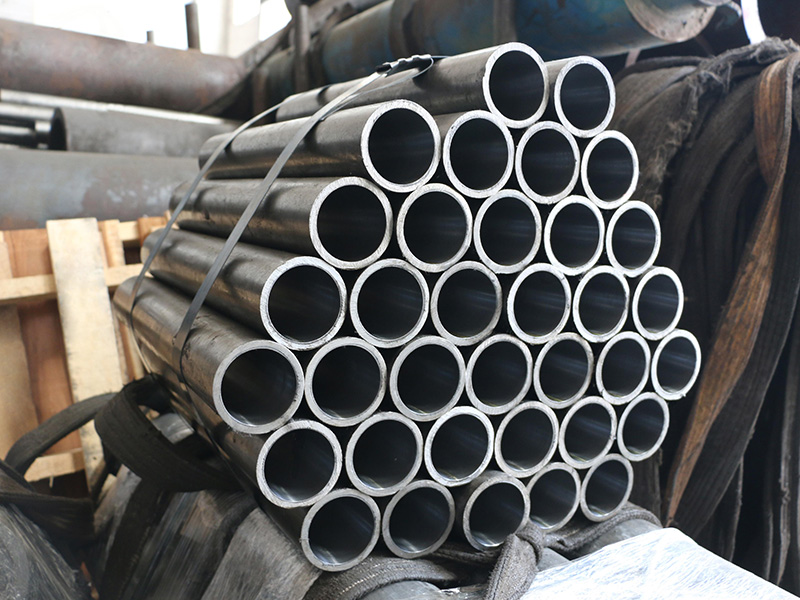
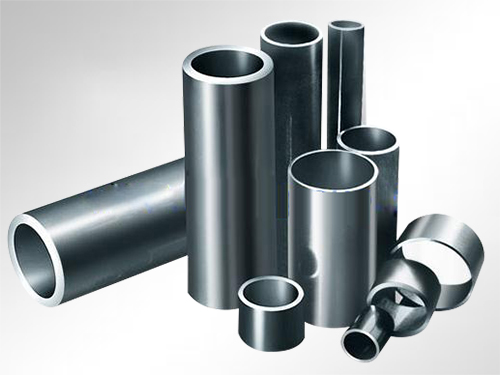
In the realm of precision tubular component manufacturing, boring technology stands as a pivotal machining process that transforms raw or pre-formed tubes into high-precision products with tailored inner diameter dimensions, exceptional roundness, and uniform wall thickness. Unlike honing or rolling processes that focus on surface refinement or plastic deformation, tube boring excels at correcting inherent defects in tubular blanks (such as eccentricity, uneven wall thickness, and internal surface irregularities) while achieving tight dimensional tolerances. This article delves into the fundamental principles, sophisticated processing procedures, core technical parameters, and diverse industrial application scenarios of tube boring technology, revealing its irreplaceable role in high-end manufacturing.
1. Fundamental Principles of Tube Boring Technology
Tube boring is a subtractive machining process that uses a cutting tool (boring bar equipped with indexable inserts or solid carbide tools) to remove material from the inner surface of a tubular workpiece, thereby refining the inner hole’s geometry and surface quality. The process relies on the coordinated movement of three core motions:
- Rotary Cutting Motion: The boring bar rotates at a predetermined speed around the central axis of the tube, which is the primary cutting motion responsible for shearing material from the tube’s inner wall. The rotational speed is calibrated based on the workpiece material, tool material, and desired surface finish, typically ranging from 50–500 r/min for carbon steel tubes and 100–800 r/min for aluminum alloy tubes.
- Linear Feed Motion: The boring bar or the tubular workpiece moves linearly along the axis of the inner hole, ensuring continuous cutting along the tube’s length. Feed rate is a critical parameter that balances processing efficiency and surface quality—coarse boring adopts a high feed rate (0.2–0.5 mm/r) for rapid material removal, while fine boring uses a low feed rate (0.05–0.15 mm/r) to minimize surface roughness.
- Radial Adjustment Motion: The cutting edge of the boring tool can be adjusted radially to control the depth of cut, enabling precise tuning of the final inner diameter of the tube. This adjustability is particularly crucial for correcting the eccentricity of pre-rolled or welded tubes, ensuring the concentricity of the inner and outer diameters meets design requirements.
At its core,
tube boring technology leverages the shearing action of the cutting tool to eliminate excess material, while the rigid connection between the machine tool, fixture, and tool ensures the stability of the machining process. The process also relies on cutting fluids to lubricate the tool-workpiece interface, cool the cutting zone to prevent thermal deformation, and flush away chips to avoid scratching the machined surface.
2. Step-by-Step Tube Boring Processing Procedures
The precision tube boring process is a systematic workflow that requires strict control of each step to ensure consistent product quality. The key procedures are as follows:
2.1 Pre-Machining Preparation
- Workpiece Selection and Inspection: The raw material typically includes seamless steel tubes, welded tubes, or cold-drawn tubes. Prior to boring, the tubes are inspected for initial defects (e.g., surface cracks, internal inclusions, and excessive wall thickness deviation) using ultrasonic testing (UT) or visual inspection. Tubes with severe defects are rejected to avoid machining failures.
- Fixture Clamping and Centering: The tube is clamped on a precision fixture (such as a three-jaw chuck, collet chuck, or mandrel fixture) to ensure its central axis aligns with the rotational axis of the boring bar. For long tubes, a tailstock support is added to prevent deflection during machining, which would lead to coaxiality errors.
- Tool Selection and Installation: The boring tool is selected based on the workpiece material and machining requirements. High-speed steel (HSS) tools are used for low-precision, low-speed machining of carbon steel; cemented carbide inserts are preferred for high-speed, high-precision machining of alloy steel or stainless steel; and polycrystalline diamond (PCD) tools are adopted for machining non-ferrous metals (e.g., aluminum alloy) to achieve ultra-smooth surfaces.
2.2 Graded Boring Operations
Tube boring is typically divided into three sequential stages to balance efficiency and precision:
- Rough Boring: The primary goal is to remove most of the machining allowance (0.5–2 mm per side) to correct major geometric defects (e.g., eccentricity, ovality) of the inner hole. High cutting speed and feed rate are used, and the cutting depth is controlled to avoid excessive tool wear or workpiece deformation. After rough boring, the inner hole achieves a preliminary tolerance of H10–H11 and a surface roughness (Ra) of 3.2–6.3 μm.
- Semi-Fine Boring: This stage refines the inner hole geometry, reducing the machining allowance to 0.1–0.3 mm per side. The cutting parameters are optimized to improve dimensional accuracy and surface quality, with the tolerance narrowed to H8–H9 and Ra reduced to 1.6–3.2 μm. Semi-fine boring also serves as a transition step to prepare the workpiece for fine boring.
- Fine Boring: The final precision machining stage, where the cutting depth is minimized to 0.02–0.05 mm per side. The boring bar is equipped with a precision adjustment mechanism to control the inner diameter within the target tolerance (typically H7–H8 for high-precision applications). The cutting speed is increased while the feed rate is reduced to minimize cutting forces and avoid workpiece deformation. Fine boring can achieve a surface roughness of Ra 0.4–1.6 μm and a coaxiality error of less than 0.01 mm/m.
2.3 Post-Machining Treatment and Quality Inspection
- Deburring and Cleaning: After boring, the tube’s inner and outer edges are deburred using a deburring tool or abrasive brushes to remove sharp burrs that could damage seals or mating components during assembly. The tube is then cleaned with ultrasonic equipment to remove residual cutting fluid and chips.
- Precision Metrology: Key parameters are inspected using specialized measuring instruments: inner diameter is measured with a bore gauge or coordinate measuring machine (CMM); roundness and coaxiality are tested with a roundness tester; and surface roughness is evaluated with a roughness profiler. Non-conforming products are sorted for rework or scrapping.
- Optional Surface Treatment: For tubes used in corrosive environments, post-processing such as phosphating, electroplating, or passivation is applied to enhance corrosion resistance. For high-wear applications, a hard coating (e.g., TiN, TiCN) can be deposited on the inner surface to improve hardness and wear resistance.
3. Core Advantages of Precision Tube Boring Technology
Compared with other tube machining processes (e.g., honing, rolling, and drawing), tube boring technology offers unique advantages that make it indispensable in specific application scenarios:
1. Exceptional Geometric Correction Capability: Boring can effectively correct inherent defects in pre-formed tubes, such as eccentricity, ovality, and uneven wall thickness, which are difficult to address with rolling or drawing processes. This makes it the ideal choice for machining large-diameter, thick-walled tubes that require strict coaxiality between inner and outer diameters.
2. High Machining Flexibility: The radial adjustability of the boring tool allows for on-demand adjustment of the inner diameter without changing the tool or fixture, enabling the production of tubes with varying inner diameters from the same blank. This flexibility is particularly valuable for small-batch, customized production.
3. Wide Material Compatibility: Tube boring can process a broad range of materials, including carbon steel, alloy steel, stainless steel, aluminum alloy, copper alloy, and even heat-resistant superalloys used in aerospace applications. Different tool materials and cutting parameters can be tailored to match the machinability of various materials.
4. Suitable for Large-Size Tubes: Unlike honing, which is limited by the length of the honing head, boring technology can process extra-long and large-diameter tubes (e.g., diameter > 500 mm, length > 10 m) used in petrochemical and energy industries, with consistent precision across the entire tube length.
4. Industrial Application Scenarios of Bored Tubes
Bored tubes are widely used in industries where high precision, structural integrity, and dimensional consistency are critical. Key application scenarios include:
4.1 Petrochemical and Energy Industry
In oil and gas exploration and transportation, bored seamless steel tubes are used as high-pressure well casing and pipeline components. The precise inner diameter and uniform wall thickness of bored tubes ensure they can withstand extreme pressure (up to 100 MPa) and corrosive media (e.g., crude oil, natural gas, and acidic wastewater). In thermal power plants, bored alloy steel tubes serve as boiler water wall tubes and superheater tubes, where their excellent coaxiality and heat transfer performance improve the efficiency and safety of power generation systems.
4.2 Construction and Engineering Machinery
Bored tubes are the core components of hydraulic cylinder barrels in excavators, loaders, and cranes. The precise inner hole of the bored tube ensures a tight fit with the piston and seals, minimizing hydraulic oil leakage and improving the response speed of the hydraulic system. For heavy-duty machinery, bored tubes made of quenched and tempered alloy steel offer high tensile strength and fatigue resistance, withstanding repeated cyclic loads during long-term operation.
4.3 Aerospace and Defense Industry
In aerospace applications, bored tubes made of titanium alloy or nickel-based superalloys are used as fuel delivery pipelines, hydraulic control tubes, and structural components of aircraft engines. The strict dimensional tolerance (H7 grade) and ultra-low surface roughness of these tubes ensure they can operate stably under extreme conditions of high temperature, high pressure, and high vibration. In the defense sector, bored tubes are used as gun barrels and missile launch tubes, where their uniform wall thickness and high structural strength guarantee firing accuracy and reliability.
4.4 Medical Equipment and Precision Instrumentation
For medical devices such as dialysis machines, surgical robots, and diagnostic equipment, bored stainless steel tubes are used as fluid delivery channels and structural components. The smooth inner surface of bored tubes prevents the adhesion of biological tissues and contaminants, complying with strict medical hygiene standards. In precision instrumentation, small-diameter bored tubes serve as sensor sleeves and optical component holders, where their high coaxiality and dimensional stability ensure accurate signal transmission and measurement.
5. Conclusion
Precision tube boring technology is a cornerstone of modern tubular component manufacturing, bridging the gap between raw tube blanks and high-performance industrial components through its unique geometric correction capability and machining flexibility. As advanced manufacturing technologies such as CNC (Computer Numerical Control) boring machines, real-time machining monitoring systems, and intelligent tool wear detection continue to evolve, the precision, efficiency, and automation level of tube boring will be further enhanced. In the future, with the growing demand for high-precision tubes in emerging fields such as new energy (e.g., hydrogen energy storage pipelines) and semiconductor manufacturing, tube boring technology will play an even more critical role in driving the advancement of high-end manufacturing industries worldwide.