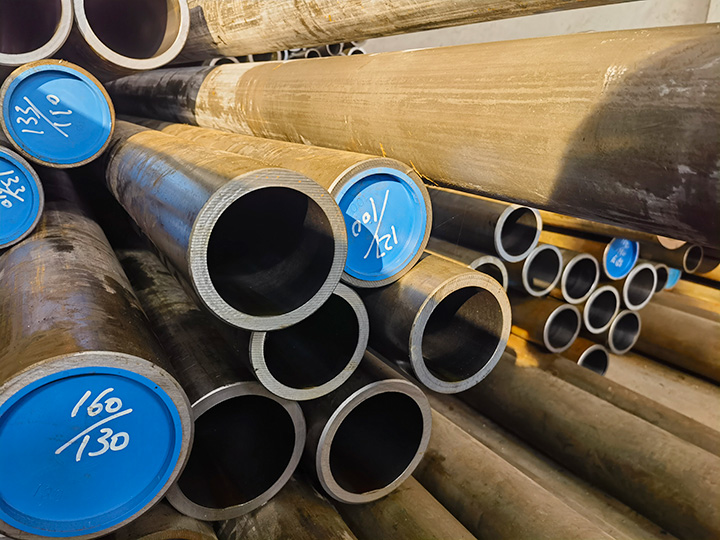
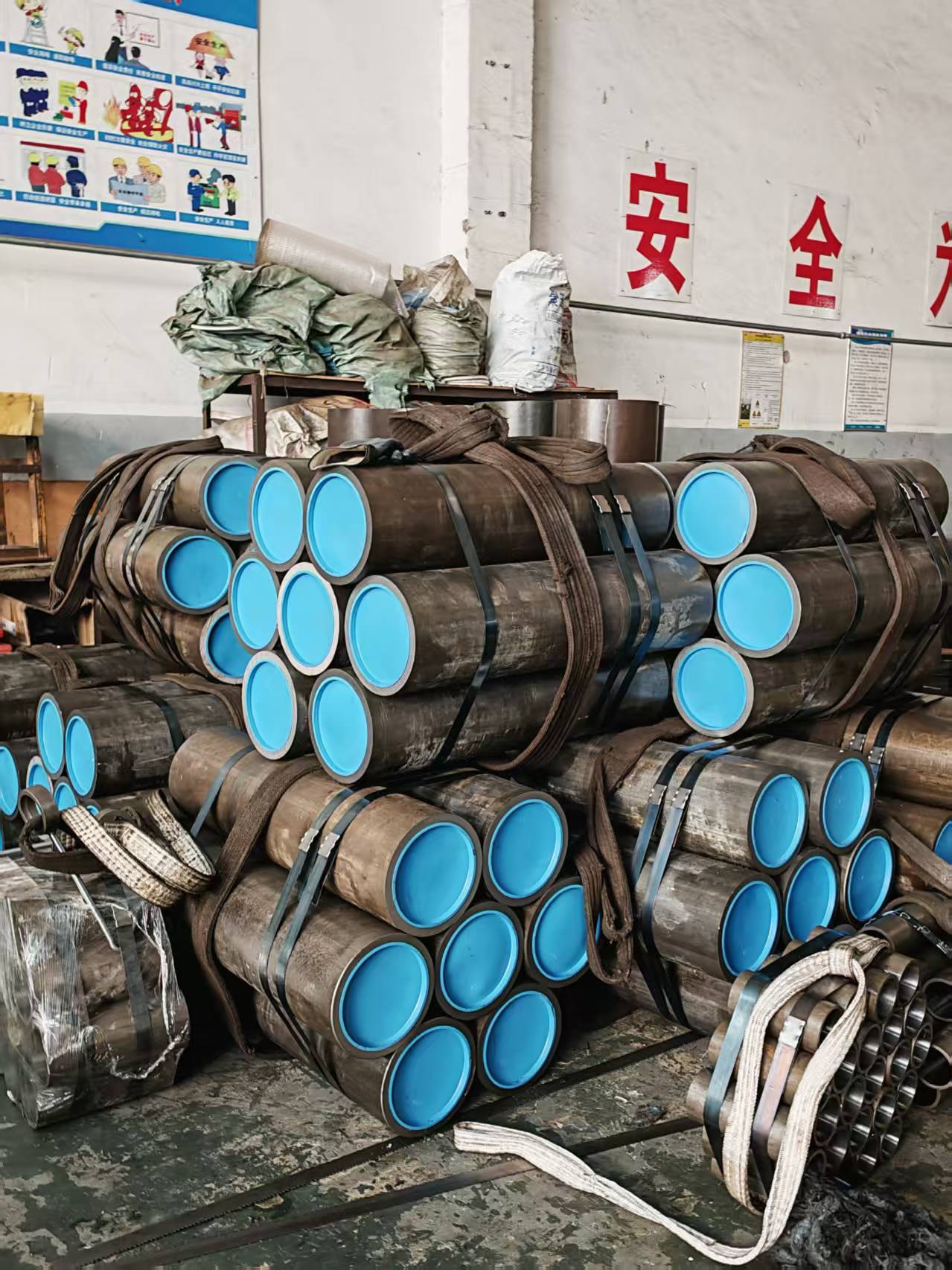
In the landscape of advanced manufacturing, where component precision directly dictates equipment reliability and performance, high-precision rolled tubes emerge as a pivotal structural and functional element. Distinguished from conventional rolled tubes by their micron-level dimensional control and superior mechanical homogeneity, these tubes serve as the backbone of critical systems spanning industrial automation, aerospace, and energy engineering. Unlike honed tubes that rely on post-machining surface refinement, high-precision rolled tubes achieve their excellence through a meticulously calibrated rolling process that shapes both the tube’s geometry and material properties in tandem. This article dissects the sophisticated production processes, unparalleled core advantages, and diverse high-value application fields of high-precision rolled tubes, revealing how they redefine the benchmarks of precision tubular components.
1. Sophisticated Production Processes of High-Precision Rolled Tubes
The manufacturing of
high-precision rolled tubes is a systematic, multi-stage process that integrates thermal processing, plastic deformation, and precision finishing, with each step subject to strict parameter control to ensure final product quality.
1.1 Raw Material Preparation & Pretreatment
The process begins with the selection of premium raw materials, typically continuous-cast round billets made of carbon structural steel, alloy steel, or stainless steel. The billets must meet stringent purity standards, with controlled contents of sulfur, phosphorus, and other harmful impurities to avoid internal defects in the finished tubes.
Subsequent pretreatment steps include:
- Surface Conditioning: Shot blasting or acid pickling to remove oxide scales, rust, and surface defects from the billets, preventing damage to rolling dies during processing.
- Homogenization Heat Treatment: Heating the billets to 1100–1250℃ and holding them for a specified duration to eliminate chemical composition segregation and uniformize the grain structure, laying the foundation for consistent plastic deformation in subsequent rolling steps.
1.2 Hot Rolling: Blank Forming & Rough Sizing
Hot rolling is the primary step for shaping the billet into a tubular blank, suitable for manufacturing large-diameter high-precision rolled tubes.
1. Piercing: The heated billet is fed into a piercing mill, where a rotating piercer roll and mandrel work together to transform the solid billet into a hollow shell (seamless tube blank), with wall thickness controlled by adjusting the mandrel diameter and roll gap.
2. Stretch Reducing: The hollow shell is passed through a multi-stand stretch reducing mill, where it undergoes continuous diameter reduction and wall thickness adjustment. The rolling speed, temperature (maintained at 850–950℃), and roll pass design are precisely calibrated to ensure the tube blank achieves preliminary dimensional accuracy, with outer diameter tolerance controlled within ±1.5%.
1.3 Cold Rolling/Cold Drawing: Precision Finishing
Cold rolling or cold drawing is the core process for achieving high precision, performed at room temperature to avoid thermal deformation and improve surface quality.
- Cold Rolling: The tube blank is fed into a tandem cold rolling mill equipped with a floating mandrel. The mill’s rigid frame and servo-controlled roll position enable precise adjustment of the outer diameter and wall thickness, reducing the tolerance of outer diameter to ±0.05 mm and wall thickness to ±0.02 mm. This process also induces work hardening, enhancing the tube’s surface hardness and tensile strength.
- Cold Drawing: For small-diameter, thin-walled high-precision rolled tubes, cold drawing is preferred. The tube blank is pulled through a die with a fixed aperture, paired with a mandrel to control wall thickness. Multiple passes of drawing with intermediate annealing are required to gradually reduce the diameter and wall thickness while maintaining dimensional stability, with the final surface roughness (Ra) reaching 0.2–0.8 μm.
1.4 Post-Processing: Final Refinement & Quality Assurance
After precision rolling, a series of post-processing steps are implemented to ensure the tubes meet application requirements:
- Stress Relief Annealing: Heating the tubes to 350–550℃ to eliminate residual stresses generated during cold working, preventing deformation or cracking during subsequent machining or service.
- Precision Straightening: Using a hydraulic precision straightener to correct the tube’s straightness, with the straightness error controlled within 0.3 mm per meter.
- Non-Destructive Testing (NDT): Employing ultrasonic testing to detect internal defects (such as voids and inclusions), eddy current testing to identify surface cracks, and laser diameter gauging to verify dimensional accuracy. Non-conforming products are rejected or reworked.
- Surface Finishing: Optional processes such as polishing or passivation to further improve surface smoothness and corrosion resistance for special application scenarios.
2. Core Advantages of High-Precision Rolled Tubes
High-precision rolled tubes outperform conventional tubular components in multiple dimensions, making them irreplaceable in high-end industrial applications:
2.1 Exceptional Dimensional Accuracy & Consistency
The combination of hot rolling rough sizing and cold rolling/cold drawing precision finishing ensures tight control over key dimensions. The outer diameter tolerance can reach H8–H10 grade, wall thickness deviation is less than 2% of the nominal value, and roundness error is limited to 0.01–0.03 mm. This consistency eliminates the need for secondary machining in most applications, reducing production costs and improving assembly efficiency.
2.2 Superior Mechanical Properties
The cold working process induces grain refinement and work hardening in the tube material, resulting in a uniform, dense microstructure. Compared with annealed tubes of the same material, high-precision rolled tubes exhibit:
- 15–30% higher tensile strength and yield strength;
- Enhanced fatigue resistance, capable of withstanding cyclic loads in high-frequency operating systems;
- Stable plasticity and toughness, avoiding brittle fracture under extreme working conditions.
2.3 Excellent Surface Quality & Material Homogeneity
The cold rolling/drawing process removes surface defects left by hot rolling, producing a smooth, burr-free inner and outer surface with Ra values as low as 0.1 μm. Meanwhile, the uniform plastic deformation during rolling eliminates internal segregation and porosity, ensuring consistent material properties across the entire tube length. This homogeneity is critical for components operating under high pressure or corrosive environments.
2.4 High Material Utilization & Cost Efficiency
Unlike machining processes that remove large amounts of material to achieve precision, the rolling process shapes the tube through plastic deformation, with material utilization rates reaching 85–95%. For mass production, this advantage significantly reduces raw material waste and lowers the overall manufacturing cost of high-precision components.
3. High-Value Application Fields of High-Precision Rolled Tubes
Thanks to their outstanding performance, high-precision rolled tubes are widely used in key industrial fields where reliability and precision are paramount:
3.1 Industrial Automation & Robotics
In industrial automation systems, high-precision rolled tubes serve as the cylinder barrels of hydraulic and pneumatic cylinders for robotic arms, conveyor systems, and precision positioning equipment. Their tight dimensional tolerance ensures minimal friction between the piston and cylinder wall, improving the system’s response speed and control accuracy. The high fatigue resistance also extends the service life of automation equipment in continuous operation scenarios.
3.2 Aerospace & Defense Industry
Aerospace applications demand components that can withstand extreme conditions (high altitude, low temperature, high vibration). High-precision rolled tubes made of high-strength alloy steel are used to manufacture hydraulic pipelines for aircraft landing gear, engine fuel delivery tubes, and missile guidance system components. Their lightweight design and high structural strength help reduce the overall weight of aircraft and improve flight performance.
3.3 Automotive & Transportation Engineering
In the automotive industry, high-precision rolled tubes are applied in critical components such as shock absorber tubes, drive shaft sleeves, and brake system pipelines. For electric vehicles, they are used in battery cooling systems and motor housing components, leveraging their excellent thermal conductivity and dimensional stability to ensure the safe and efficient operation of the vehicle. In high-speed rail and maglev train systems, these tubes serve as structural components for bogies, withstanding high-speed vibration and dynamic loads.
3.4 Energy & Petrochemical Industry
In the energy sector, high-precision rolled tubes made of corrosion-resistant stainless steel or alloy steel are used in oil and gas exploration pipelines, nuclear power plant heat exchanger tubes, and solar thermal power generation collector tubes. Their high pressure resistance and corrosion resistance enable them to operate stably in harsh environments such as high-temperature oil wells and corrosive chemical media. In wind power generation, they are used in hydraulic pitch control systems, ensuring the precise adjustment of wind turbine blades.
3.5 Medical Equipment Manufacturing
For medical applications, high-precision rolled tubes made of medical-grade stainless steel are used to manufacture components of surgical instruments, dialysis machines, and medical imaging equipment. Their smooth surface avoids tissue damage during surgical procedures, and their biocompatibility meets strict medical hygiene standards.
4. Conclusion
High-precision rolled tubes represent the pinnacle of modern precision rolling technology, embodying the perfect integration of dimensional accuracy, mechanical performance, and cost efficiency. As advanced manufacturing industries such as industrial automation, aerospace, and new energy continue to evolve, the demand for high-precision rolled tubes with customized specifications (e.g., ultra-thin walls, special alloy materials) will continue to grow. The future development of high-precision rolled tube technology will focus on intelligent manufacturing—integrating digital simulation, real-time process monitoring, and automated quality inspection—to further improve production efficiency and product precision, contributing to the advancement of high-end manufacturing industries worldwide.