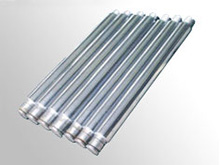
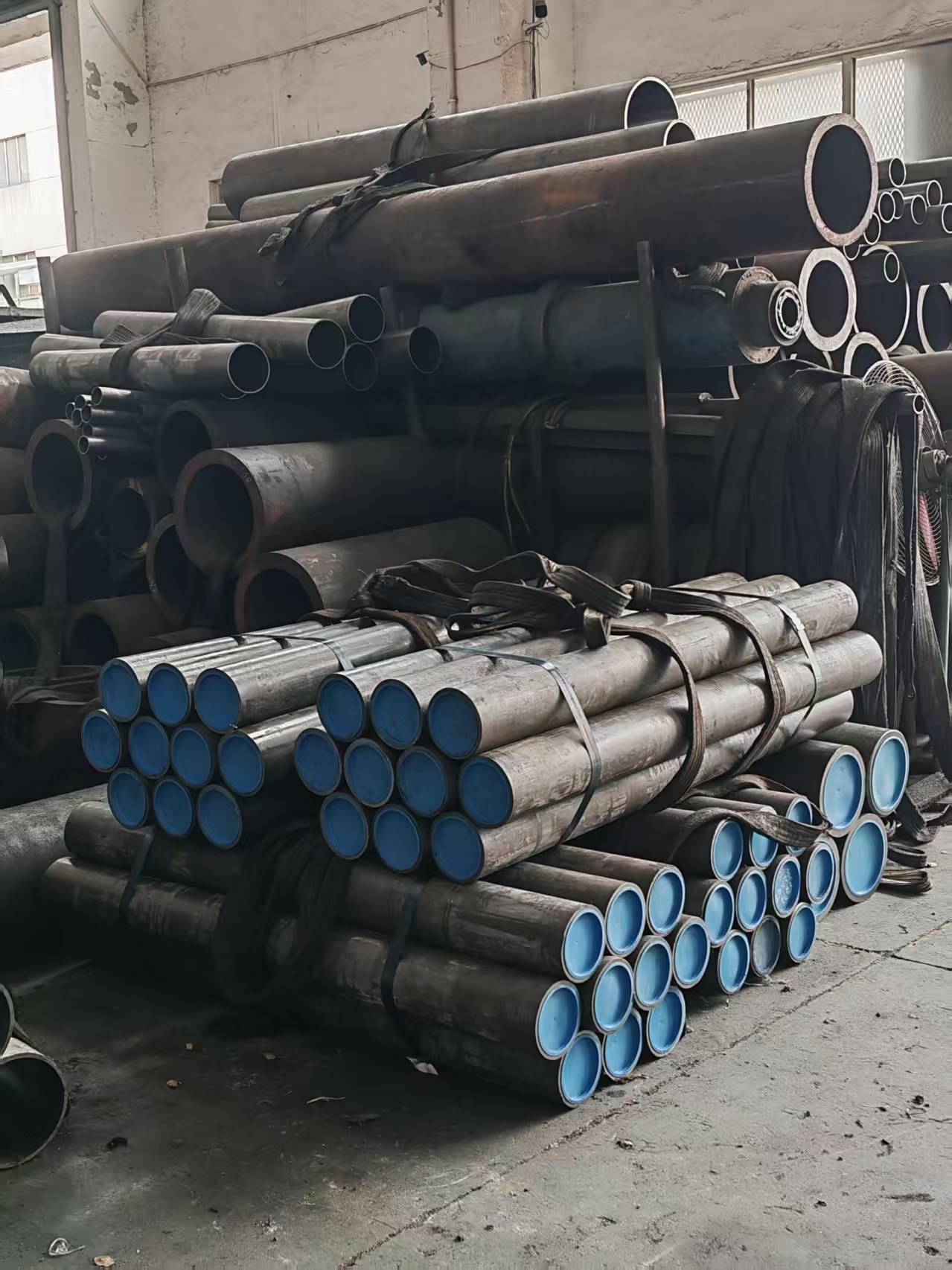
In the realm of advanced manufacturing, where micrometer-level precision translates to unparalleled equipment performance, high-precision honed tubes stand as a cornerstone component that underpins the reliability of hydraulic systems, heavy machinery, and aerospace equipment. Unlike conventional seamless steel tubes, honed tubes undergo a specialized machining process that refines their inner surfaces and dimensional accuracy to meet the stringent demands of modern industrial applications. This article delves into the core characteristics, sophisticated manufacturing processes, and diverse application scenarios of high-precision honed tubes, shedding light on why they are irreplaceable in high-end manufacturing sectors.
Core Characteristics of High-Precision Honed Tubes
The superiority of high-precision
honed tubes stems from a set of distinct technical attributes that distinguish them from standard tubular components, making them ideal for high-stress, high-precision working environments.
1. Ultra-high Dimensional Accuracy
The most prominent feature of honed tubes lies in their exceptional dimensional consistency. Through precision honing, the inner diameter tolerance can be controlled within H7–H9 grade, and the roundness error is limited to less than 0.005 mm per 100 mm length. This level of accuracy ensures a tight fit between the tube and matching components such as hydraulic pistons, eliminating radial clearance and reducing mechanical vibration during operation.
2. Ultra-smooth Inner Surface
Honing eliminates the micro-roughness and burrs left by primary machining processes, resulting in an inner surface roughness (Ra) as low as 0.05–0.2 μm. A smooth inner wall minimizes friction resistance when fluids or mechanical parts move inside the tube, which not only improves the efficiency of hydraulic systems but also reduces wear and tear on mating components, extending the overall service life of the equipment.
3. Uniform Wall Thickness and High Straightness
Advanced honing equipment ensures uniform wall thickness distribution across the entire tube length, with a deviation of no more than 3% of the nominal thickness. Meanwhile, the straightness error is controlled within 0.5 mm per meter, preventing uneven stress distribution caused by tube bending. This characteristic is critical for components operating under high pressure, as it avoids local stress concentration and potential rupture risks.
4. Enhanced Mechanical Properties
The honing process involves a certain degree of cold working, which induces work hardening on the inner surface of the tube, increasing its surface hardness by 10%–15% compared to the base material. Additionally, honing does not damage the base metal structure, maintaining the original tensile strength, yield strength, and corrosion resistance of the tube material (such as 45# steel, 20# steel, or stainless steel).
Sophisticated Manufacturing Processes of High-Precision Honed Tubes
The production of high-precision honed tubes is a systematic process that integrates pre-processing, precision honing, and post-processing, with each step requiring strict parameter control to ensure final product quality.
1. Pre-processing: Laying the Foundation for Precision
The process starts with the selection of high-quality raw materials, typically seamless steel tubes or cold-drawn tubes with uniform chemical composition and no internal defects. The raw tubes are first cut to the required length, followed by heat treatment (normalizing or quenching and tempering) to adjust their mechanical properties and eliminate internal stresses generated during the initial manufacturing stage. After heat treatment, the tube ends are chamfered to avoid scratching the honing tool, and the inner surface is pre-cleaned to remove oil stains and oxide scales.
2. Precision Honing: The Core Forming Step
Honing is a low-speed, high-pressure grinding process that uses a honing head equipped with abrasive stones to remove a small amount of material from the inner wall of the tube. The process is divided into three stages to achieve progressive precision improvement:
- Rough Honing: This stage uses coarse-grained abrasive stones (grain size 80–120) to remove the machining allowance rapidly, correcting major dimensional deviations and surface irregularities left by previous processes. The honing head rotates at a speed of 100–200 r/min, with a reciprocating stroke speed of 0.5–1 m/s, and the honing pressure is set between 0.8–1.2 MPa.
- Fine Honing: Fine honing adopts medium-grained abrasive stones (grain size 150–240) to reduce the surface roughness and further improve dimensional accuracy. The rotation speed of the honing head is increased to 200–300 r/min, while the reciprocating speed is adjusted to 0.3–0.6 m/s, and the honing pressure is reduced to 0.4–0.8 MPa to avoid over-processing.
- Super-finish Honing: For tubes requiring ultra-high precision, super-finish honing uses fine-grained abrasive stones (grain size 300–600) or diamond abrasives. The honing pressure is further reduced to 0.1–0.3 MPa, and the process focuses on polishing the inner surface rather than removing material, achieving a mirror-like finish with Ra values below 0.1 μm.
Throughout the honing process, a special honing oil is continuously injected into the tube. This oil serves three key functions: lubricating the contact surface between the abrasive stones and the tube wall, cooling the honing head to prevent thermal deformation, and flushing away the grinding debris to avoid scratching the inner surface.
3. Post-processing: Ensuring Product Reliability
After honing, the tubes undergo a series of post-processing steps to meet application requirements:
- Cleaning and Drying: The tubes are cleaned with ultrasonic equipment to remove residual honing oil and debris, then dried with hot air to prevent rusting.
- Precision Inspection: Professional measuring instruments such as internal micrometers, roundness testers, and surface roughness meters are used to inspect key parameters including inner diameter tolerance, roundness, straightness, and surface roughness. Non-conforming products are sorted out for rework or scrapping.
- Anti-corrosion Treatment: According to customer requirements, the tubes are subjected to anti-corrosion treatments such as electroplating, phosphating, or painting to enhance their service life in harsh environments.
Wide-ranging Applications of High-Precision Honed Tubes
Thanks to their excellent performance, high-precision honed tubes are widely used in various high-end industrial fields where precision and reliability are paramount.
1. Hydraulic and Pneumatic Systems
This is the largest application area for honed tubes. They serve as the cylinder barrels of hydraulic cylinders in construction machinery, agricultural machinery, and industrial robots. The smooth inner surface reduces friction between the piston and the cylinder wall, improving the response speed and control accuracy of the hydraulic system, while the high dimensional accuracy prevents oil leakage, ensuring the system operates stably under high pressure.
2. Aerospace and Defense Industry
In the aerospace field, honed tubes are used to manufacture hydraulic pipelines for aircraft landing gear and engine control systems, as well as structural components for missiles and satellites. The strict dimensional tolerance and high mechanical strength of honed tubes can withstand extreme conditions such as high altitude, low temperature, and high vibration, ensuring the safety and reliability of aerospace equipment.
3. Medical Equipment Manufacturing
In the medical field, honed tubes made of stainless steel are used to manufacture precision components of medical devices such as surgical instruments, dialysis machines, and medical imaging equipment. The ultra-smooth inner surface avoids contamination and adhesion of biological tissues, and the high corrosion resistance ensures compliance with medical hygiene standards.
4. Automotive and Marine Engineering
In the automotive industry, honed tubes are used in the manufacturing of shock absorbers and brake systems, improving the driving stability and safety of vehicles. In marine engineering, they are used as components of ship hydraulic systems and underwater equipment, with their corrosion resistance enabling them to withstand the corrosive effects of seawater.