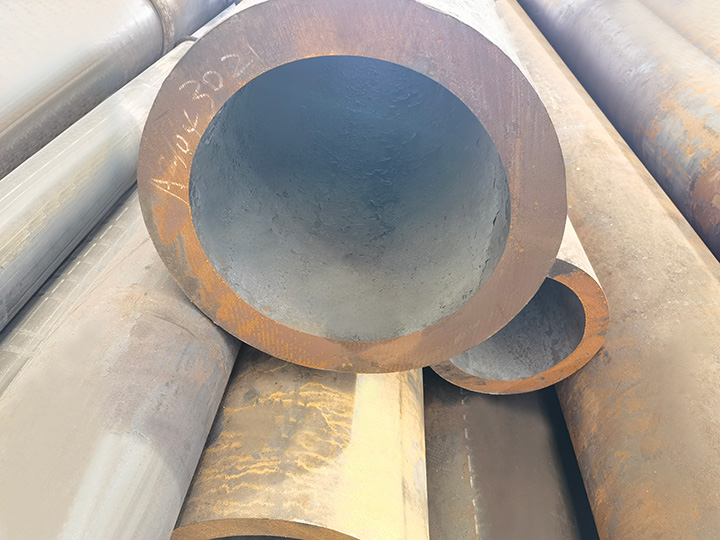
High-precision cold-drawn tubes are a type of premium seamless precision tubing manufactured through a cold-forming process without heating the base material. Compared with traditional hot-rolled tubes, they exhibit superior dimensional accuracy, surface finish, and mechanical properties. As a key basic component, high-precision cold-drawn tubes are widely used in core fields such as hydraulic/pneumatic systems, automotive manufacturing, aerospace, and industrial automation, providing critical support for the upgrading of high-end equipment manufacturing. This paper systematically analyzes the core technical advantages of high-precision cold-drawn tubes and their typical application scenarios in major industries, aiming to provide a technical reference for material selection and application optimization in engineering practice.
1. Introduction
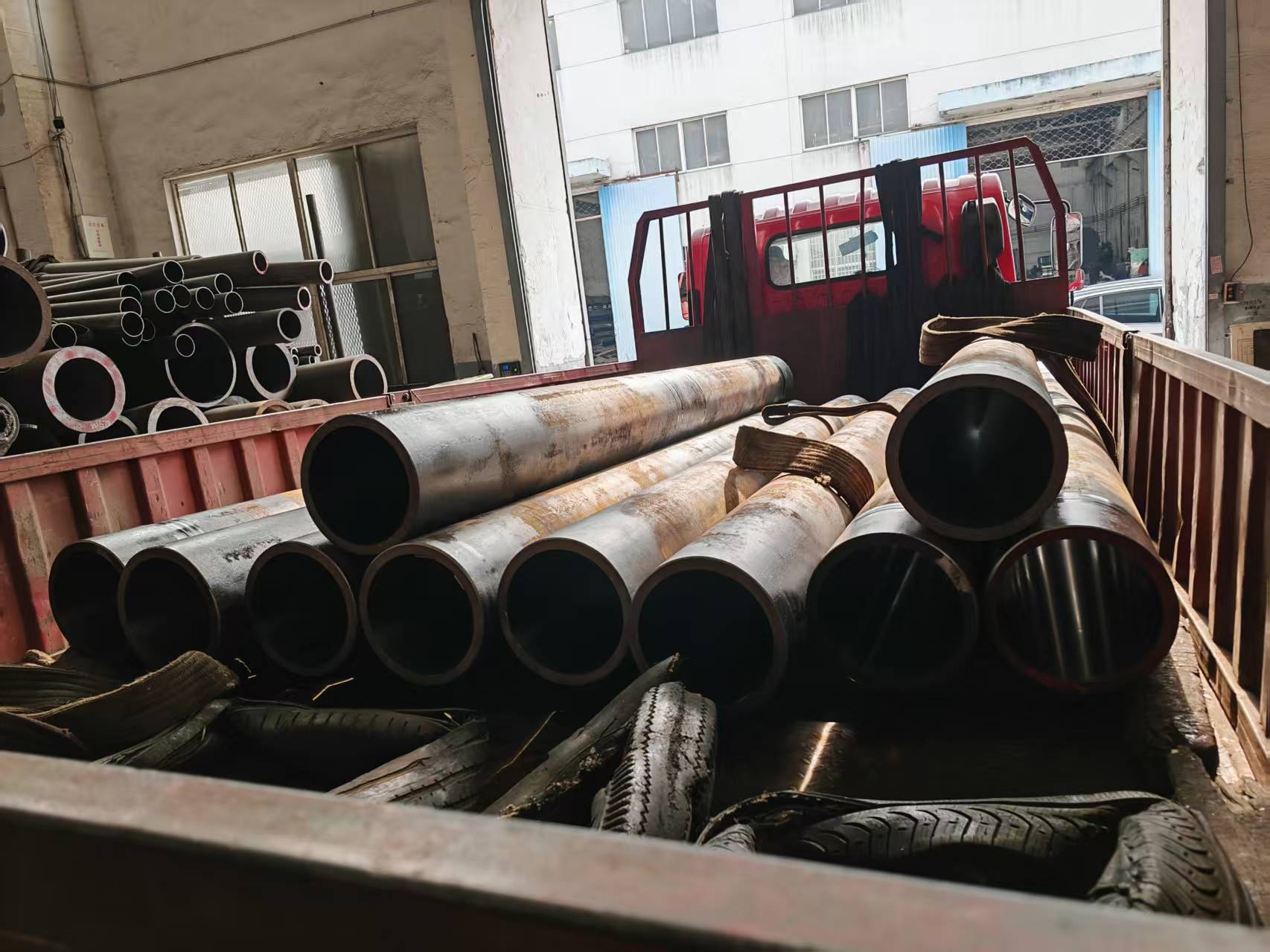
Seamless steel tubes are fundamental structural and functional components in modern industry, classified into hot-rolled tubes and cold-drawn tubes based on their forming processes. Hot-rolled tubes are produced by high-temperature rolling of steel billets, featuring high production efficiency but limited dimensional accuracy and surface quality, which can only meet the needs of general engineering applications. High-precision cold-drawn tubes, by contrast, are processed by drawing hot-rolled seamless tubes through a die at room temperature. The cold plastic deformation during processing refines the material’s grain structure, improves its mechanical properties, and ensures strict control over the tube’s inner diameter, outer diameter, wall thickness, and surface roughness. With the continuous advancement of technologies such as intelligent manufacturing, precision hydraulic systems, and lightweight equipment, the demand for high-precision cold-drawn tubes is growing rapidly, and their application scope is expanding into high-end manufacturing fields with stringent performance requirements.
2. Core Advantages of High-Precision Cold-Drawn Tubes
The unique cold-drawing process endows high-precision cold-drawn tubes with a series of advantages that distinguish them from hot-rolled tubes, covering dimensional performance, surface quality, mechanical properties, and processing applicability.
2.1 Exceptional Dimensional Accuracy and Consistency
The most prominent advantage of high-precision cold-drawn tubes is their strict dimensional control, which is achieved through precise die design and multi-pass drawing processes.
- Dimensional tolerance: The tolerance of outer diameter, inner diameter, and wall thickness can be controlled within ±0.05 mm, far exceeding the tolerance range of hot-rolled tubes (usually ±0.5 mm or higher). This high precision eliminates the need for secondary machining (such as boring or turning) in most application scenarios, directly reducing production costs and improving processing efficiency.
- Wall thickness uniformity: The cold-drawing process ensures uniform wall thickness distribution along the entire length of the tube, with the wall thickness deviation rate controlled below 3%. This characteristic is critical for components subjected to high-pressure and cyclic loads, as it avoids stress concentration caused by uneven wall thickness and enhances the service life of the components.
2.2 Superior Surface Quality
Without the oxide scale generated during high-temperature processing, high-precision cold-drawn tubes have an inherently smooth surface, which can be further optimized through subsequent polishing or honing processes.
- Surface roughness: The surface roughness (Ra) of cold-drawn tubes can reach 0.2–0.8 μm, while hot-rolled tubes typically have an Ra value of 6.3–12.5 μm. A smooth surface reduces friction loss when the tube is mated with moving parts (such as hydraulic piston rods), improves sealing performance, and prevents hydraulic oil leakage.
- Clean inner surface: The inner wall of high-precision cold-drawn tubes is free of oxide scale, burrs, and other defects. This cleanliness is essential for hydraulic systems and fluid transmission pipelines, as it avoids contamination of hydraulic oil or media and prevents wear of valves, pumps, and other precision components.
2.3 Enhanced Mechanical Properties
The cold plastic deformation during the drawing process induces work hardening of the tube material, and the subsequent annealing treatment adjusts the grain structure, resulting in a balanced combination of strength and toughness.
- High strength and hardness: Compared with hot-rolled tubes of the same material, high-precision cold-drawn tubes have a 15%–30% higher tensile strength and a significant increase in surface hardness, enabling them to withstand higher working pressures. For example, cold-drawn tubes made of 45# steel have a tensile strength of ≥600 MPa, while hot-rolled 45# steel tubes have a tensile strength of only about 500 MPa.
- Good fatigue resistance: The refined grain structure and uniform stress distribution of cold-drawn tubes improve their fatigue resistance, making them suitable for components under cyclic load conditions, such as hydraulic cylinder barrels and automotive transmission shafts.
2.4 High Material Utilization and Processing Flexibility
High-precision cold-drawn tubes can be produced in a wide range of specifications and materials, with high material utilization rates, reducing waste in the manufacturing process.
- Diverse material compatibility: The cold-drawing process is applicable to various materials, including carbon structural steel (20# steel, 45# steel), alloy structural steel (40Cr, 42CrMo), stainless steel (304, 316L), and copper alloys, meeting the requirements of different working environments (corrosion resistance, high temperature resistance, etc.).
- Complex specification customization: Cold-drawn tubes can be processed into thin-walled, small-diameter, or special-shaped tubes according to customer needs, which are difficult to produce by hot rolling. This flexibility allows them to adapt to the miniaturization and lightweight design trends of modern equipment.
3. Industrial Applications of High-Precision Cold-Drawn Tubes
Thanks to their outstanding comprehensive performance, high-precision cold-drawn tubes have become indispensable components in multiple high-end manufacturing fields, with the following typical application scenarios:
3.1 Hydraulic and Pneumatic Systems
This is the largest and most core application field of high-precision cold-drawn tubes. Hydraulic and pneumatic systems rely on sealed pipelines and cylinder barrels to transmit pressure and realize linear motion, imposing strict requirements on the dimensional accuracy and surface quality of tubes.
- Hydraulic cylinder barrels: High-precision cold-drawn tubes are the preferred base material for hydraulic cylinder barrels. After honing and chrome plating on the inner wall, they can form a high-strength, wear-resistant surface, ensuring the stable operation of hydraulic cylinders under high pressure (up to 32 MPa or higher). They are widely used in construction machinery (excavators, loaders), industrial automation equipment (CNC machine tools, robotic arms), and metallurgical equipment (rolling mills, continuous casting machines).
- Hydraulic pipelines: Cold-drawn tubes are used as high-pressure hydraulic pipelines in aircraft, ships, and heavy-duty vehicles, with their smooth inner walls reducing fluid resistance and improving the response speed of hydraulic systems.
3.2 Automotive Manufacturing
The automotive industry has increasingly stringent requirements for lightweight and high reliability, making high-precision cold-drawn tubes a key component in multiple automotive systems.
- Power transmission systems: Cold-drawn tubes are used to manufacture drive shafts, transmission gears, and steering system components. Their high strength and dimensional accuracy ensure the stability and safety of power transmission.
- Fluid systems: Fuel pipes, brake pipes, and cooling system pipes in automobiles are often made of stainless steel cold-drawn tubes. Their corrosion resistance and leakage prevention performance meet the long-term working requirements of automotive fluid systems.
- Chassis components: Cold-drawn tubes are used in chassis suspension systems to reduce weight while maintaining structural strength, contributing to the improvement of vehicle fuel efficiency and handling performance.
3.3 Aerospace Industry
The aerospace field has extremely high standards for the performance and reliability of components, and high-precision cold-drawn tubes are widely used in aircraft and spacecraft structures and systems.
- Aircraft hydraulic systems: The hydraulic systems of commercial airliners and military aircraft use high-strength alloy steel cold-drawn tubes to manufacture high-pressure pipelines and cylinder barrels, which can withstand extreme working conditions such as high altitude, low temperature, and large pressure changes.
- Structural components: Lightweight aluminum alloy cold-drawn tubes are used in aircraft frame structures, reducing the overall weight of the aircraft while ensuring structural rigidity and fatigue resistance.
- Propulsion systems: Cold-drawn tubes made of heat-resistant alloys are used in rocket engine fuel transmission pipelines, with their high temperature resistance and dimensional stability ensuring the safe operation of the propulsion system.
3.4 Medical Equipment
The medical device industry requires components with high precision, cleanliness, and biocompatibility, and stainless steel high-precision cold-drawn tubes can meet these strict requirements.
- Medical catheters and endoscopes: Thin-walled cold-drawn tubes are processed into medical catheters and endoscope components, with their smooth surface and precise dimensions ensuring minimal tissue damage during clinical operations.
- Medical instrument components: Components of surgical instruments, such as forceps and scissors shafts, are made of cold-drawn stainless steel tubes, which have high hardness and corrosion resistance, facilitating sterilization and repeated use.
3.5 Industrial Automation and Robotics
In the field of industrial automation, high-precision cold-drawn tubes are key components of precision actuators and transmission systems, supporting the high-precision motion control of equipment.
- Linear actuator components: The cylinder barrels of precision pneumatic and hydraulic actuators in automated production lines are made of cold-drawn tubes, ensuring the accurate positioning of the actuator (positioning accuracy up to ±0.01 mm).
- Robot arm structures: Lightweight alloy cold-drawn tubes are used to manufacture robot arms, reducing the load of the drive system while improving the rigidity and motion stability of the arm.