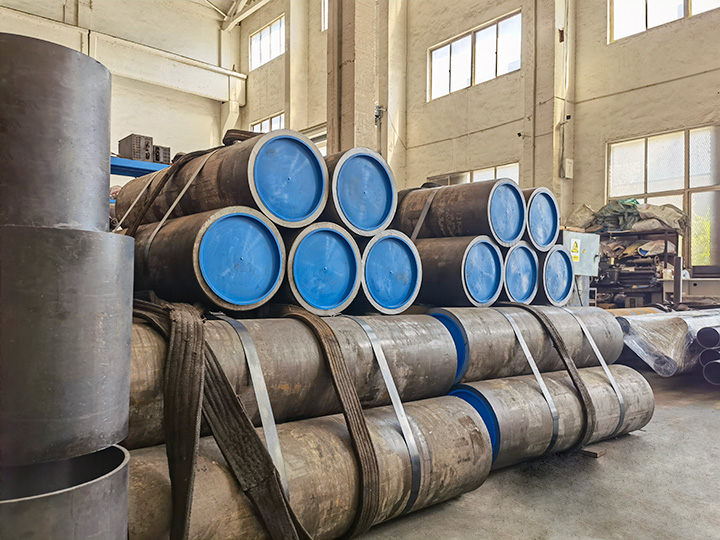
The honing process is a precision finishing technique for tubing interiors, designed to achieve ultra-smooth surfaces, tight dimensional tolerances, and optimized geometric accuracy—critical requirements for high-performance applications such as hydraulic cylinders, pneumatic actuators, and precision fluid systems. Unlike grinding or polishing, honing combines rotational and reciprocating motion of abrasive tools to remove microscopically thin material layers, resulting in a crosshatched surface texture that enhances lubrication retention and seal compatibility. This article systematically details the technical principles, equipment components, process workflow, performance specifications, industrial applications, and technical merits of tubing honing, providing a professional reference for manufacturing engineers and quality control personnel.
1. Core Technical Definition & Key Performance Indicators
Tubing honing is a subtractive manufacturing process that refines the internal surface of cylindrical tubes using abrasive honing sticks (stones) mounted on an expandable honing head. The process is distinguished by its ability to simultaneously improve three critical performance metrics, compliant with international standards (ISO 2374, DIN 406, ASTM B800):
1.1 Key Technical Specifications
- Surface Finish: Typical Ra 0.2–0.8 μm (hydraulic cylinders), with ultra-precision applications (e.g., aerospace) achieving Ra 0.05–0.2 μm. The crosshatched texture (angle 30–45° between tool rotation and reciprocation) optimizes lubricant film retention, reducing friction and wear.
- Dimensional Tolerance: Inner diameter (ID) tolerance IT7–IT9 (e.g., H8 for hydraulic cylinder tubes), with diameter variation ≤0.01 mm over the entire tube length.
- Geometric Accuracy: Roundness ≤0.005 mm/m, cylindricity ≤0.01 mm/m, and straightness ≤0.1 mm/m, ensuring uniform wall thickness and piston/seal contact.
- Material Removal: Typically 0.02–0.15 mm per side, minimizing material waste while correcting manufacturing defects from prior processes (e.g., cold drawing, machining).
1.2 Core Objectives of Honing
- Refine surface topography to reduce frictional resistance and improve sealing performance.
- Correct dimensional deviations (e.g., taper, ovality) from upstream manufacturing processes.
- Enhance geometric precision (roundness, cylindricity) to ensure uniform load distribution and motion stability.
- Create a functional surface texture that retains lubricants, extending component service life.
2. Honing Equipment: Components & Technical Parameters
Honing machines for tubing are specialized systems engineered to deliver precise control of motion, pressure, and abrasive interaction. Key components include:
2.1 Core Equipment Components
| Component | Technical Function & Specifications |
|-------------------------------|--------------------------------------------------------------------------------------------------------|
| Expandable Honing Head | Mounts 3–6 honing sticks; expands radially to apply uniform pressure (0.1–5 MPa) to the tube interior. Features quick-change tooling for different tube diameters (10–500 mm ID). |
| Honing Sticks (Abrasive Tools) | Available in abrasive materials: Aluminum oxide (for carbon steel), silicon carbide (for cast iron), cubic boron nitride (CBN, for alloy steel), and diamond (for stainless steel/titanium). Grit sizes range from 120 (coarse) to 1500 (ultra-fine), with hardness grades (J–Q) selected based on tube material. |
| Drive System | Dual-motion control: Rotational speed (100–1500 RPM) and reciprocating speed (0.5–5 m/min), synchronized to create the desired crosshatch angle. Servo-driven systems ensure ±1% speed accuracy. |
| Cutting Fluid Circulation System | Delivers coolant/lubricant (mineral oil-based, water-soluble, or synthetic) to: 1) Cool the workpiece and tools (preventing thermal deformation); 2) Flush away abrasive debris; 3) Reduce friction. Flow rate: 20–100 L/min, with filtration (≤10 μm) to maintain fluid cleanliness. |
| Workholding Fixtures | Chuck or mandrel-based clamping systems with concentricity alignment (≤0.005 mm) to prevent tube deflection during honing. Compatible with tube lengths 100–6000 mm. |
| In-Process Measurement System | Integrates laser micrometers or air gages to monitor ID dimensions in real time (±0.001 mm accuracy), enabling automatic process adjustment and closed-loop control. |
2.2 Machine Classification
- Vertical Honing Machines: Ideal for long tubes (≥2000 mm) and heavy workpieces, ensuring gravity-assisted coolant flow and minimal deflection.
- Horizontal Honing Machines: Suitable for high-volume production (e.g., hydraulic cylinder tubes), with automated loading/unloading systems for cycle times ≤30 seconds per part.
- Portable Honing Machines: Used for on-site maintenance or large-diameter tubes (≥300 mm ID), offering flexibility for field applications.
3. Technical Workflow of Tubing Honing
The honing process follows a structured workflow to ensure consistent quality, with each step governed by strict process parameters:
3.1 Pre-Honing Preparation
1. Workpiece Inspection: Verify incoming tube quality using ultrasonic testing (UT) for internal defects, and coordinate measuring machines (CMM) for initial ID tolerance (typically IT10–IT11 before honing).
2. Surface Preparation: Remove oil, grease, and oxide layers via alkaline degreasing (50–60°C) and acid pickling (for carbon steel) or mechanical cleaning (for stainless steel) to ensure abrasive adherence and prevent contamination.
3. Workholding Setup: Mount the tube in the machine fixture, aligning it to achieve concentricity ≤0.005 mm between the tube axis and honing head.
3.2 Process Parameter Setup
- Select abrasive grit size (coarse grit for material removal, fine grit for finishing): e.g., 240-grit CBN for alloy steel tubes (4140) to achieve Ra 0.4 μm.
- Set rotational speed (N) and reciprocating speed (Vr) to achieve the target crosshatch angle (θ = arctan(2Vr/πDN), where D = tube ID).
- Adjust radial feed pressure (0.5–2 MPa for finishing) to control material removal rate (0.005–0.02 mm/min per side).
3.3 Honing Execution
1. Rough Honing: Use coarse-grit sticks to remove excess material, correct taper/ovality, and establish the initial surface profile. Material removal: 0.05–0.10 mm per side.
2. Intermediate Honing: Switch to medium-grit sticks to refine surface texture and reduce roughness. Material removal: 0.01–0.03 mm per side.
3. Finish Honing: Use fine-grit sticks to achieve the final surface finish and dimensional tolerance. Material removal: 0.005–0.01 mm per side.
4. In-Process Monitoring: Continuously measure ID dimensions with air gages and surface roughness with portable profilometers to ensure compliance with specifications.
3.4 Post-Honing Treatment
1. Cleaning: Ultrasonic cleaning (40 kHz, 5–10 minutes) to remove abrasive debris and cutting fluid residues from the crosshatched surface.
2. Rust Prevention: Apply corrosion inhibitors (e.g., oil-based or dry film) to carbon steel tubes; passivate stainless steel tubes per ASTM A967.
3. Final Inspection: Verify ID tolerance (using internal micrometers), surface finish (Ra/Rz values), roundness (laser roundness tester), and crosshatch angle (microscopic analysis).
4. Industrial Applications & Material-Specific Requirements
Honed tubing is indispensable in industries requiring high-pressure fluid handling, precise motion control, and long service life:
4.1 Hydraulic & Pneumatic Systems
- Hydraulic Cylinders: Carbon steel (CK45, 4140) honed tubes with Ra 0.2–0.8 μm, ID tolerance H8, and crosshatch angle 30–45°—critical for seal compatibility (polyurethane/nitrile seals) and resistance to high pressure (up to 45 MPa). Used in construction machinery (excavators, cranes) and industrial presses.
- Pneumatic Actuators: Aluminum alloy (6061-T6) honed tubes with Ra 0.4–1.0 μm, ensuring low friction and smooth actuation (cycle frequency ≥100 cycles/min).
4.2 Aerospace & Defense
- Aircraft Hydraulic Systems: Titanium alloy (Ti-6Al-4V) or stainless steel (316L) honed tubes, compliant with AMS 2630 and MIL-STD-883 standards. Requirements: Ra 0.05–0.2 μm, cylindricity ≤0.003 mm/m, and resistance to extreme temperatures (-55°C to 120°C).
- Missile & Rocket Propulsion Systems: High-strength alloy steel honed tubes for fuel/oxidizer lines, with ultra-precise ID tolerance (IT6) and leak-tight performance.
4.3 Automotive & Transportation
- Automotive Hydraulic Components: Shock absorber tubes (CK45) with Ra 0.3–0.6 μm, reducing friction between the piston and tube wall to improve ride comfort.
- Commercial Vehicles: Heavy-duty truck hydraulic lift systems use honed tubes (OD 50–100 mm) to withstand repeated load cycles (10⁸+) and road vibration.
4.4 Medical & Precision Equipment
- Medical Devices: 316L stainless steel honed tubes for surgical instruments and fluid delivery systems, with Ra ≤0.2 μm and biocompatibility (ISO 10993).
- Semiconductor Manufacturing: Aluminum nitride-coated honed tubes for ultra-pure fluid transport, ensuring particle-free surfaces (≤1 particle/mL ≥0.5 μm).
5. Technical Advantages & Performance Enhancements
5.1 Superior Surface Quality & Functionality
- The crosshatched texture retains lubricant, reducing frictional coefficient by 30–50% compared to polished surfaces, and extending seal service life by 2–3x.
- Ultra-smooth surface (Ra ≤0.8 μm) minimizes abrasive wear on moving components (e.g., piston rods), reducing maintenance frequency by 40–60%.
5.2 Precise Dimensional & Geometric Control
- Corrects manufacturing defects (taper, ovality, waviness) from cold drawing or machining, achieving ID consistency ±0.005 mm over the entire tube length.
- Ensures uniform wall thickness (variation ≤0.01 mm), preventing piston binding and improving hydraulic system efficiency by 15–20%.
5.3 Material Versatility & Process Adaptability
- Compatible with carbon steel, alloy steel, stainless steel, aluminum, titanium, and copper alloys, with customized abrasive selection and process parameters for each material.
- Scalable for high-volume production (automated horizontal honing machines) or low-volume precision parts (vertical honing machines with manual setup).
5.4 Cost-Effectiveness & Lifecycle Optimization
- While honing adds a finishing step, it eliminates the need for secondary polishing or lapping, reducing total production time by 20–30%.
- Extended component service life (3–5x longer than non-honed tubes) lowers replacement costs and downtime, delivering a 2:1 return on investment over the product lifecycle.
6. Technical Challenges & Mitigation Strategies
6.1 Key Challenges
- Process Consistency: Maintaining uniform surface finish and tolerance across high-volume production runs requires tight control of abrasive wear and cutting fluid cleanliness.
- High-Strength Materials: Honing of alloy steel (4340) or titanium requires specialized CBN/diamond abrasives and optimized parameters to avoid tool wear and thermal deformation.
- Large-Diameter Tubes: Tubes with ID ≥300 mm require custom honing heads and fixturing to prevent deflection and ensure cylindricity.
6.2 Mitigation Solutions
- Implement closed-loop control systems with real-time ID and roughness monitoring to adjust process parameters automatically.
- Use abrasive wear compensation algorithms to maintain consistent cutting pressure as honing sticks wear.
- For large-diameter tubes, employ multi-point support fixtures and low-speed, high-pressure honing strategies to minimize deflection.