Hydraulic systems serve as the backbone of modern industrial machinery, converting fluid power into precise mechanical motion to drive critical operations across construction, manufacturing, agriculture, and aerospace sectors. At the core of these systems lies the hydraulic cylinder barrel—an engineered pressure vessel designed to withstand extreme loads, maintain fluid integrity, and facilitate efficient energy transfer. Aligned with international standards (e.g., ISO 4401, SAE J1209, DIN 24333), hydraulic barrels are precision-manufactured components that directly influence system performance, reliability, and service life. This article delves into the technical fundamentals, core components, operational principles, construction classifications, industrial applications, and maintenance best practices of hydraulic barrels, providing a comprehensive overview for engineers, maintenance technicians, and industry professionals.
1. Core Definition & Technical Role
A
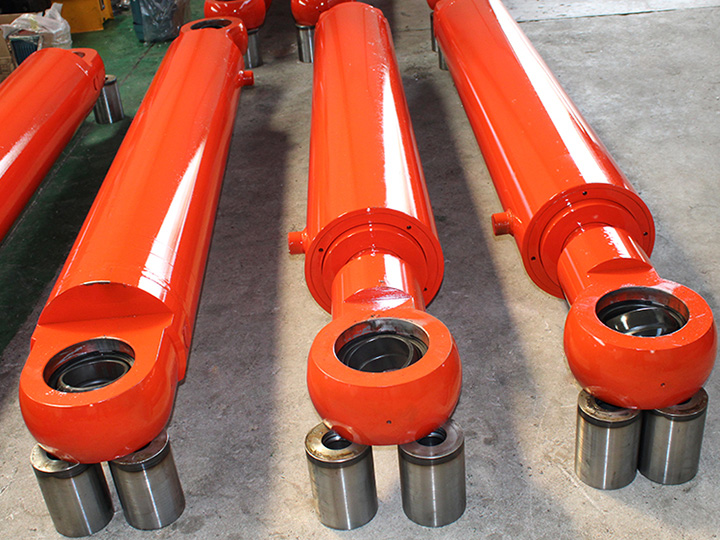
hydraulic cylinder barrel (commonly referred to as a cylinder tube or barrel) is a cylindrical pressure vessel that forms the stationary outer housing of a hydraulic cylinder. Its primary function is to:
- Enclose the piston assembly within a leak-tight chamber to contain hydraulic fluid under high pressure (typically 100–420 bar, with specialized designs exceeding 700 bar for heavy-duty applications).
- Guide the piston and piston rod during linear motion, ensuring concentricity and minimizing friction.
- Transmit mechanical force generated by hydraulic pressure to the load via the piston-rod assembly.
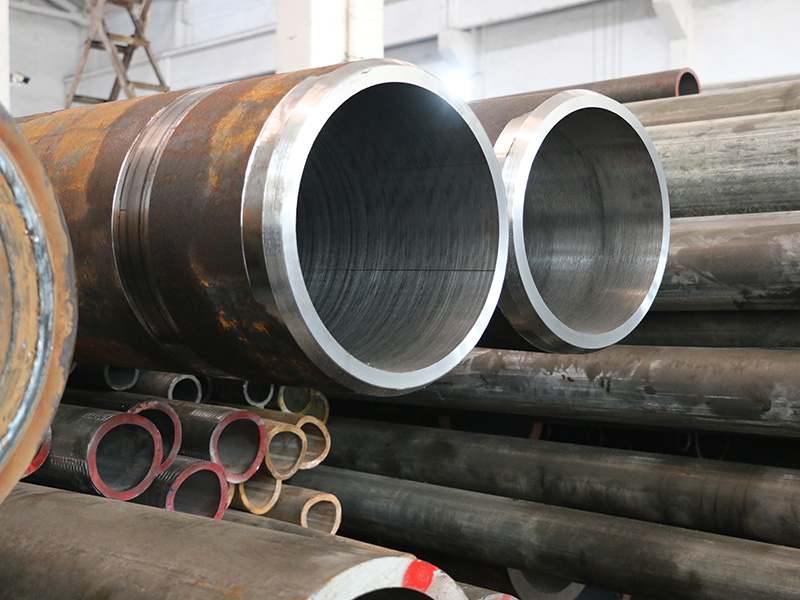
Constructed from high-strength materials (e.g., ST52-3 carbon steel, 4140/4340 alloy steel, or 316L stainless steel for corrosive environments), hydraulic barrels undergo precision machining processes—including cold drawing, honing (Ra 0.2–0.8 μm surface finish), and heat treatment (quenching and tempering to achieve tensile strength ≥630 MPa)—to meet strict dimensional tolerances (ISO H7 for inner diameter) and structural integrity requirements.
2. Key Components & Material Specifications
A hydraulic barrel’s performance is dependent on its integrated components, each engineered for specific functional requirements:
| Component | Technical Description & Material Standards |
|---------------------|-----------------------------------------------------------------------------------------------------------|
| Cylinder Barrel | - Material: ST52-3 (general purpose), 4140 alloy steel (high pressure), 316L stainless steel (corrosive environments), or duplex steel (marine/aerospace).<br>- Manufacturing: Cold-drawn seamless tubing (per ISO 11940) followed by plateau honing to create a cross-hatch surface pattern (30–45° angle) for lubricant retention and seal longevity.<br>- Dimensional Tolerances: Inner diameter (ID) tolerance ISO H7, wall thickness uniformity ±5%, straightness ≤0.02 mm/m. |
| Piston | - Function: Converts hydraulic pressure into linear force (F = P × A, where P = pressure, A = piston area).<br>- Material: Cast iron (grey iron EN-GJL-250), aluminum alloy (6061-T6), or steel (4140) with phenolic or PTFE guide rings for wear resistance.<br>- Design: Integrates sealing grooves for piston seals (U-cup, V-ring) and pressure-balancing ports to reduce friction. |
| Piston Rod | - Material: High-strength steel (4140/4340) with hard chrome plating (0.05–0.1 mm thickness, HRC 60–65) for corrosion and wear resistance.<br>- Tolerances: Outer diameter (OD) tolerance ISO f7, straightness ≤0.01 mm/m, surface finish Ra ≤0.2 μm. |
| Sealing System | - Static Seals: O-rings (NBR, Viton, or PTFE) for end cap-to-barrel interfaces, compliant with ISO 3601.<br>- Dynamic Seals: U-cup seals (for piston/rod), wiper seals (to exclude contaminants), and buffer seals (to absorb pressure spikes).<br>- Lubrication: Compatible with hydraulic fluids (ISO VG 32/46/68) to reduce seal wear and maintain fluid film. |
| End Caps | - Material: Steel (ST52-3) or aluminum alloy, welded or bolted to the barrel.<br>- Features: Integrate fluid ports (BSP, NPT, or SAE thread standards), rod glands, and mounting brackets (flange, trunnion, or clevis) per ISO 6020/2. |
3. Operational Principles: Fluid-to-Mechanical Energy Conversion
Hydraulic barrels operate on Pascal’s Law, which states that pressure applied to an enclosed fluid is transmitted undiminished in all directions. The core mechanics involve:
1. Fluid Injection: Hydraulic fluid (mineral oil, synthetic oil, or water-glycol) is pumped into one end of the barrel via a directional control valve, creating pressure (P) against the piston’s effective area (A).
2. Force Generation: The pressure exerts a linear force (F = P × A) on the piston, driving it axially along the barrel’s inner surface. For double-acting cylinders, fluid is alternately injected into the rod-side and cap-side chambers to achieve extension and retraction.
3. Mechanical Work: The piston rod transfers this force to the load (e.g., lifting a crane boom, clamping a workpiece), converting hydraulic potential energy into mechanical motion.
4. Fluid Return: As the piston moves, fluid on the opposite side of the barrel is displaced back to the reservoir, completing the cycle.
Critical performance metrics include:
- Volumetric Efficiency: ≥95% for high-quality barrels, minimizing fluid leakage and energy loss.
- Operating Temperature Range: -20°C to +80°C (standard) or -40°C to +120°C (specialized fluids/seals).
- Pressure Rating: Determined by barrel wall thickness (calculated via the Lame equation for cylindrical pressure vessels) and material yield strength.
4. Classification by Construction Type
Hydraulic barrels are categorized by their manufacturing and assembly methods, each optimized for specific pressure, size, and application requirements:
4.1 Seamless Rolled Cylinders
- Manufacturing: Cold-drawn from seamless steel tubing (ISO 11940), followed by honing and heat treatment. No welded seams, ensuring uniform strength.
- Technical Specs: Pressure rating 160–350 bar, ID range 25–200 mm, stroke length up to 6,000 mm.
- Advantages: High dimensional precision, excellent fatigue resistance, suitable for medium-to-high pressure applications.
- Applications: Mobile machinery (forklifts, agricultural tractors), industrial automation (robotic arms), and medium-duty hydraulic presses.
4.2 Welded Construction Cylinders
- Manufacturing: Seamless tube with welded end caps (MIG/TIG welding per AWS D1.1), designed for heavy-duty use.
- Technical Specs: Pressure rating 350–420 bar (up to 700 bar for specialty designs), ID range 100–500 mm, stroke length up to 10,000 mm.
- Advantages: High structural rigidity, ability to withstand shock loads, compatible with large-diameter/high-pressure applications.
- Applications: Construction equipment (excavator boom cylinders, bulldozer lift cylinders), marine hydraulic systems, and heavy-industry presses (500–5,000 tons).
4.3 Tie-Rod Cylinders
- Manufacturing: Seamless barrel with flanged end caps secured by high-tensile steel tie rods (ISO 898-1 Class 10.9).
- Technical Specs: Pressure rating 100–250 bar, ID range 20–300 mm, stroke length up to 3,000 mm.
- Advantages: Easy disassembly for maintenance, modular design (interchangeable end caps/mounts), cost-effective for standard applications.
- Applications: Industrial machinery (injection molding machines, metal stamping presses), test benches, and applications requiring frequent servicing.
4.4 Other Specialized Types
- Telescopic Cylinders: Multi-stage barrels for extended stroke lengths (e.g., dump truck lift cylinders), compliant with ISO 6022.
- Corrosion-Resistant Cylinders: 316L stainless steel or plastic-lined barrels for food processing, marine, or chemical industries.
- High-Temperature Cylinders: Inconel or Hastelloy barrels for aerospace or industrial applications operating at >120°C.
5. Industrial Applications: From Mobile to Heavy Industry
Hydraulic barrels are integral to countless applications where high force, precise control, and reliability are critical:
5.1 Construction & Heavy Machinery
- Excavators/Loaders: Boom, arm, and bucket cylinders (welded construction, 350–420 bar) generate forces up to 500 kN to lift heavy loads and dig through hard materials.
- Cranes: Telescopic and tie-rod cylinders control boom extension/retraction, with load-holding valves to prevent drift during lifting.
- Dump Trucks: Telescopic barrels (multi-stage) lift dump bodies, with stroke lengths up to 4,000 mm for maximum payload capacity.
5.2 Manufacturing & Industrial Automation
- Hydraulic Presses: Welded barrels (420–700 bar) deliver forces from 10–10,000 tons for metal forming, plastic molding, and composite manufacturing.
- Injection Molding Machines: Tie-rod cylinders (250 bar) provide clamp force (100–5,000 kN) to secure molds during injection.
- Robotic Systems: Compact seamless barrels (160–250 bar) enable precise linear motion in automated assembly lines, with positional accuracy ±0.05 mm.
5.3 Agriculture & Forestry
- Tractors/Harvesters: Hydraulic barrels control implement lifting (plows, harvesters) and steering systems, with corrosion-resistant coatings to withstand harsh outdoor conditions.
- Forestry Equipment: Welded cylinders (350 bar) power tree harvesters and skidders, with reinforced barrels to resist impact and abrasion.
5.4 Aerospace & Marine
- Aerospace: Lightweight alloy barrels (4130 chromoly steel) actuate landing gear, flaps, and thrust reversers, meeting SAE AS81003 standards for high reliability.
- Marine: Stainless steel or duplex barrels power ship steering systems, winches, and stabilizers, resisting saltwater corrosion and biofouling.
6. Maintenance & Reliability Engineering
To ensure hydraulic barrels operate at peak efficiency and extend service life (typically 10,000–20,000 operating hours), adhere to these industry-standard maintenance practices:
6.1 Routine Inspection
- Visual & Ultrasonic Checks: Inspect barrel exteriors for corrosion, dents, or weld cracks; use ultrasonic testing to measure wall thickness (minimum thickness ≥80% of original to maintain pressure rating).
- Leak Detection: Monitor seal interfaces for fluid leakage using dye testing or thermal imaging; check for internal leakage via pressure retention tests (≤5% pressure drop in 10 minutes).
- Performance Monitoring: Track piston rod movement for uneven motion or drift, indicating wear in guides or seals.
6.2 Fluid Management
- Contamination Control: Maintain hydraulic fluid清洁度 per NAS 1638 Class 7–9; use high-efficiency filters (β10 ≥100) to remove particles >10 μm.
- Fluid Analysis: Test fluid for viscosity, acidity (pH 7.5–8.5), and contamination quarterly; replace fluid per manufacturer recommendations (typically 2,000–5,000 operating hours).
- Compatibility: Ensure fluid is compatible with seal materials (e.g., mineral oil for NBR seals, synthetic oil for Viton seals).
6.3 Seal & Component Maintenance
- Seal Replacement: Replace dynamic seals (U-cups, wipers) every 5,000–8,000 hours or at first sign of leakage; use OEM-specified seals to maintain pressure integrity.
- Piston Rod Care: Clean and inspect rod surfaces for scratches or chrome wear; re-chrome if surface roughness exceeds Ra 0.4 μm.
- Lubrication: Apply compatible grease to mounting points and rod glands to reduce friction and prevent corrosion.
6.4 Storage & Handling
- Store barrels in a clean, dry environment with rod ends protected by caps to prevent contamination.
- Avoid dropping or impacting barrels, as dents can distort the inner diameter and damage seals.
7. Conclusion
Hydraulic barrels are precision-engineered pressure vessels that serve as the core of hydraulic systems, translating fluid power into mechanical motion to drive critical industrial operations. Their design—optimized for material strength, dimensional accuracy, and sealing integrity—directly impacts system efficiency, load capacity, and reliability. By understanding the technical principles, construction types, and maintenance requirements of hydraulic barrels, engineers and technicians can select the right component for their application, optimize performance, and minimize downtime.
As industrial machinery evolves toward higher pressure, precision, and sustainability, hydraulic barrels continue to advance—with innovations in lightweight materials, corrosion-resistant coatings, and integrated sensor technology (for real-time condition monitoring) driving the next generation of hydraulic systems. Whether powering a construction excavator, an injection molding machine, or an aircraft landing gear, hydraulic barrels remain indispensable to modern engineering, embodying the intersection of fluid mechanics, materials science, and precision manufacturing.
For professionals in the field, mastering the mechanics of hydraulic barrels is not just a technical necessity—it is a key enabler of operational excellence, safety, and cost-effectiveness in diverse industrial sectors.