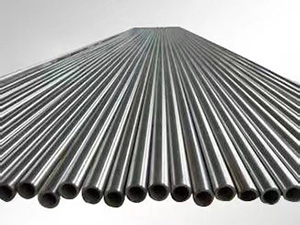
Honed steel tubes—precision-engineered components characterized by ultra-smooth internal surfaces and tight dimensional tolerances—are indispensable across industrial sectors demanding reliability, efficiency, and durability in high-pressure, dynamic motion, or corrosive environments. Unlike standard seamless or welded steel tubes, honed tubes undergo a specialized abrasive machining process (honing) that refines the inner surface to achieve consistent finish, geometric accuracy, and structural integrity. This article delves into the technical fundamentals, core industrial applications, performance advantages, and selection criteria of honed steel tubes, highlighting their critical role in advancing machinery performance and operational efficiency.
1. Definition & Manufacturing Fundamentals
Honing is a subtractive machining process that uses bonded abrasive stones (or diamond tools for hard materials) to remove microscopically thin layers of material from the inner surface of steel tubes. The process typically involves:
- Plateau Honing: A two-stage operation combining rough honing (to achieve target diameter and straightness) and finish honing (to create a plateaued surface with minimal peaks, optimizing lubrication retention).
- Dimensional Control: Achieving tight tolerances (e.g., H7/H8 cylindrical tolerance, ≤0.02 mm/m straightness, and ≤0.05 mm wall thickness uniformity) per international standards (ISO 4394-1, DIN 2393, ASTM A1011).
- Surface Finish Optimization: Producing a controlled surface roughness (Ra 0.2–0.8 μm) with a cross-hatch pattern (typically 30–45° angle), which enhances oil film retention, reduces friction, and minimizes wear between mating components (e.g., pistons, rods, or seals).
2. Key Material Specifications
Honed steel tubes are manufactured from high-performance steel grades tailored to application requirements, with two primary material categories dominating industrial use:
- Carbon Steel: Grades such as ST52-3, A106 Grade B, and 1045 carbon steel offer excellent machinability, high tensile strength (490–630 MPa), and cost-effectiveness. Ideal for general hydraulic systems, manufacturing machinery, and non-corrosive environments.
- Stainless Steel: Austenitic grades (304, 316L) and duplex stainless steels (2205) provide superior corrosion resistance, resistance to oxidation, and compatibility with acidic/caustic media. Critical for marine, chemical processing, and oil & gas applications exposed to harsh conditions.
- Specialty Alloys: For extreme environments (e.g., high temperature, high pressure, or abrasive media), alloy steels (e.g., 4140, 4340) or nickel-based alloys (Inconel) are used to enhance fatigue strength, creep resistance, and wear performance.
3. Core Industrial Applications
Honed steel tubes are engineered to address the unique demands of precision motion, high-pressure containment, and environmental resilience across key sectors:
3.1 Hydraulic Systems
Hydraulic cylinders—used in construction equipment (excavators, cranes), agricultural machinery (tractors, harvesters), and industrial presses—rely on honed tubes as the primary cylinder barrel component.
- Technical Rationale: The ultra-smooth internal surface (Ra ≤0.4 μm) minimizes friction between the piston seal and tube wall, reducing energy loss and extending seal life (by up to 3x compared to non-honed tubes). Tight dimensional tolerances (H7) ensure consistent hydraulic fluid flow, enabling precise linear motion control (e.g., ±0.05 mm positioning accuracy).
- Standards Compliance: Meets ISO 4394-1 (hydraulic cylinder tubes) and SAE J524 (seamless carbon steel hydraulic tubing) requirements, supporting working pressures up to 6000 psi (413 bar).
3.2 Automotive & Transportation
Honed steel tubes are critical to automotive suspension systems, shock absorbers, and transmission components:
- Shock Absorbers & Struts: The controlled surface finish and straightness (≤0.015 mm/m) ensure smooth piston movement, enhancing ride comfort and handling by efficiently damping vibrations. Stainless steel honed tubes resist corrosion from road salts and moisture, extending service life in harsh climates.
- Transmission Systems: Used in hydraulic clutches and gearbox actuators, where tight tolerances prevent fluid leakage and ensure responsive power transfer. High-strength carbon steel variants (e.g., 1045) withstand cyclic loading, reducing fatigue failure risks.
3.3 Manufacturing & Automation
In precision manufacturing (CNC machining, robotics, automated assembly lines), honed tubes serve as guiding elements and linear motion components:
- Linear Actuators & Cylinders: Provides the internal housing for pneumatic/hydraulic actuators, ensuring consistent piston alignment and repeatable motion (e.g., ±0.01 mm in robotic pick-and-place systems). The cross-hatch surface pattern retains lubricant, reducing maintenance frequency for high-cycle applications (up to 10 million cycles).
- Machine Tool Guides: Used in CNC lathes, milling machines, and grinders to guide cutting tools, leveraging tight straightness and parallelism (≤0.005 mm/m) for superior machining accuracy (e.g., ±0.002 mm part tolerance).
3.4 Pneumatic Systems
Pneumatic cylinders—utilized in packaging machinery, material handling equipment, and industrial automation—depend on honed tubes for efficient compressed air operation:
- Low-Friction Performance: The smooth internal surface minimizes air leakage and pressure drop, optimizing energy efficiency (up to 15% reduction in compressed air consumption compared to standard tubes).
- Contamination Resistance: The plateau finish prevents particle accumulation, protecting seals and valves from abrasion in cleanroom environments (e.g., pharmaceutical or electronics manufacturing).
3.5 Oil & Gas & Petrochemical Industries
Honed stainless steel tubes excel in harsh upstream, midstream, and downstream applications:
- Drilling Equipment: Used in hydraulic control systems for offshore rigs, with 316L or duplex stainless steel variants offering resistance to saltwater corrosion and sulfide stress cracking (SSC) in acidic oilfields.
- Pipeline Components: Employed in high-pressure fluid transfer lines (e.g., crude oil, natural gas liquids) where dimensional accuracy and leak-tight performance are critical (compliant with API 5L standards).
- Chemical Processing: Resists corrosion from solvents, acids, and alkalis in reactor feed lines and process piping, ensuring long-term reliability in petrochemical plants.
3.6 Marine & Aerospace
- Marine Applications: Honed stainless steel tubes are used in ship hydraulic systems (steering, winches, stabilizers) and seawater cooling lines, with 2205 duplex steel variants offering enhanced resistance to marine biofouling and corrosion.
- Aerospace: Lightweight alloy steel honed tubes (e.g., 4130 chromoly steel) are integrated into aircraft hydraulic systems, meeting strict aerospace standards (SAE AS87156) for high-pressure (up to 8000 psi) and temperature (-55°C to +120°C) performance.
4. Technical Advantages of Honed Steel Tubes
The unique manufacturing process of honed steel tubes delivers distinct performance benefits that outperform standard steel tubes:
- Superior Surface Quality: The plateau-honed finish eliminates micro-peaks, reducing seal wear, minimizing lubricant breakdown, and extending component lifespan by 2–5x.
- Exceptional Dimensional Precision: Tight tolerances for diameter, straightness, and concentricity ensure seamless integration with mating components (e.g., pistons, rods), reducing assembly time and operational downtime.
- High Pressure Resistance: Uniform wall thickness and enhanced structural integrity enable operation in high-pressure environments (up to 10,000 psi), making them suitable for critical hydraulic/pneumatic systems.
- Corrosion Resilience: Stainless steel and alloy variants provide robust protection against moisture, chemicals, and harsh weather, reducing maintenance costs and extending service life in aggressive environments.
- Optimized Lubrication: The cross-hatch surface pattern retains lubricant, forming a stable oil film that reduces friction and heat generation, improving energy efficiency and reducing operational noise.
5. Critical Selection Criteria
Selecting the right honed steel tube requires alignment with application-specific requirements:
- Material Compatibility: Choose carbon steel for cost-sensitive, non-corrosive applications; stainless steel for marine, chemical, or food-grade environments; and specialty alloys for extreme temperature/pressure conditions.
- Dimensional Parameters: Define target diameter (10–200 mm typical), wall thickness (2–20 mm), dimensional tolerance (H7/H8), and straightness (≤0.02 mm/m) based on equipment design specifications.
- Surface Finish: Specify surface roughness (Ra 0.2–1.6 μm) and cross-hatch angle (30–45°) to optimize lubrication and seal performance—e.g., lower Ra (0.2–0.4 μm) for high-pressure hydraulic systems.
- Industry Standards: Ensure compliance with relevant standards (ISO 4394-1, DIN 2393, API 5L) for regulatory compliance and interoperability with existing equipment.
- Environmental Factors: Consider operating temperature (-55°C to +200°C), pressure, chemical exposure, and media type (hydraulic oil, compressed air, seawater) to select materials with appropriate resistance properties.
- Surface Treatments: Optional finishes (zinc plating, chromating, passivation) enhance corrosion resistance or facilitate welding/threading for specific installation requirements.
6. Conclusion
Honed steel tubes represent a cornerstone of precision engineering, delivering unmatched performance in high-pressure, dynamic motion, and corrosive environments across industries. From hydraulic cylinders in construction machinery to aerospace hydraulic systems, their technical advantages—superior surface quality, dimensional precision, pressure resistance, and corrosion resilience—drive operational efficiency, reduce maintenance costs, and extend equipment lifespan.
By understanding the manufacturing fundamentals, material options, and application-specific requirements, engineers and procurement professionals can select honed steel tubes that optimize system performance and ensure long-term reliability. As industrial machinery evolves toward higher precision, efficiency, and durability, honed steel tubes will remain an indispensable component, enabling innovation and excellence in modern manufacturing, transportation, energy, and aerospace sectors.
With their proven track record of performance and versatility, honed steel tubes continue to set the standard for critical motion and fluid transfer applications, reinforcing their role as a preferred choice for engineers seeking to balance performance, reliability, and cost-effectiveness.